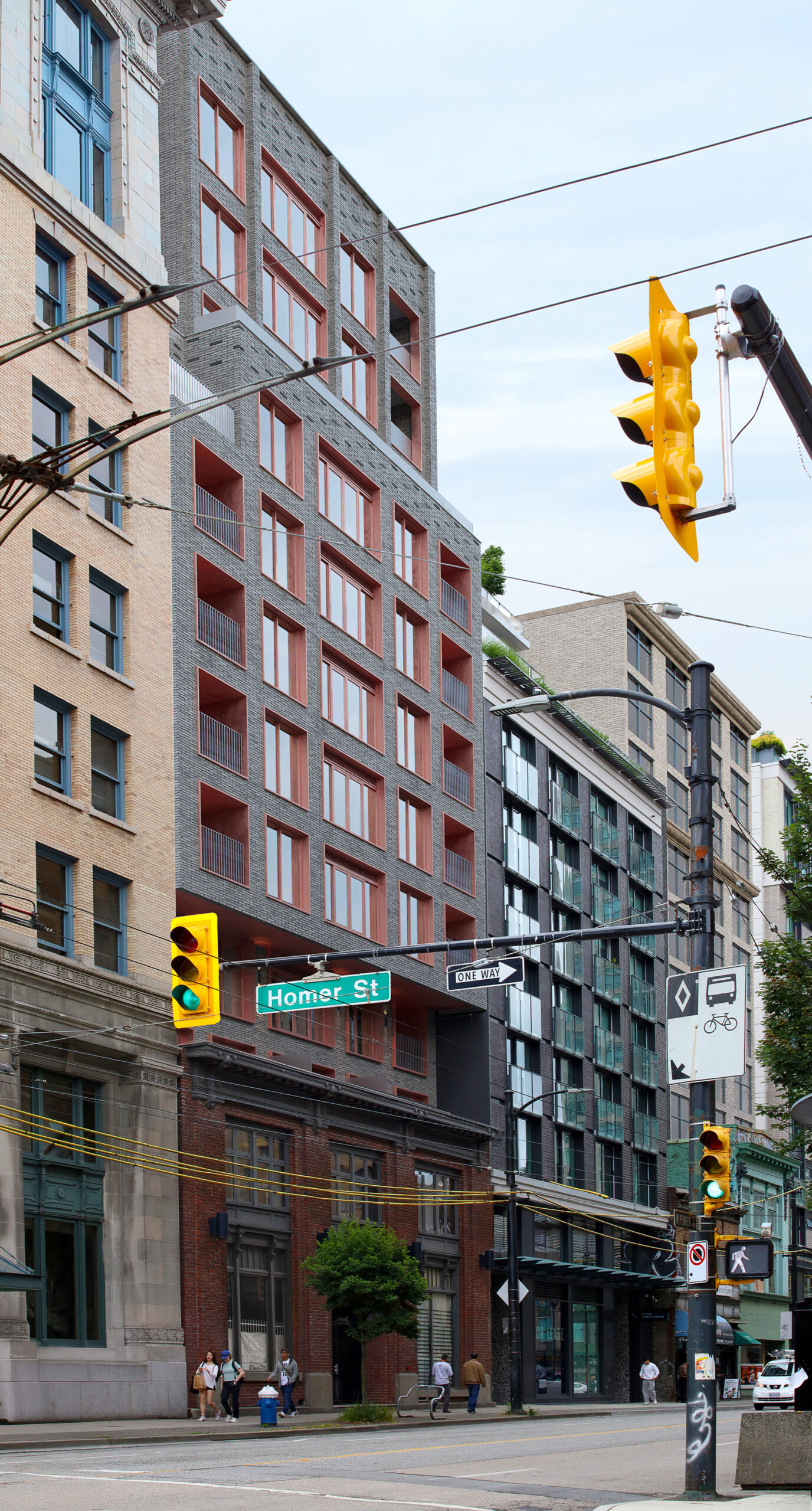
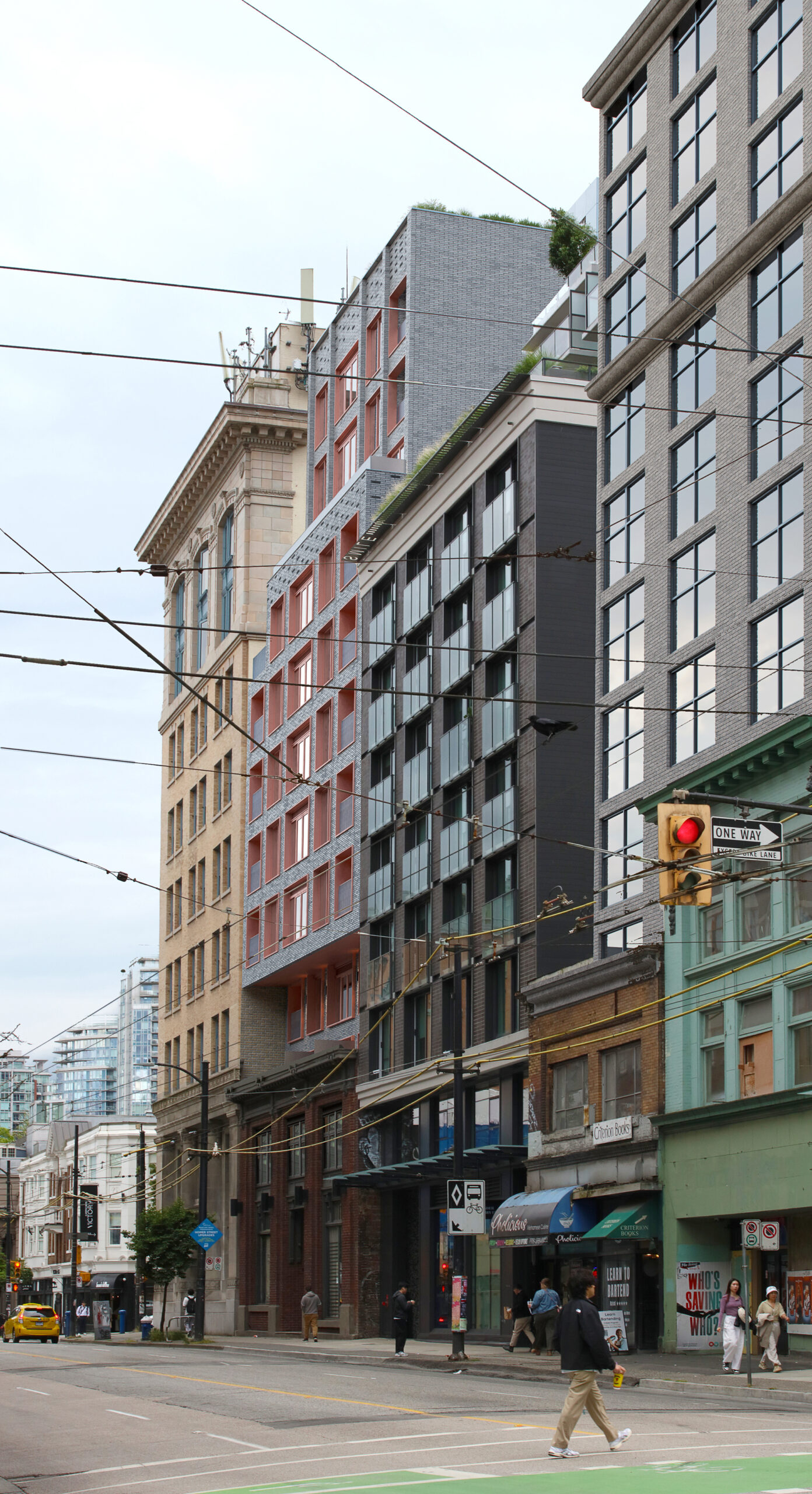
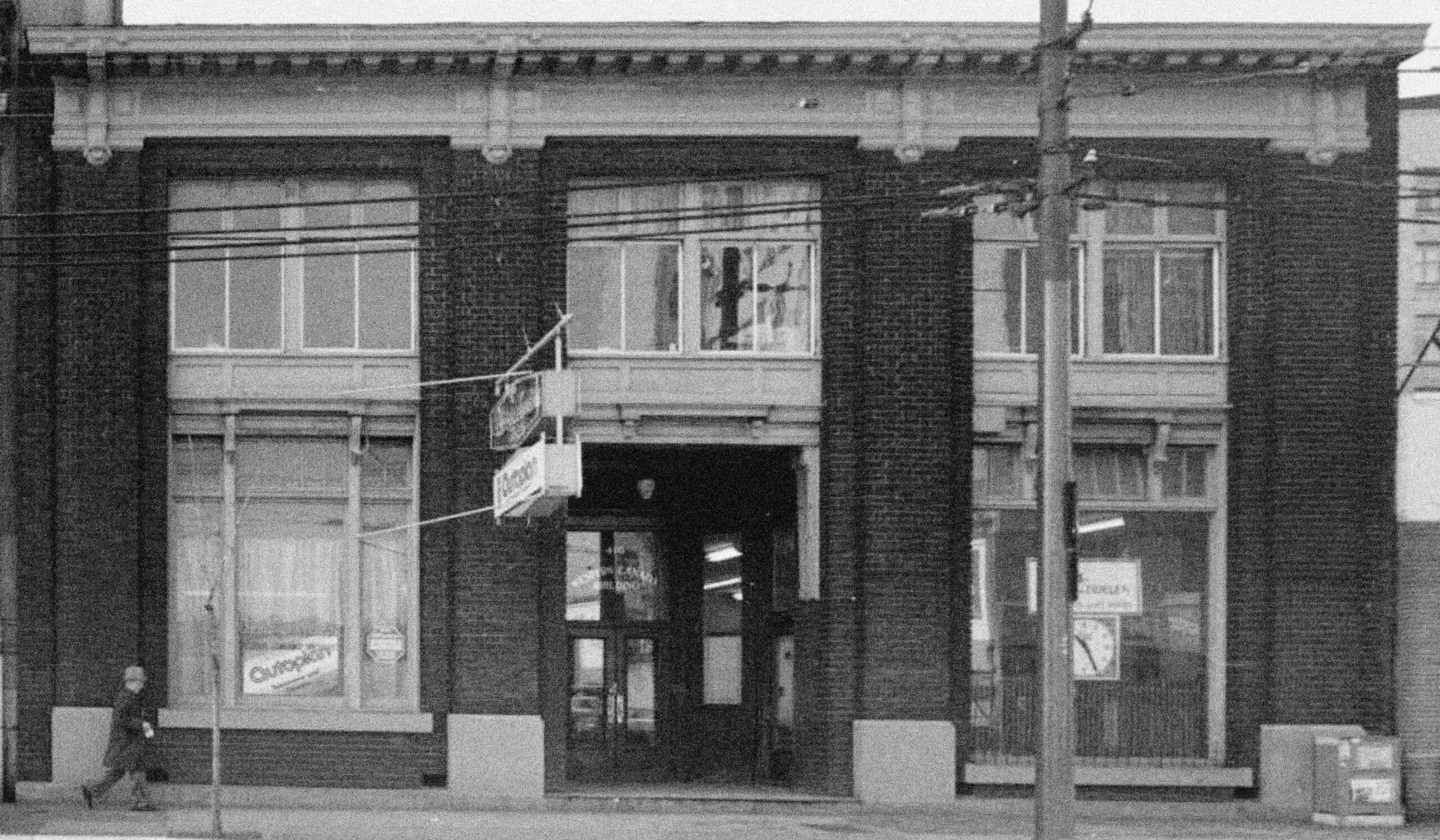
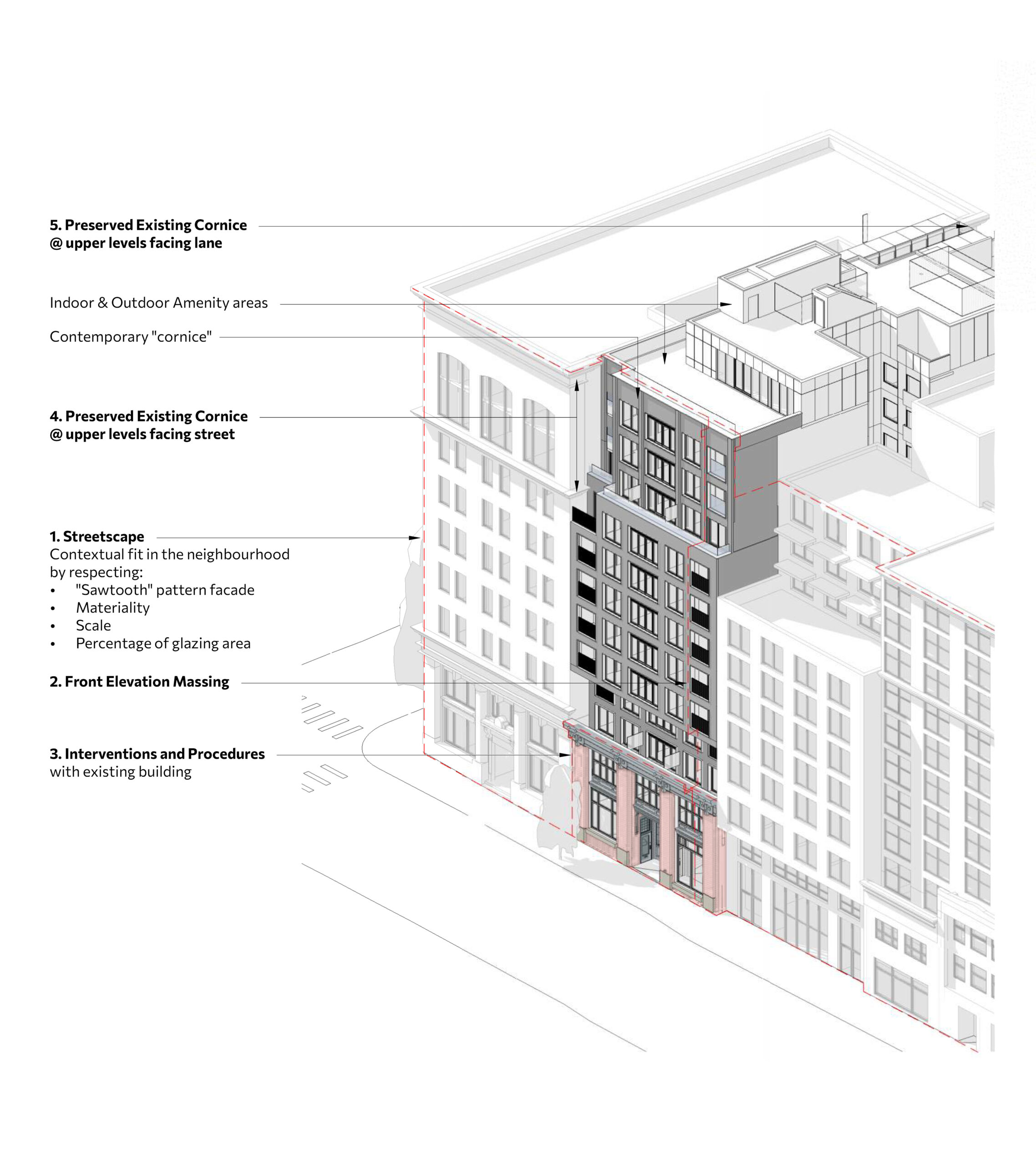
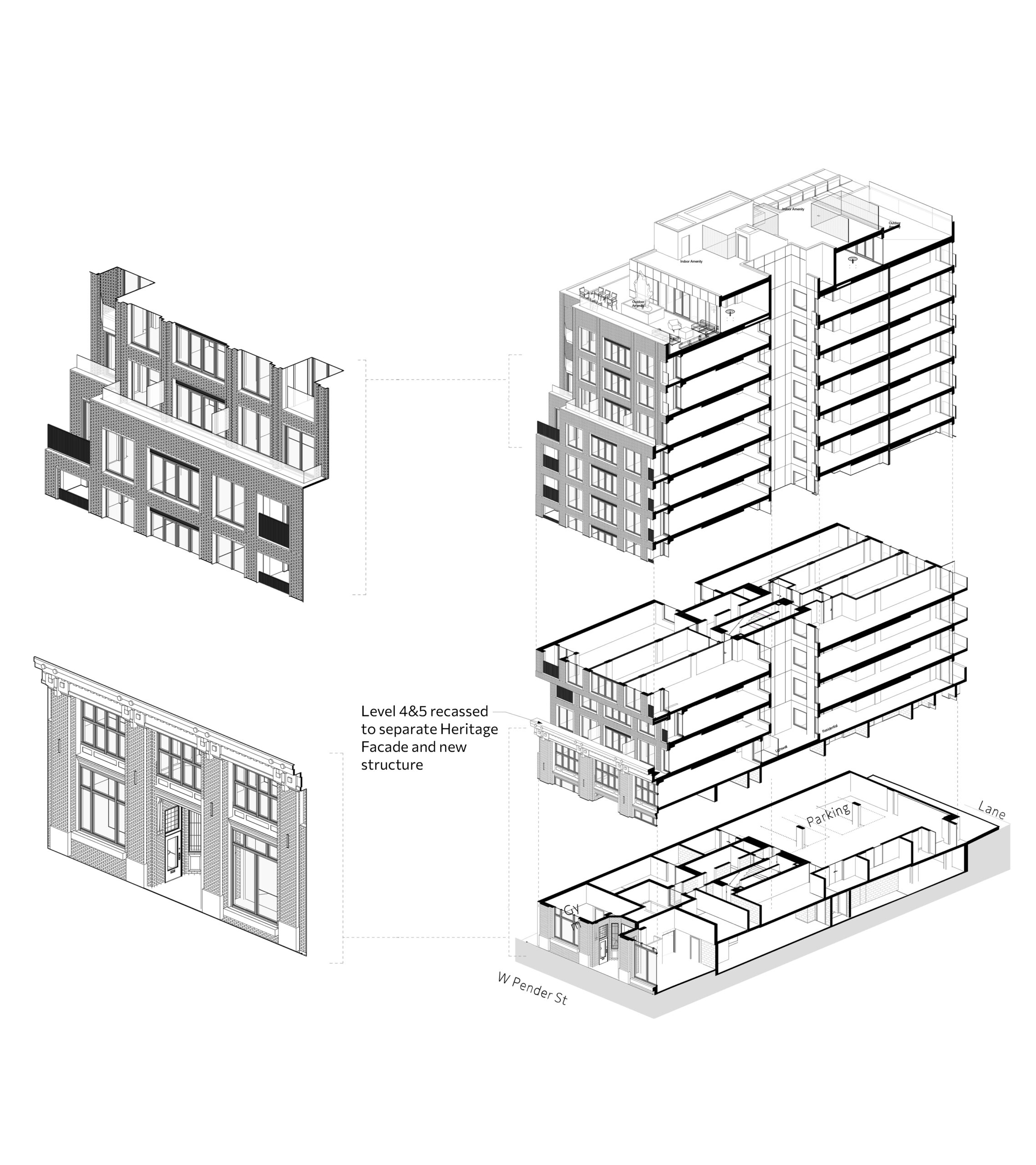
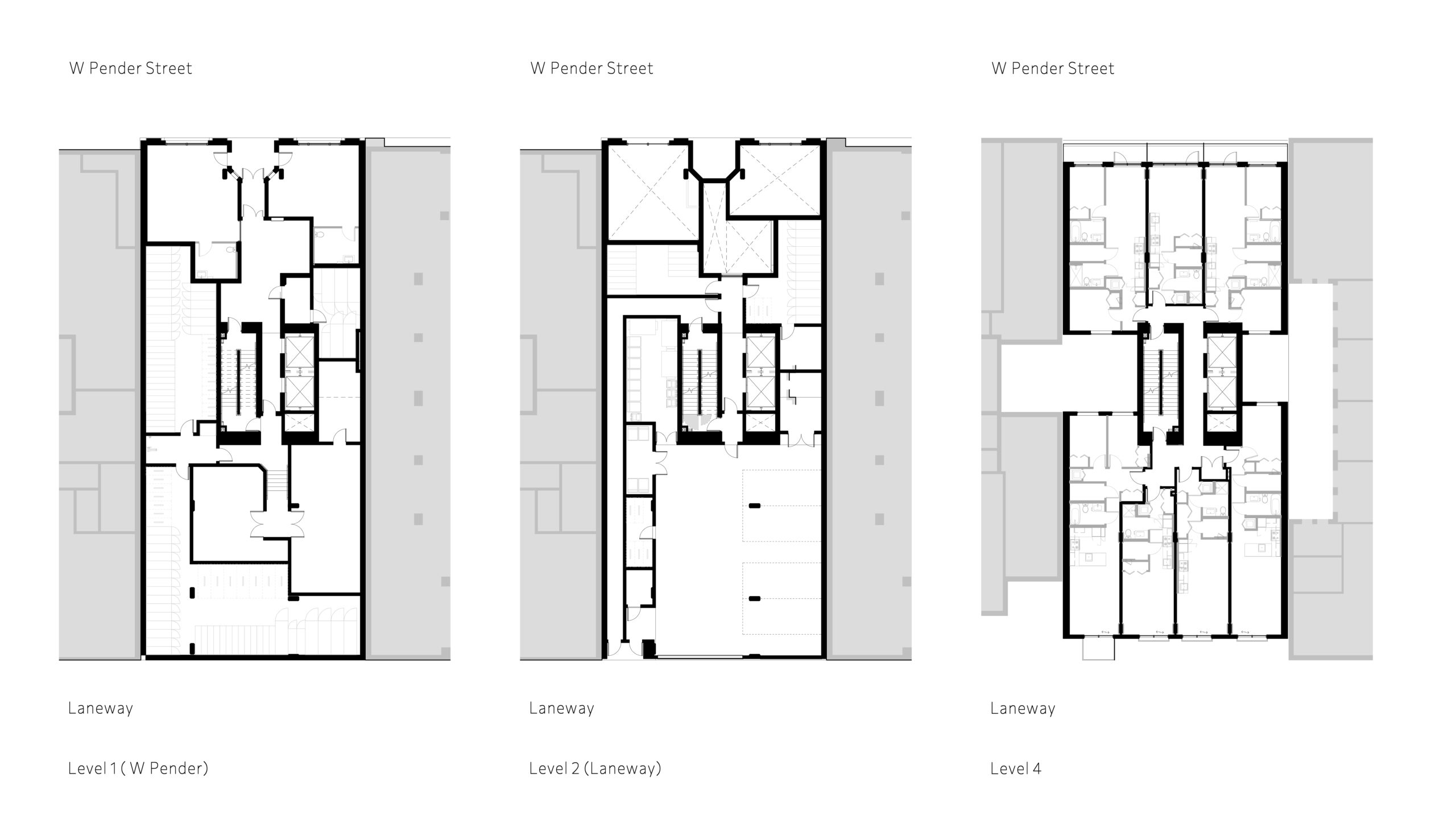
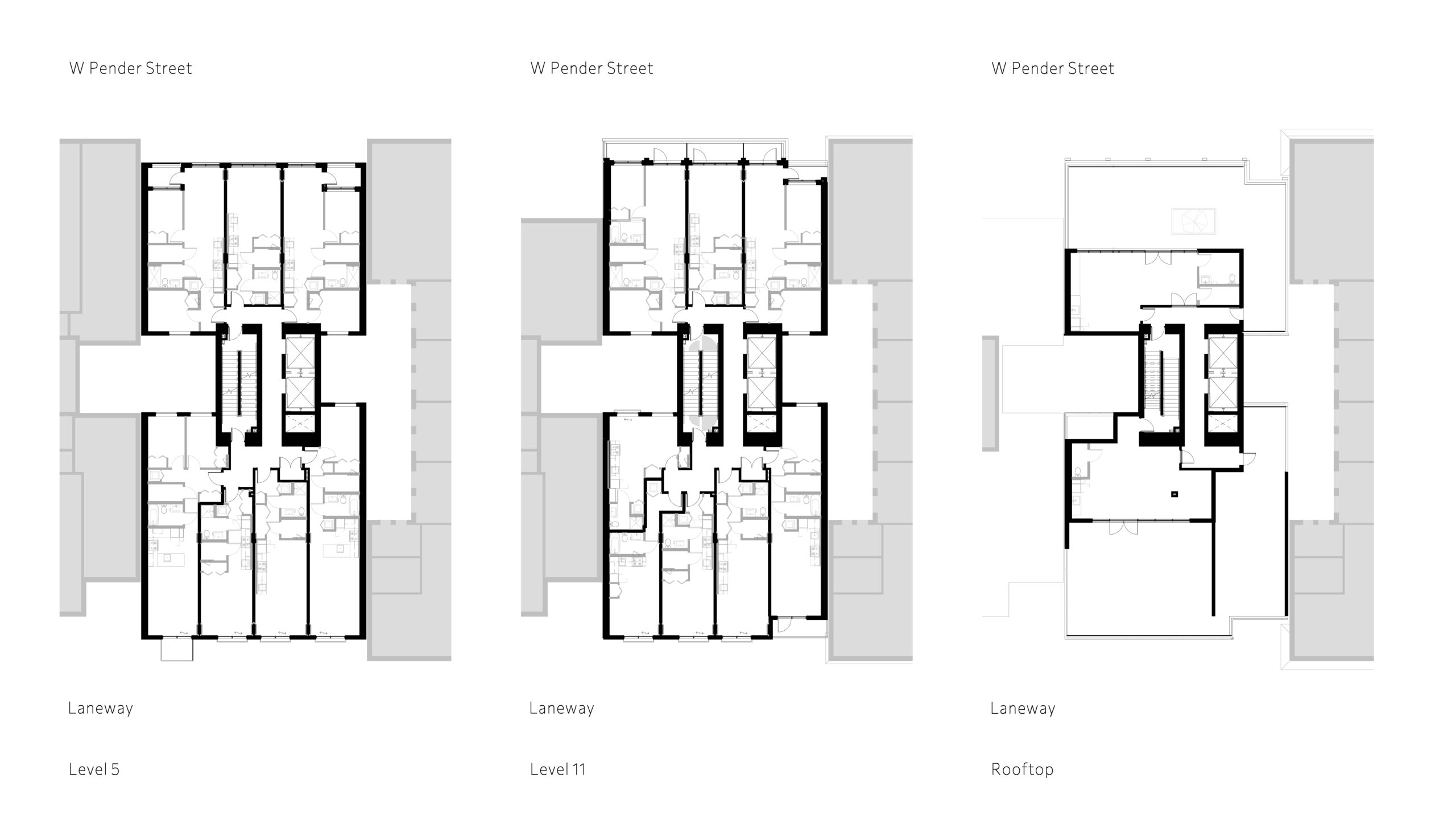
At 416 West Pender Street, the story is one of continuity—honoring the legacy of the Western Canada Building while contributing meaningfully to the future of Victory Square. The redevelopment preserves the historic street presence of the 1914 structure and uses the new tower above it to express a modern chapter of urban living, sustainability, and community growth through secured rental housing.
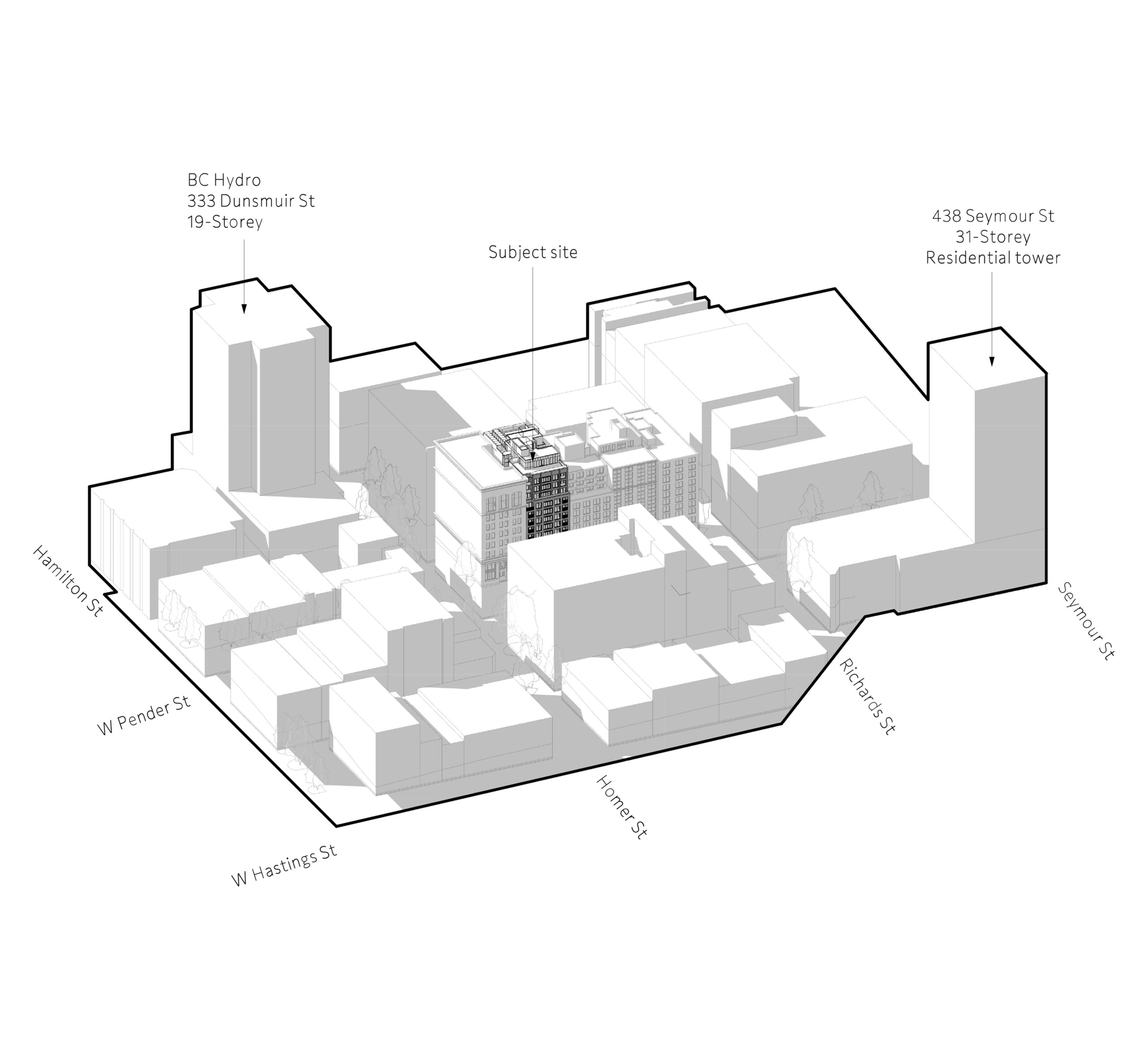
The proposal introduces a 12-storey building that delivers 88 secured rental units, including at least 25% family-oriented homes, where none exist today. The ground level maintains active retail frontage along Pender Street in accordance with Victory Square urban design guidelines. Located near Waterfront Station, Gastown, major public institutions, and ample transit, the site sits within a dense urban context of three- to twelve-storey buildings. Rezoning from DD to a site-specific CD-1 enables increased height and density consistent with the Downtown ODP, Victory Square Policy, and the Housing Plan for the Downtown Eastside. Shared resident amenities—including rooftop indoor space, urban agriculture areas, children’s play space, and outdoor gathering zones—enhance livability for all residents.
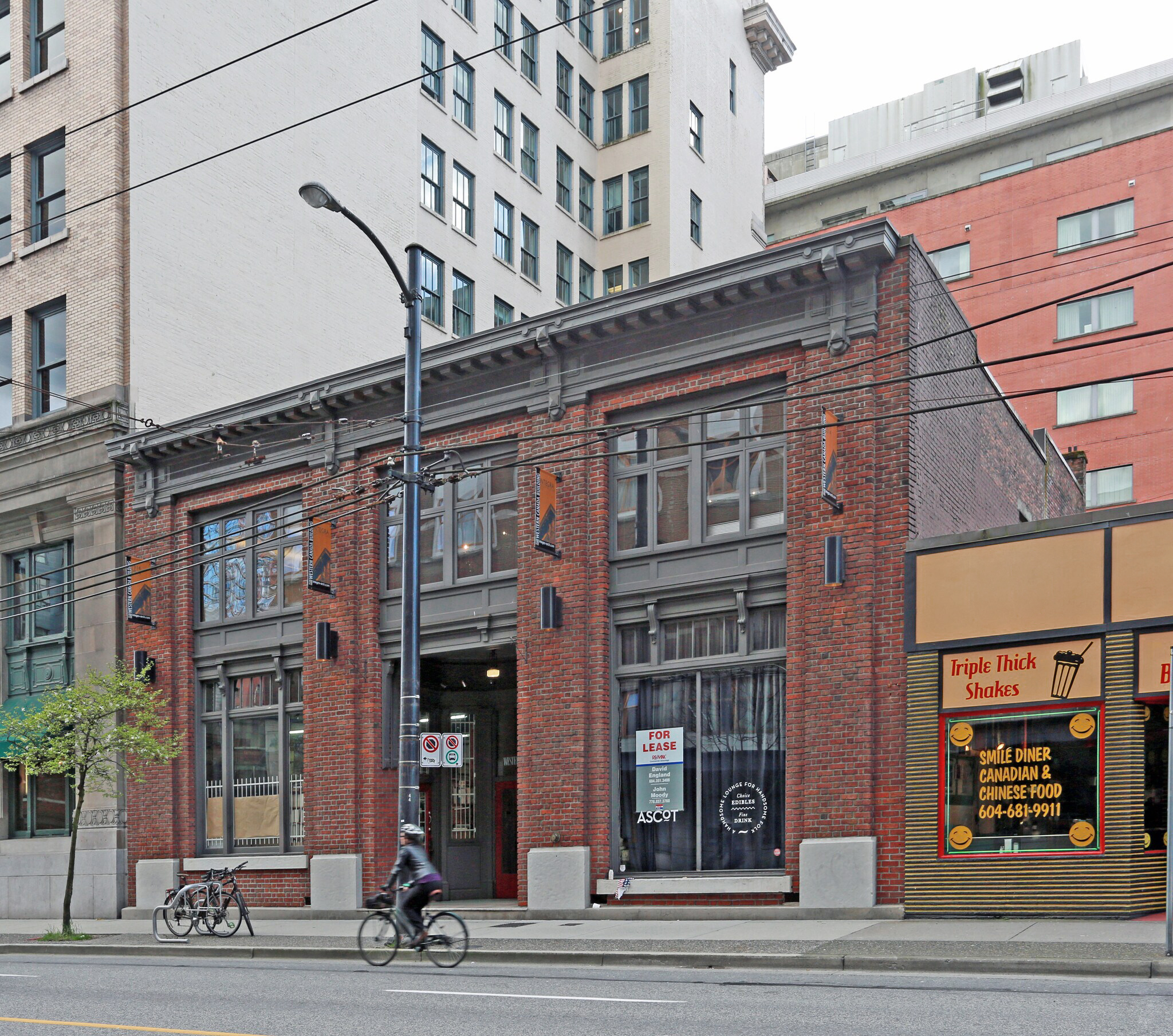
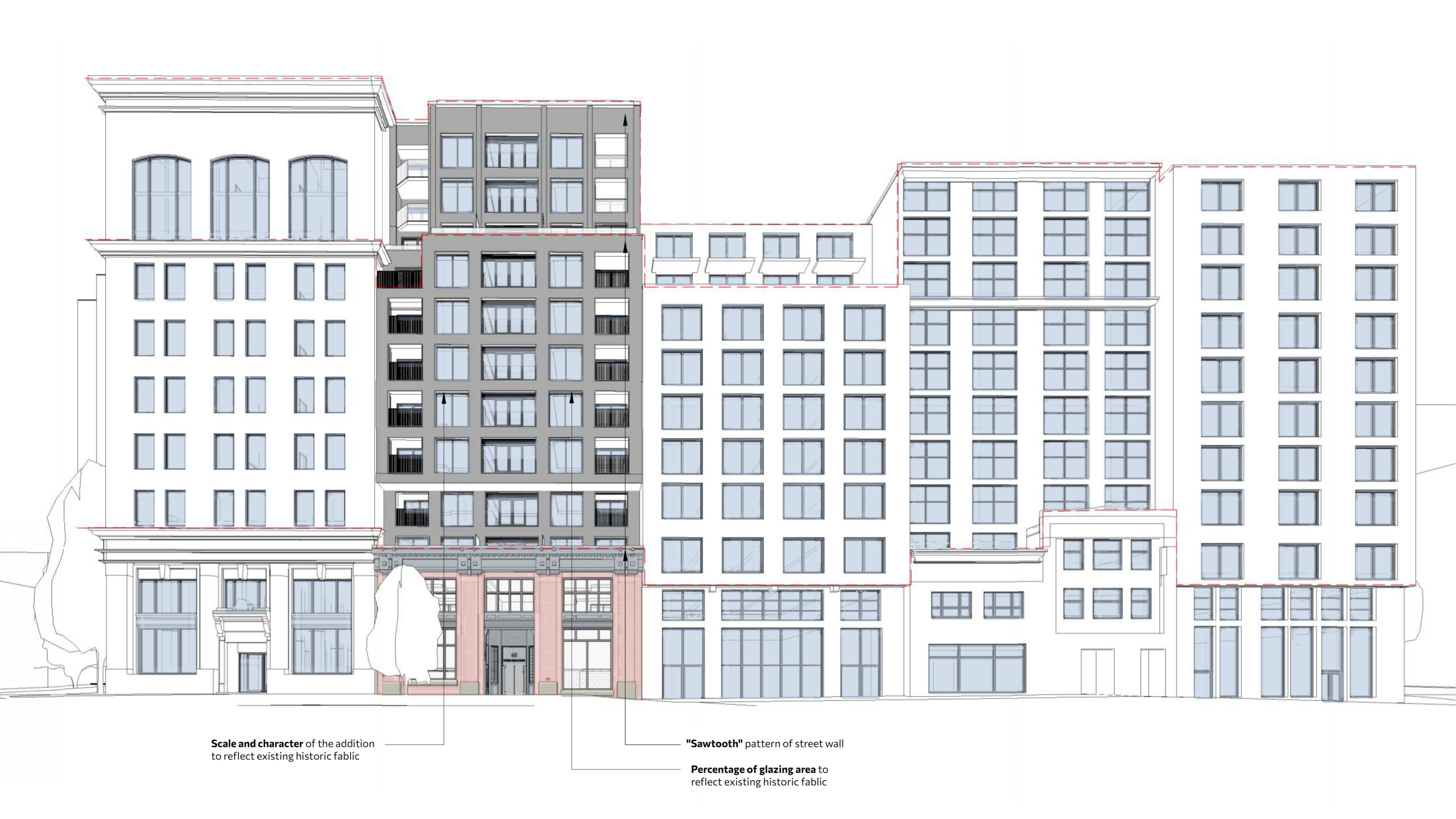
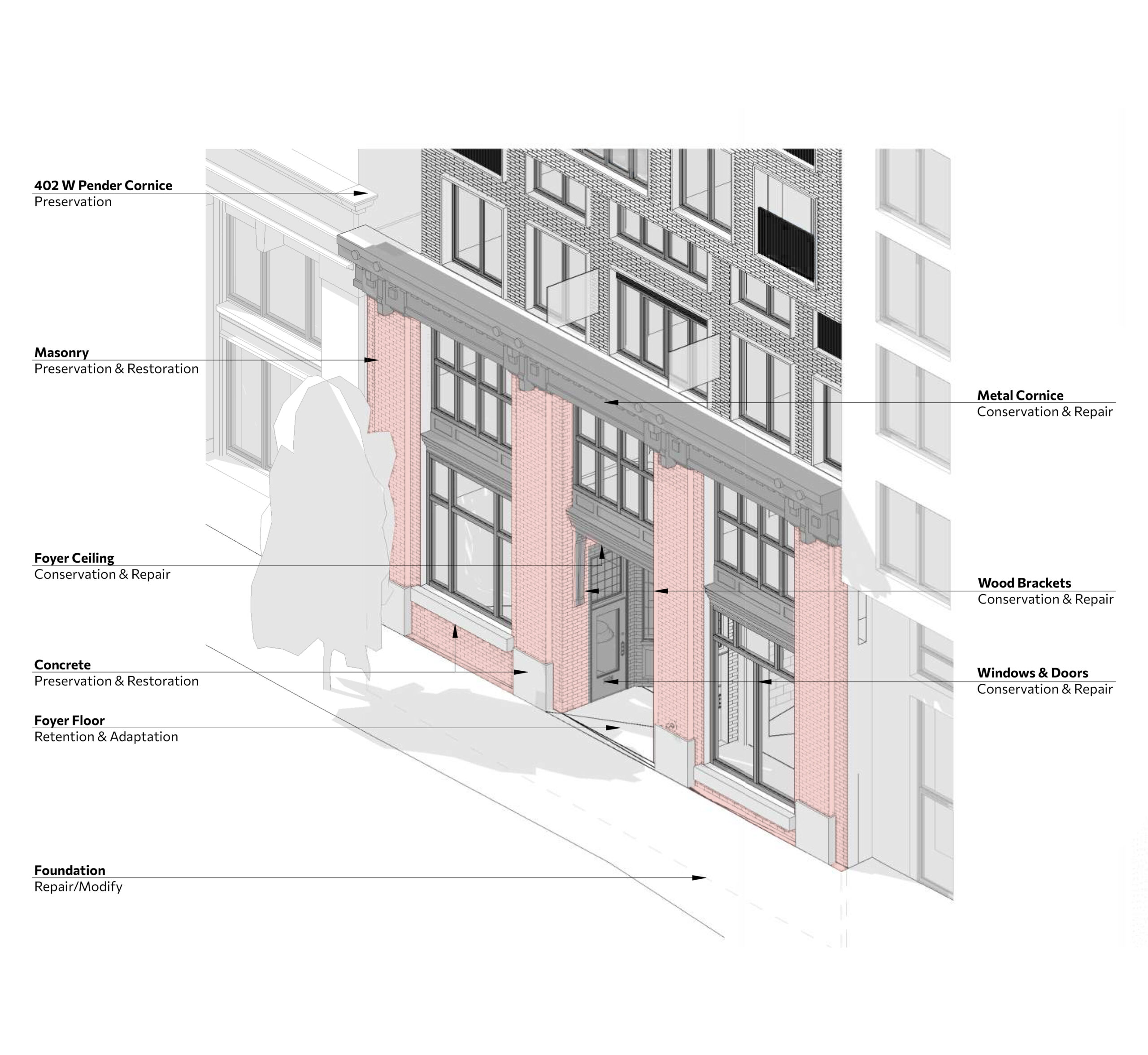
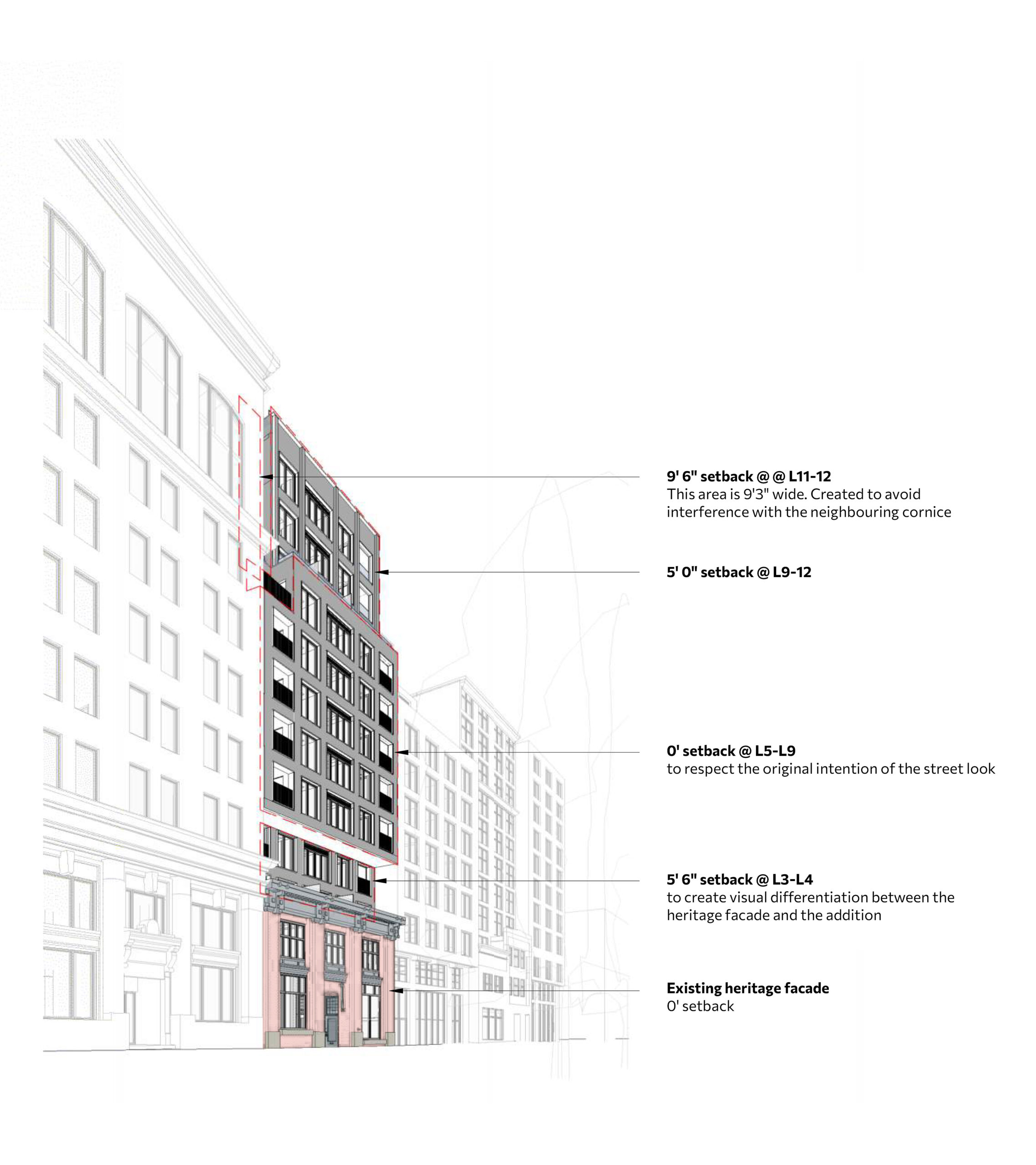
A defining aspect of the design is the respectful retention of the Western Canada Building, valued for its classical detailing and significant role in the financial and commercial history of early Vancouver. The original façade and entry foyer will be preserved and restored, using archival and on-site evidence to guide interventions. A stepped-back massing above the heritage frontage creates a visible transition between old and new, while materials salvaged from deconstruction—such as original timber—may be reused on site to strengthen the continuity of place.
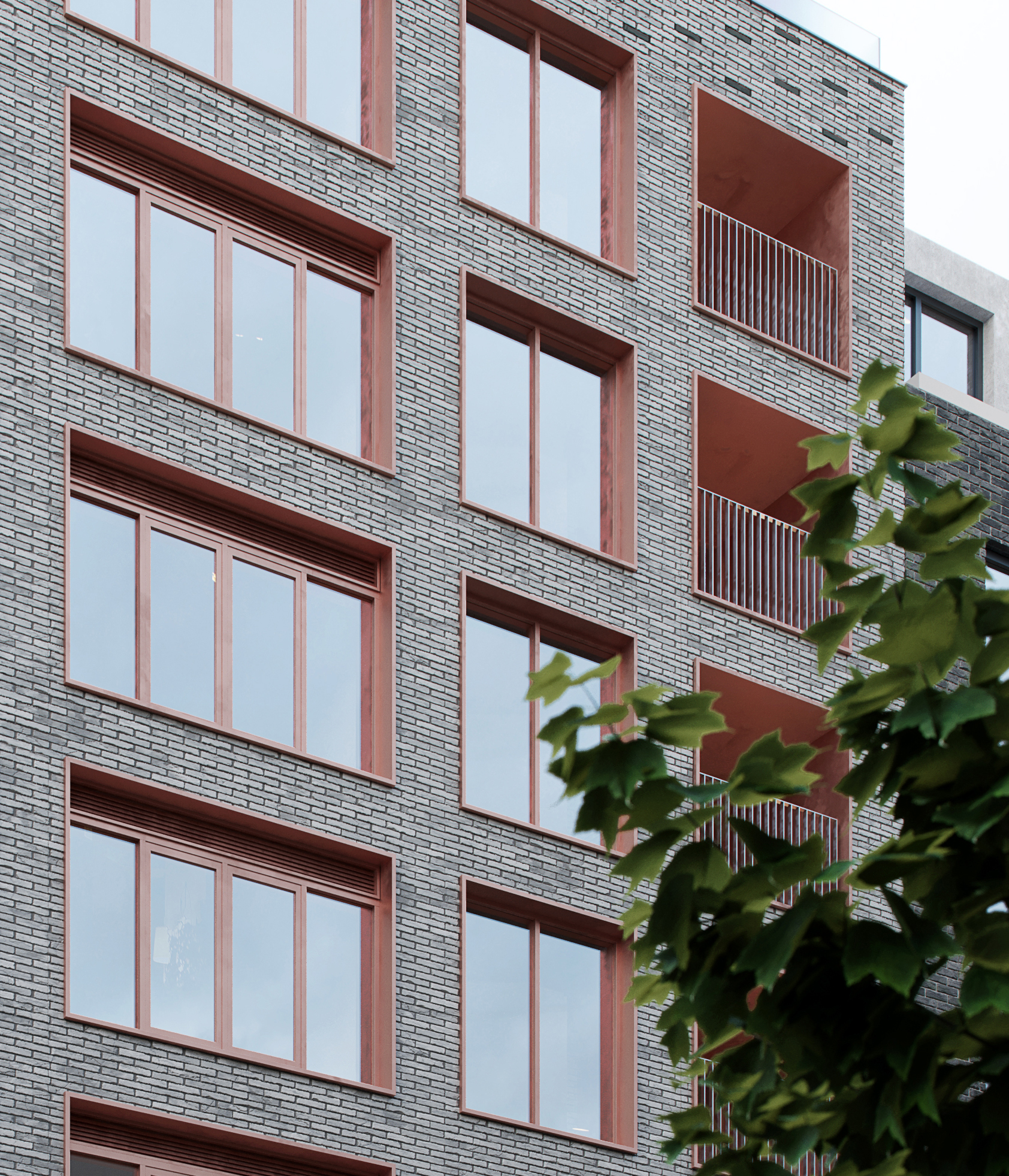
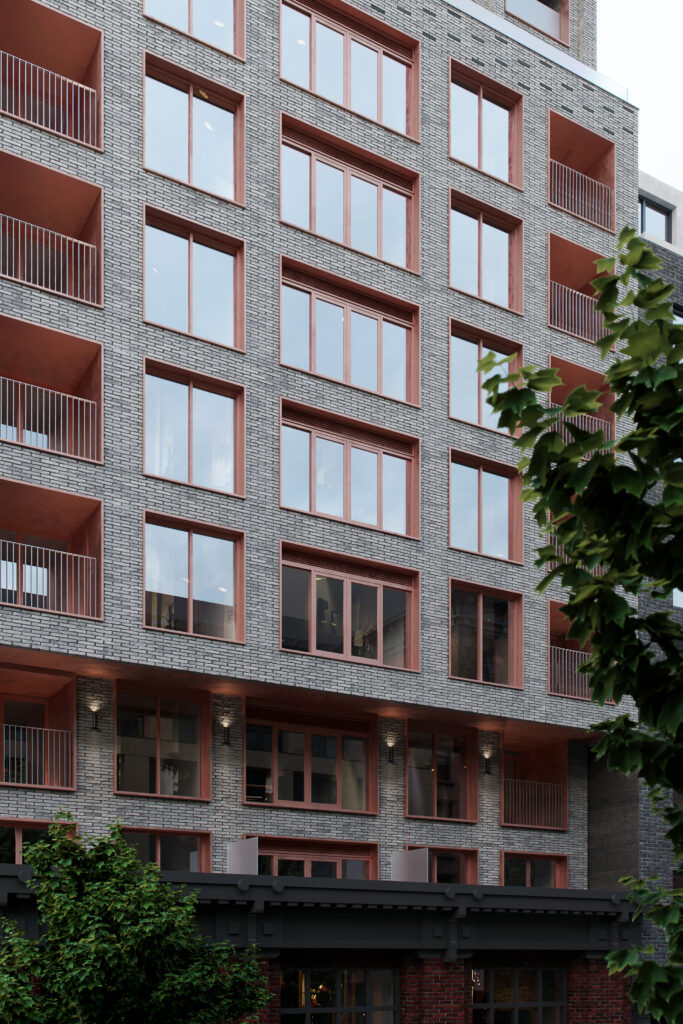
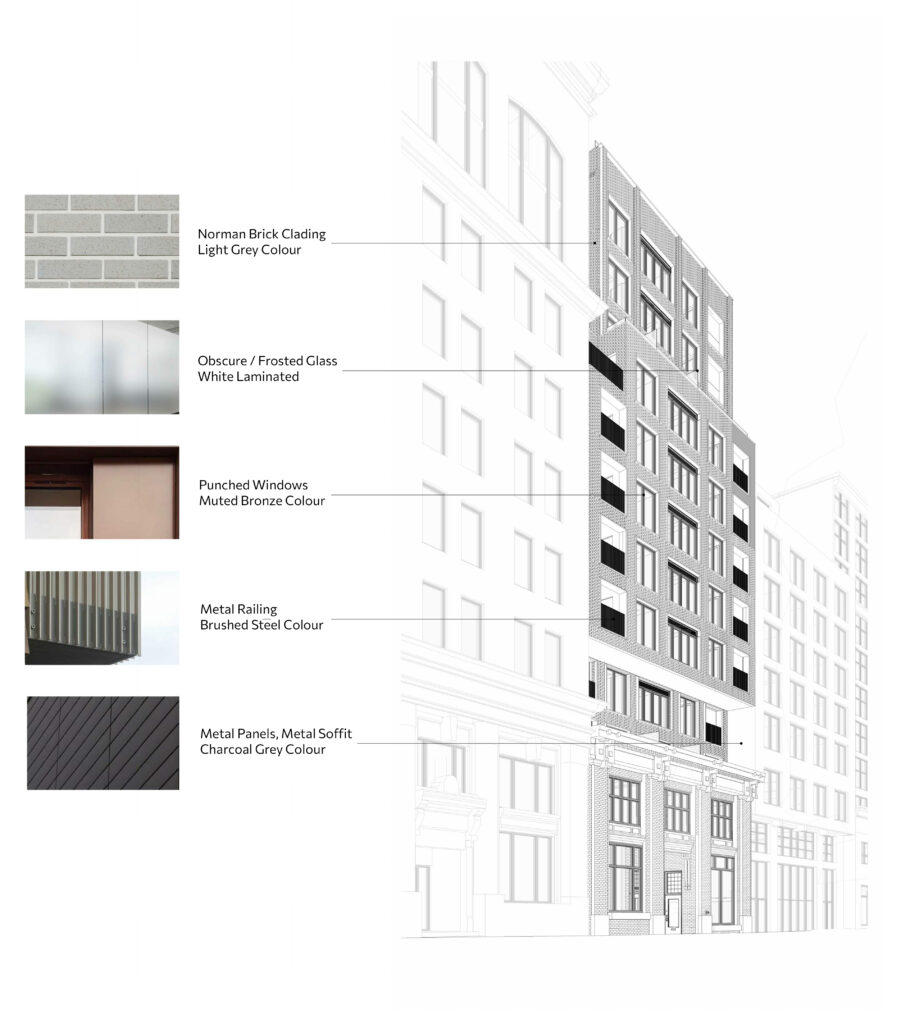
Material selection reinforces this narrative of heritage and evolution. While the original façade remains intact, the residential tower above is clad in light grey brick to complement but differentiate itself from the historic brickwork below. Punched window openings framed in bronze metal add warmth and refinement, while the top floors step back and continue the same material palette to align with surrounding architectural rhythms. Together, the retained heritage and the modern addition tell a unified story of preservation, city-building, and respectful transformation.
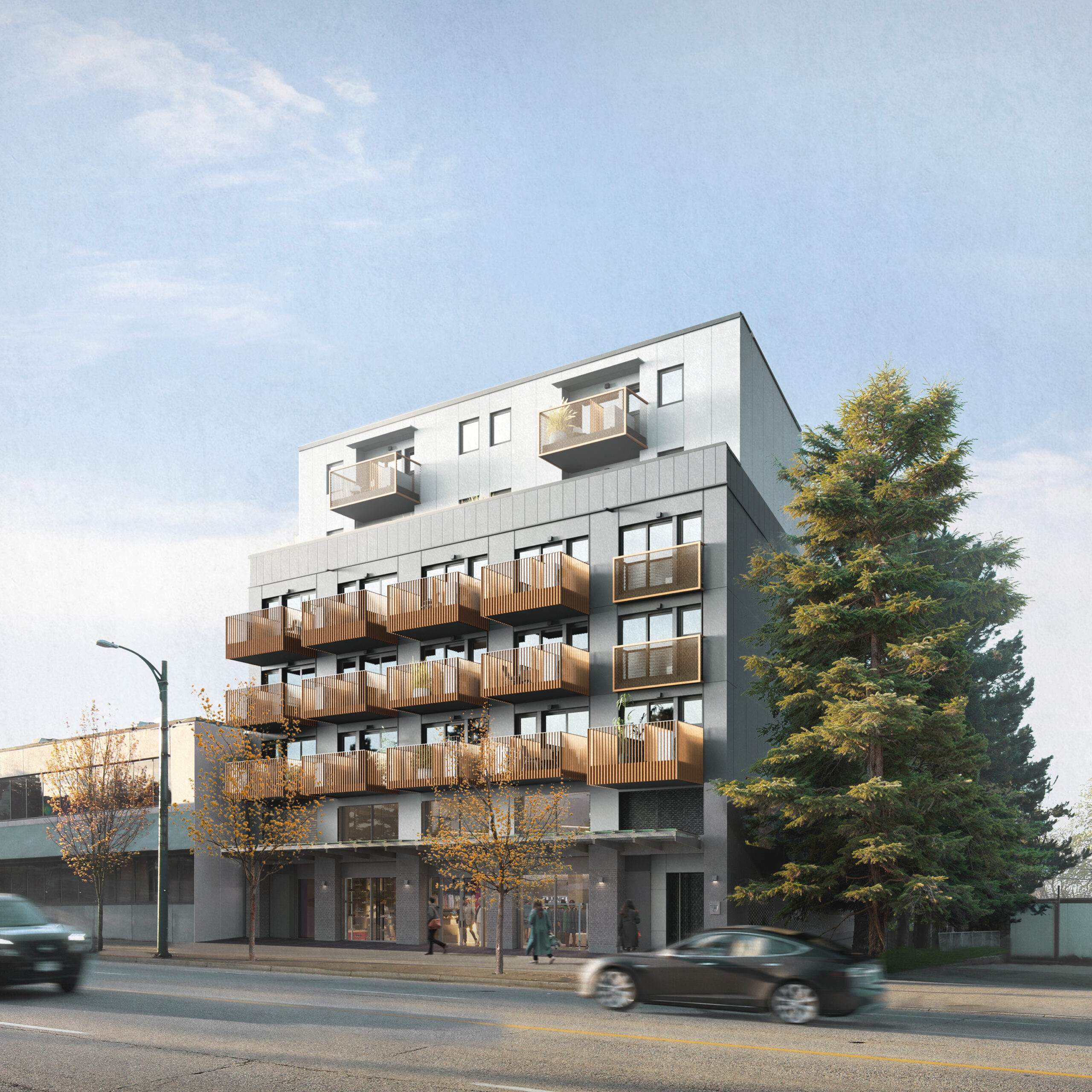
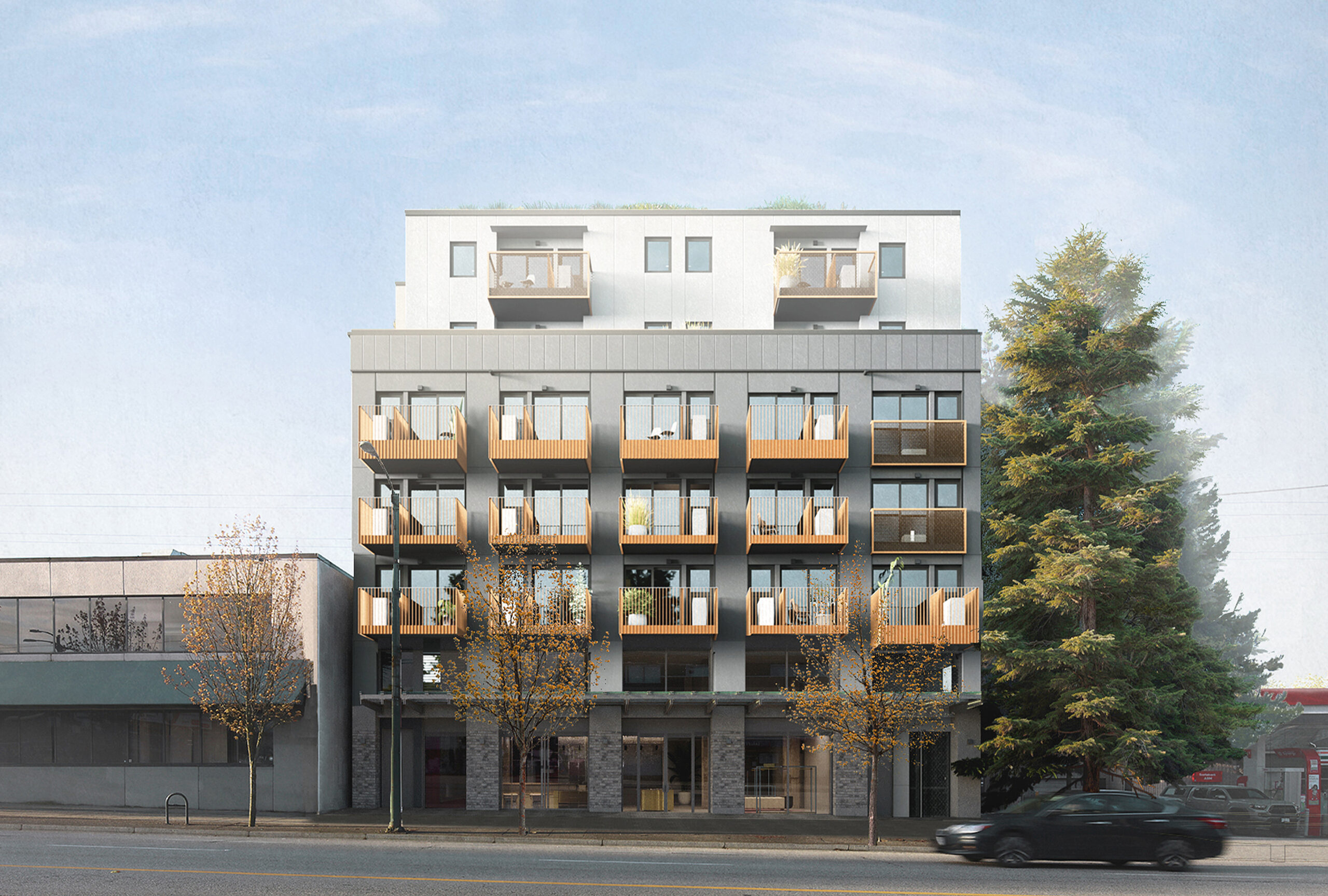
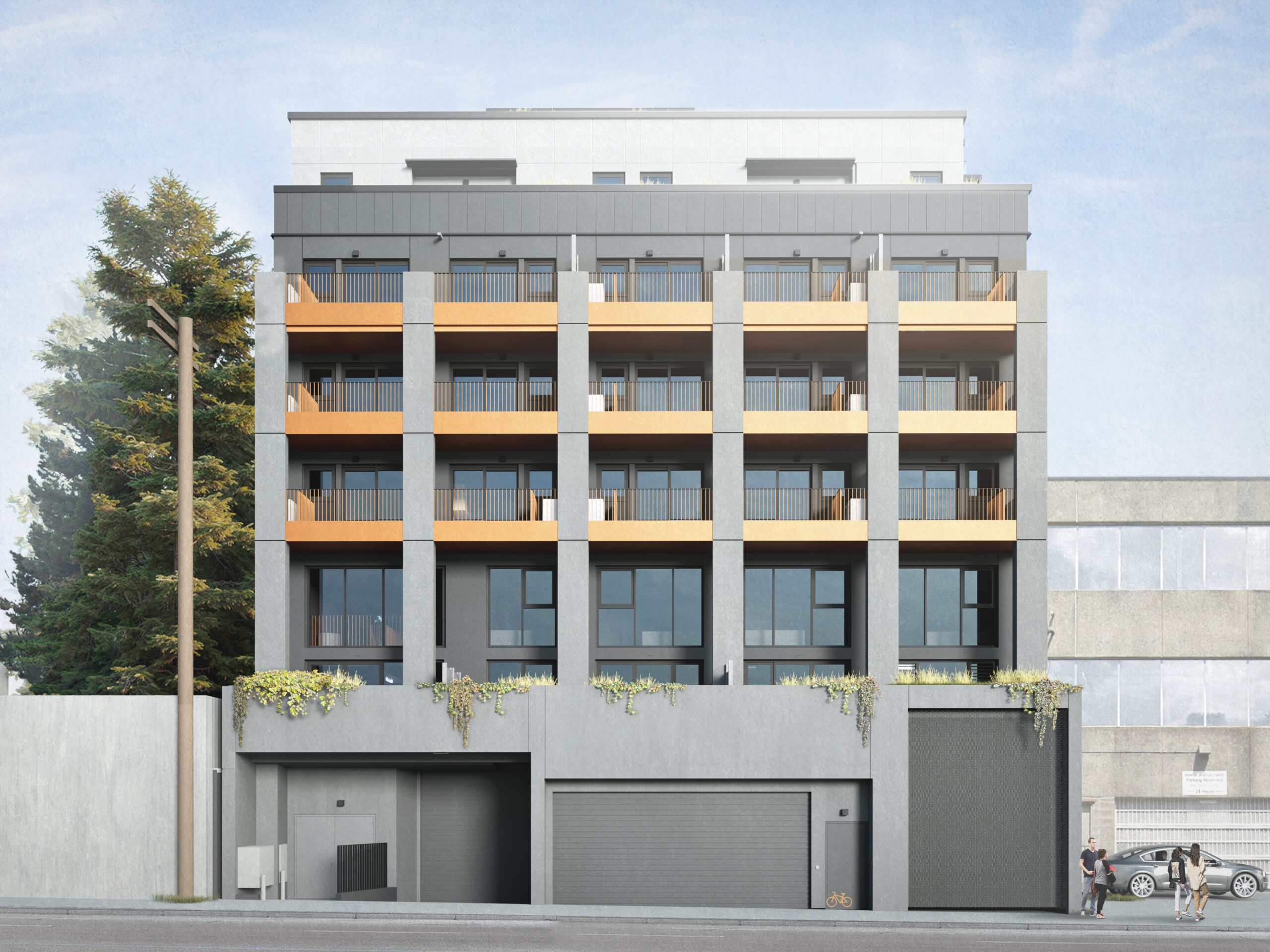
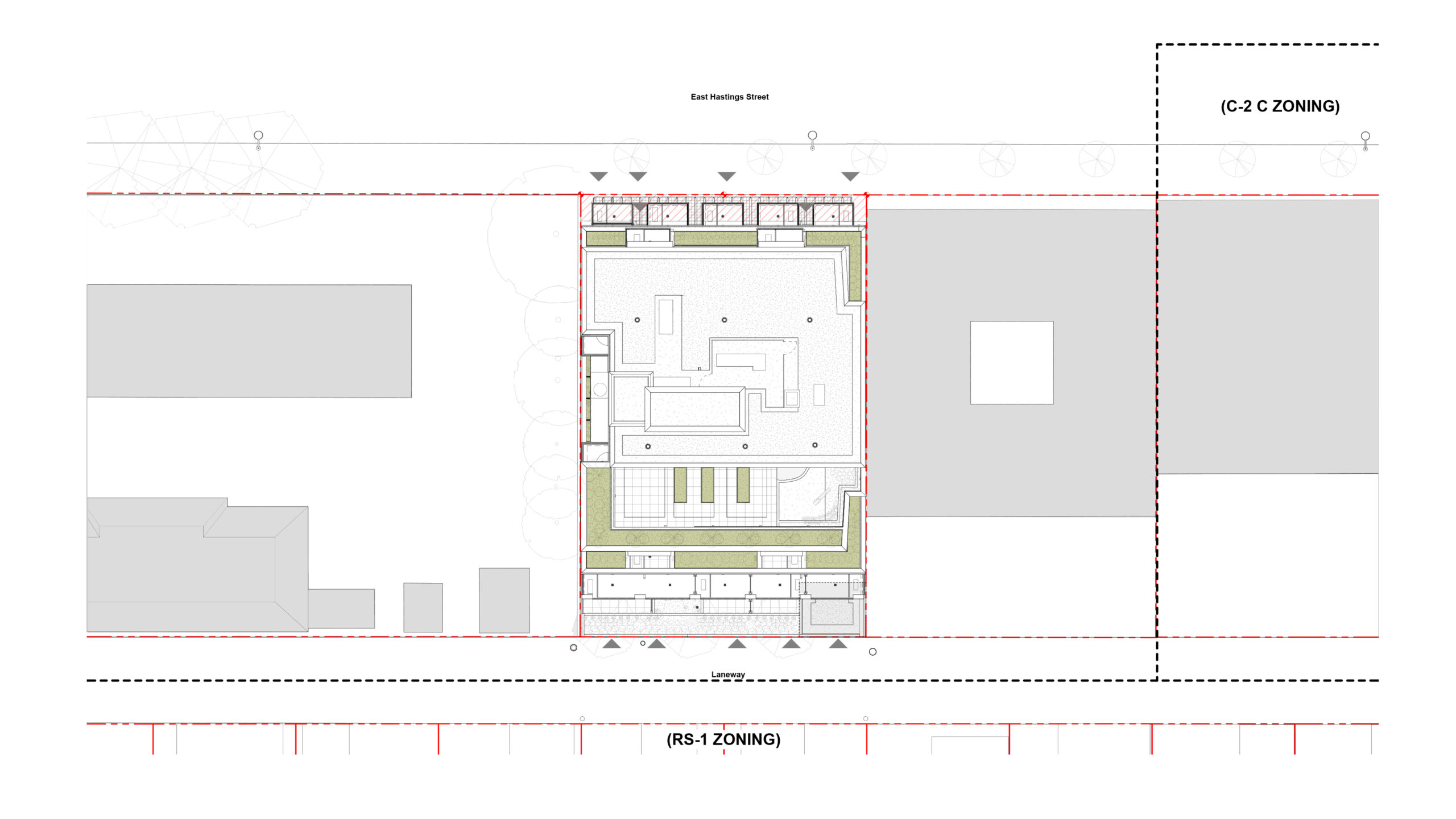
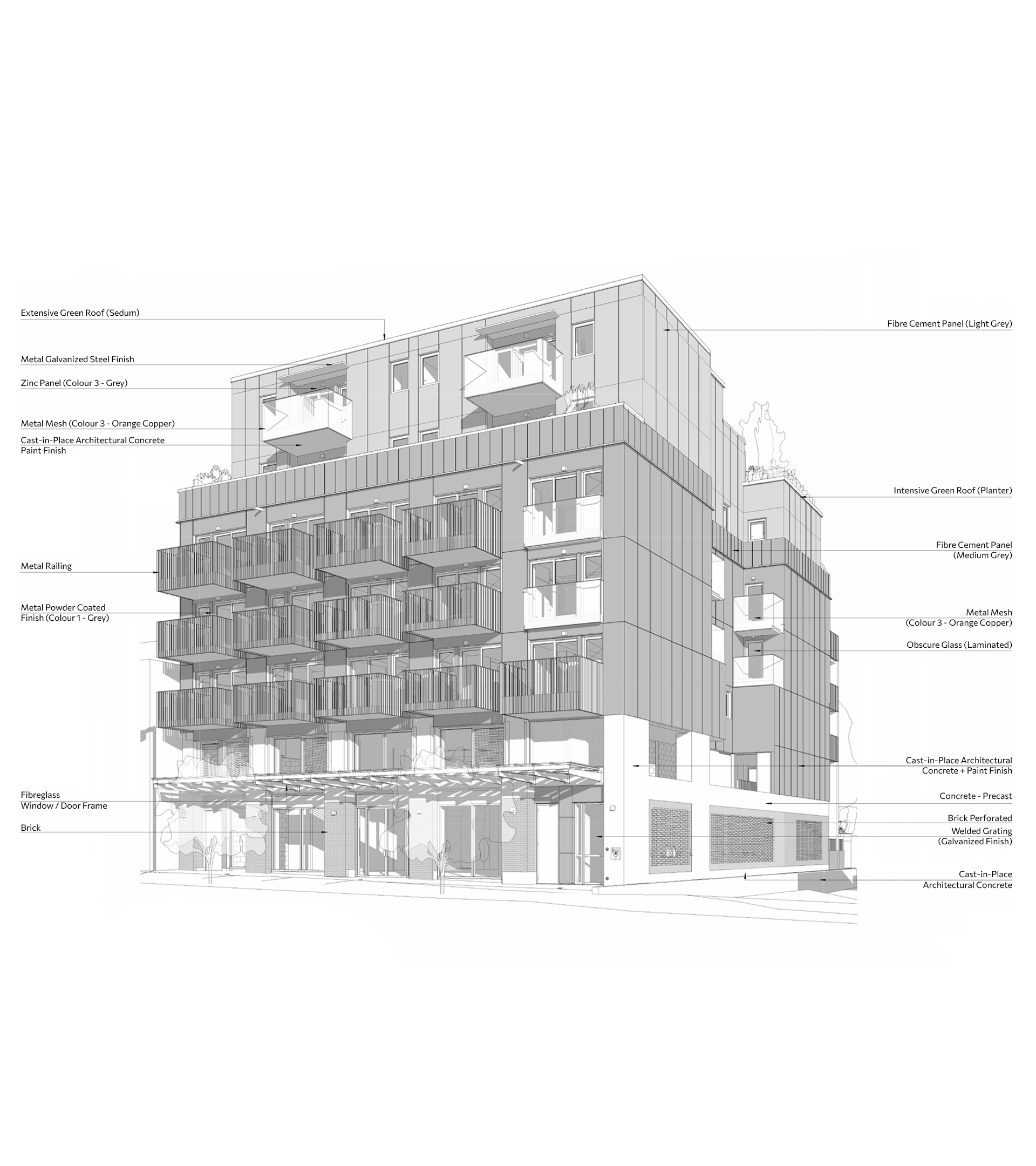
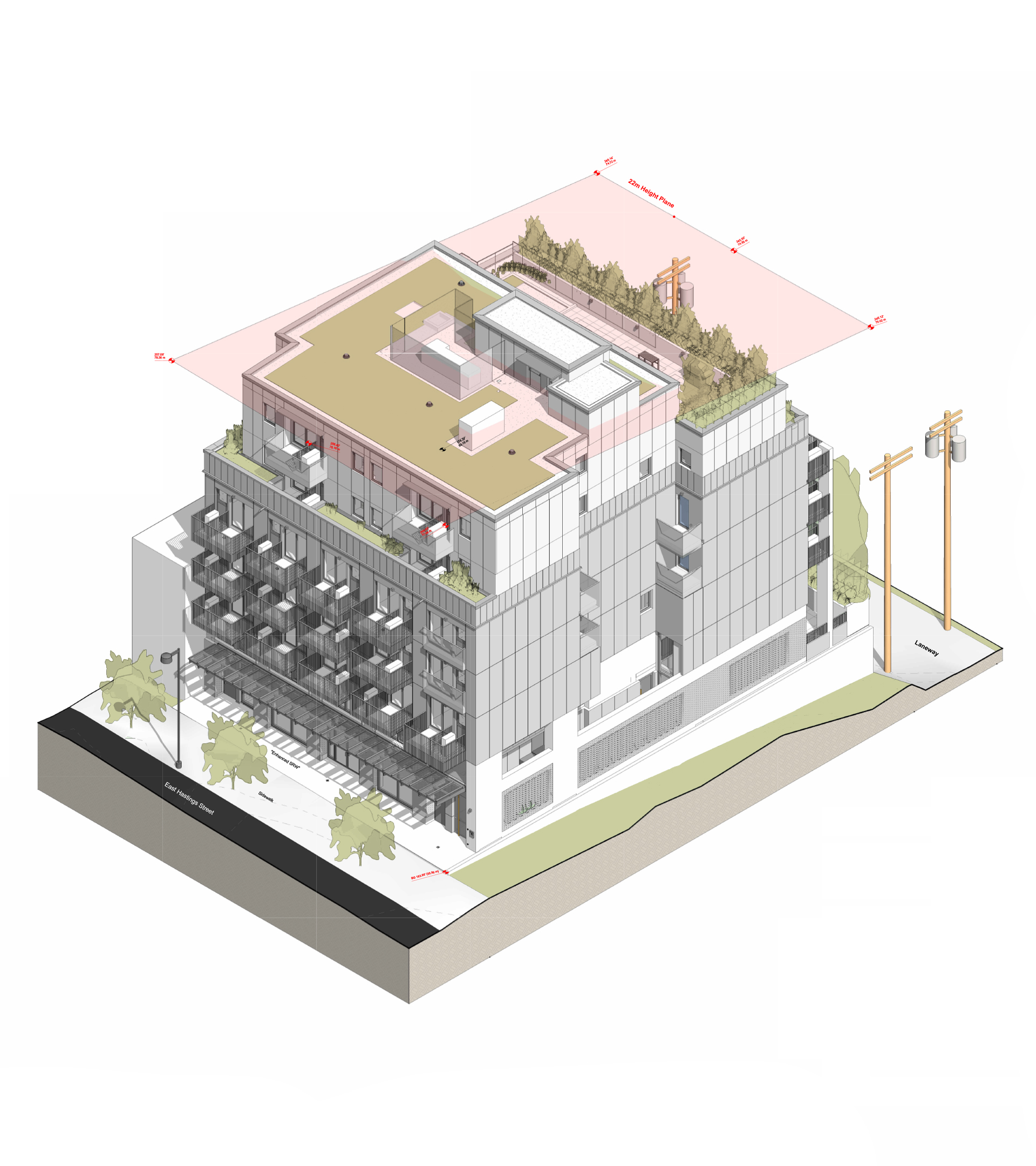
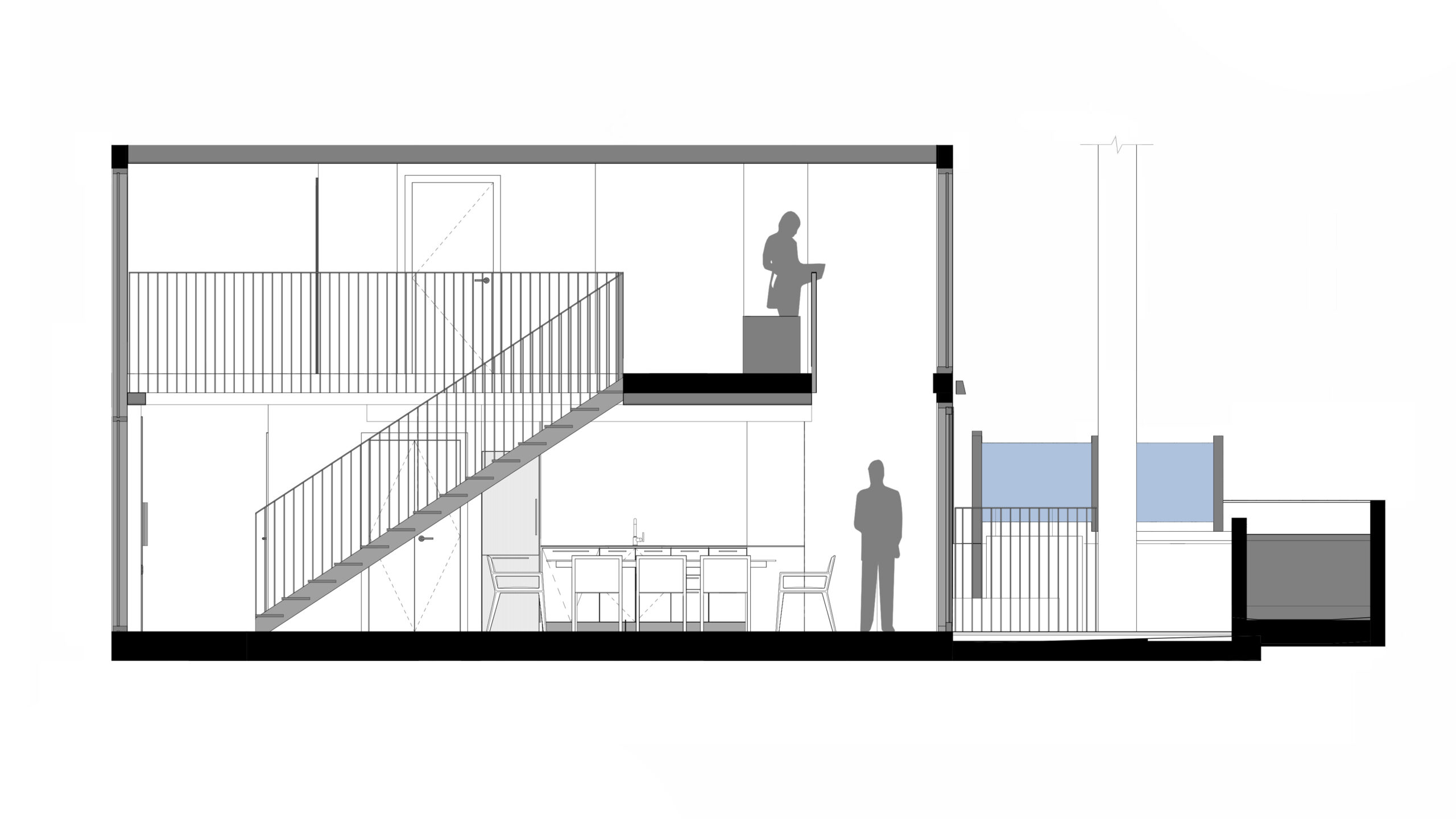
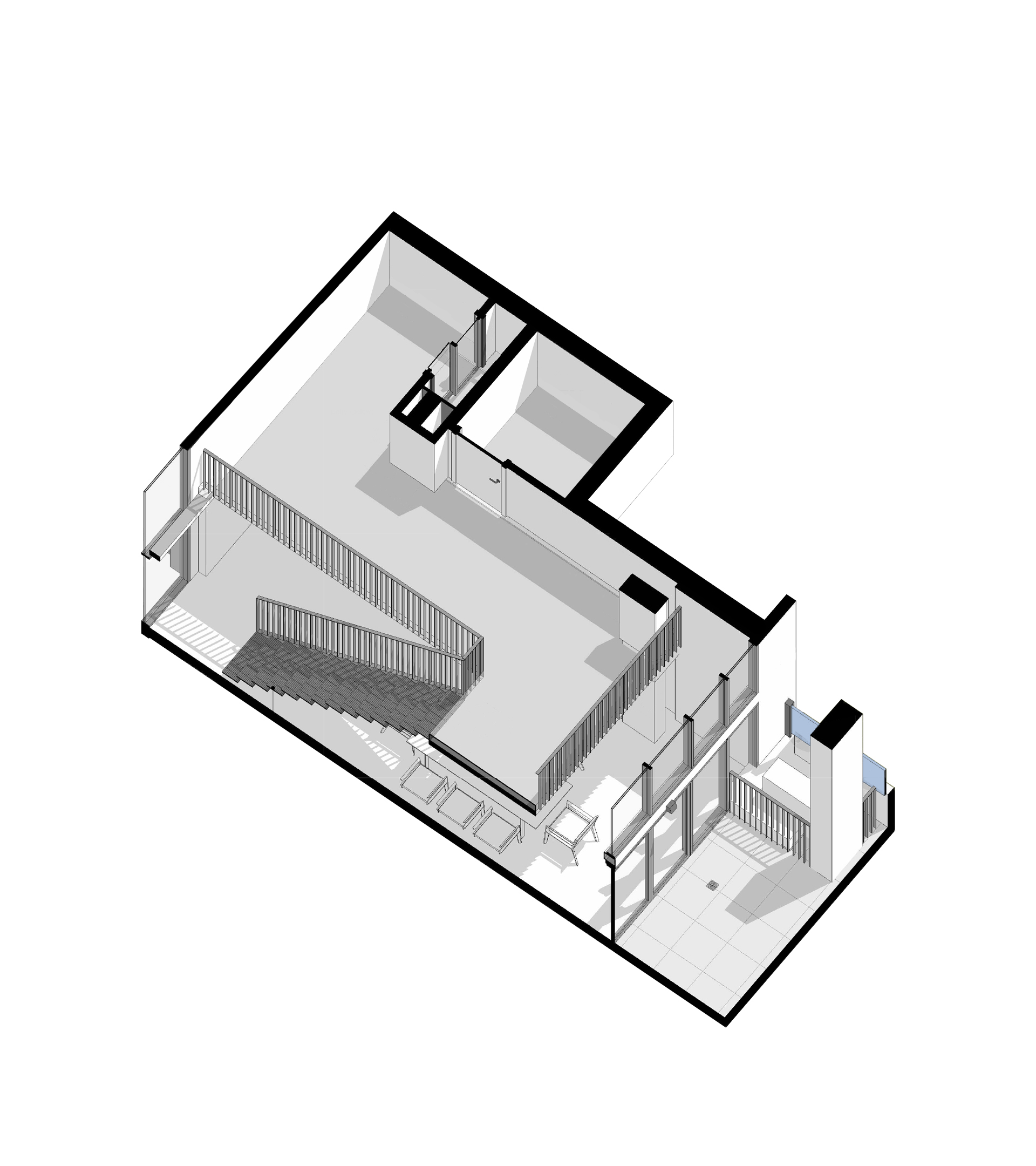
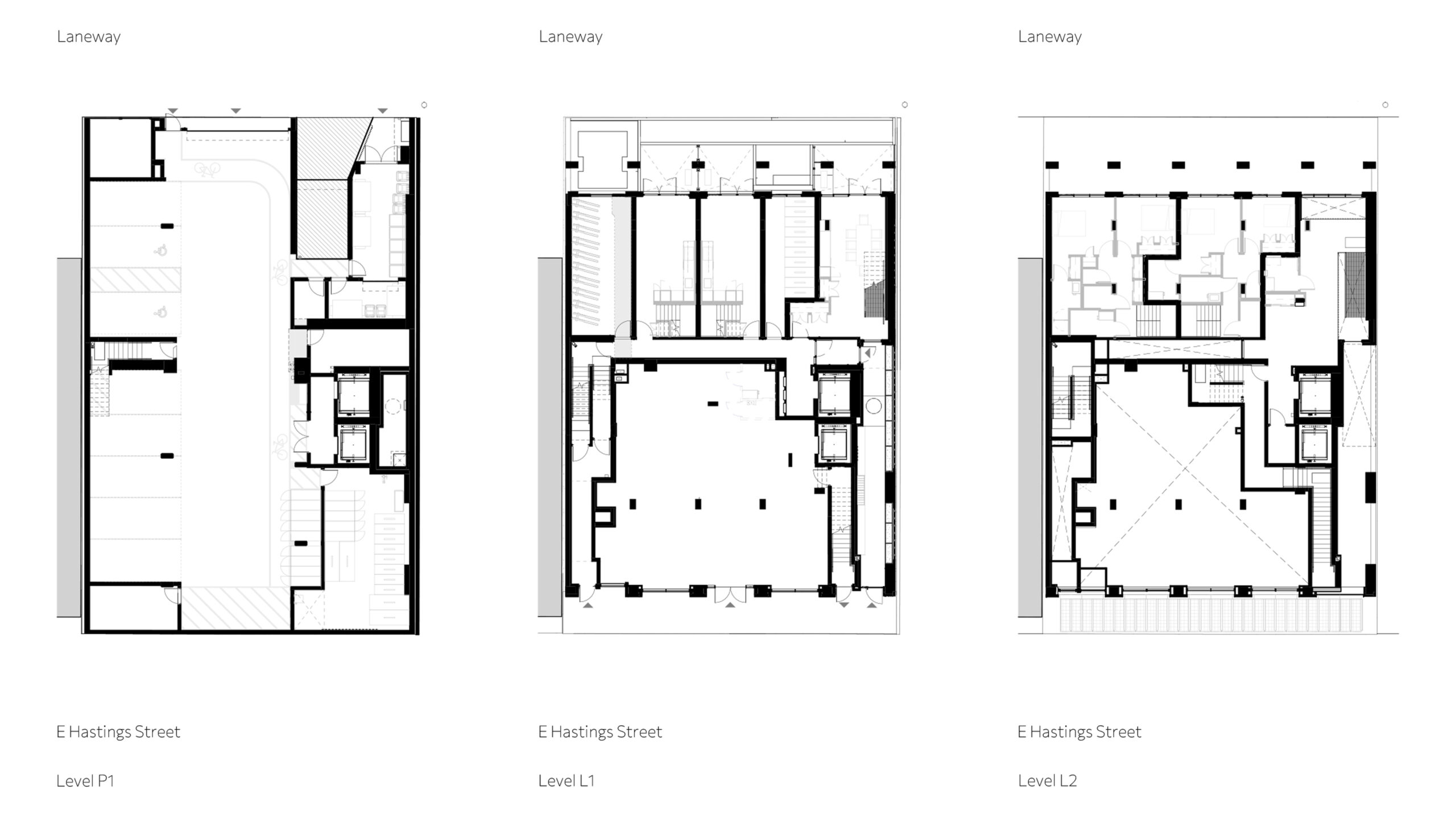
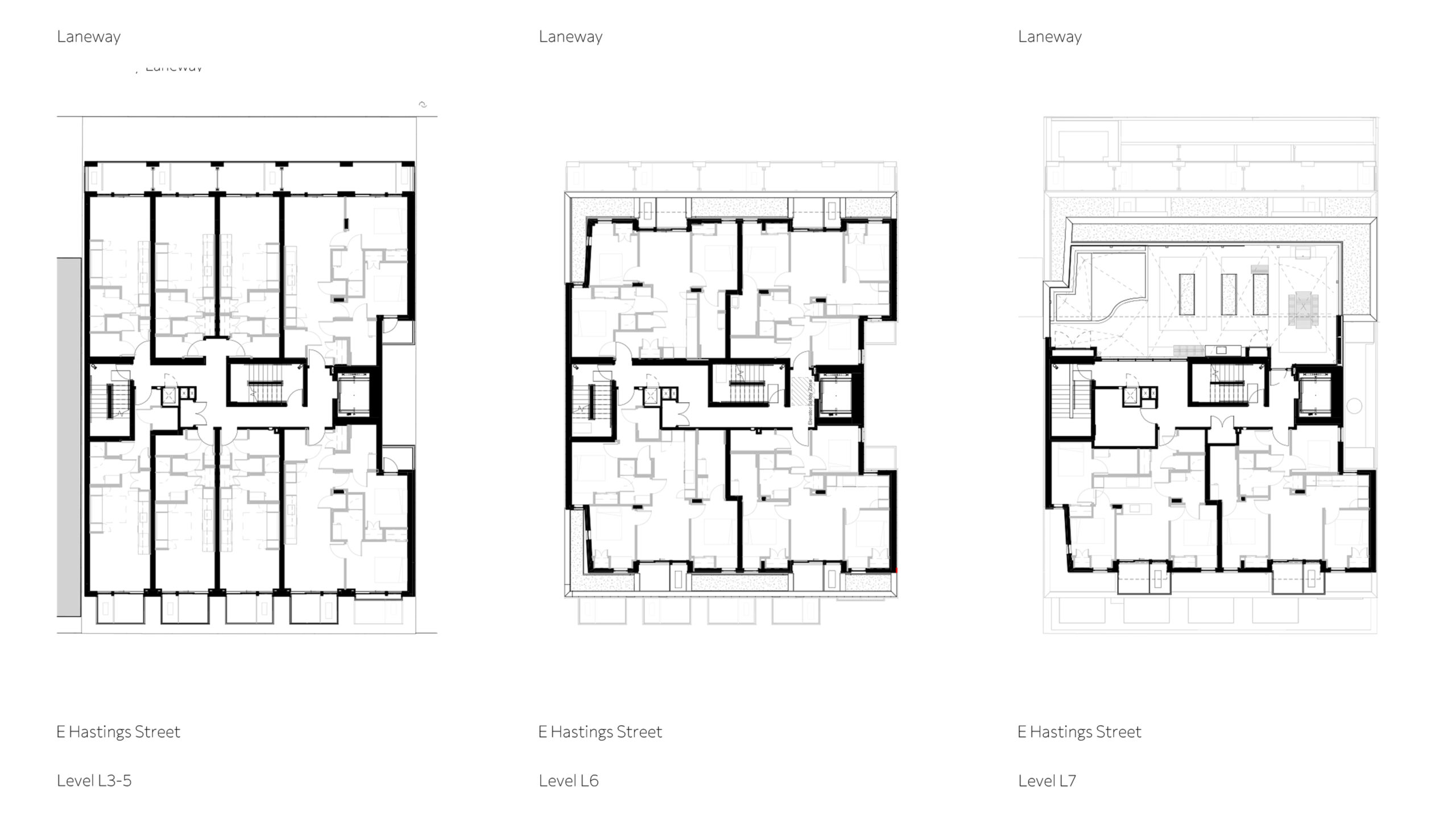
At 3532 East Hastings, the story is one of transformation—from a C-2C1 commercial site to a CD-1 mixed-use development that delivers much-needed secured rental housing. The six-storey street frontage (seven at the rear due to grade change) provides one commercial rental space at ground level and 34 purpose-built rental homes in a range of unit types, including a significant proportion of family units. The project aligns with the City of Vancouver’s Rental 100 and Rental Incentive Guidelines, supporting increased height and density to make long-term rental housing viable. Parking and bicycle facilities are accommodated below grade, accessed from the laneway.
Architecturally, the building tells a story of scale, texture, and public presence. A four-storey brick podium establishes a strong, durable street wall, while recessed, lighter metal cladding on the upper levels reduces visual massing and respects the neighbourhood context. Continuous canopies and a widened sidewalk enhance the pedestrian experience, reinforcing East Hastings as an active urban frontage. At the lane, the façade accommodates parkade and service access below, with residential terraces and sun-shading strategies above that create a thoughtful and livable rear elevation.
BreezewayAmenity Room
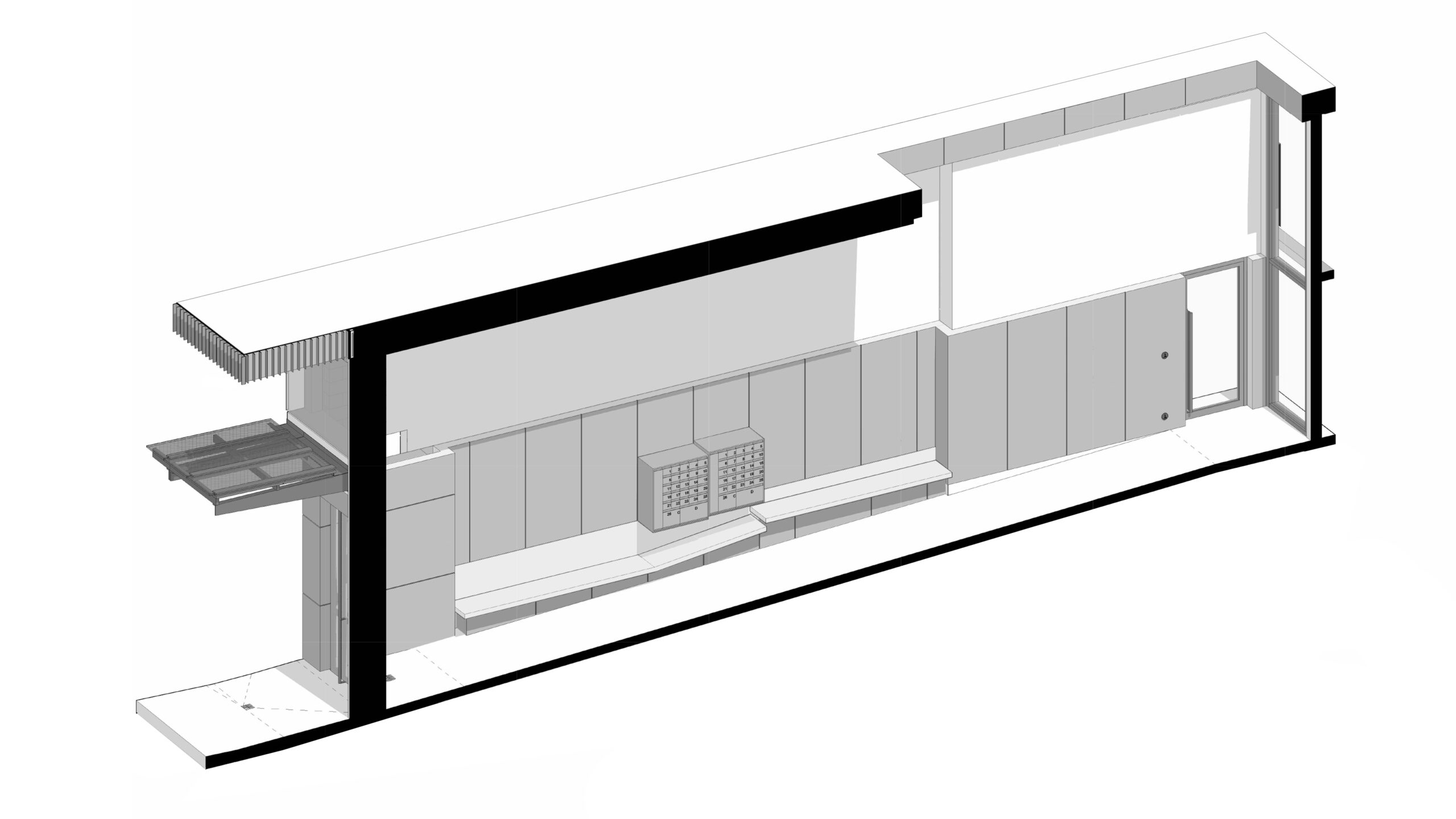
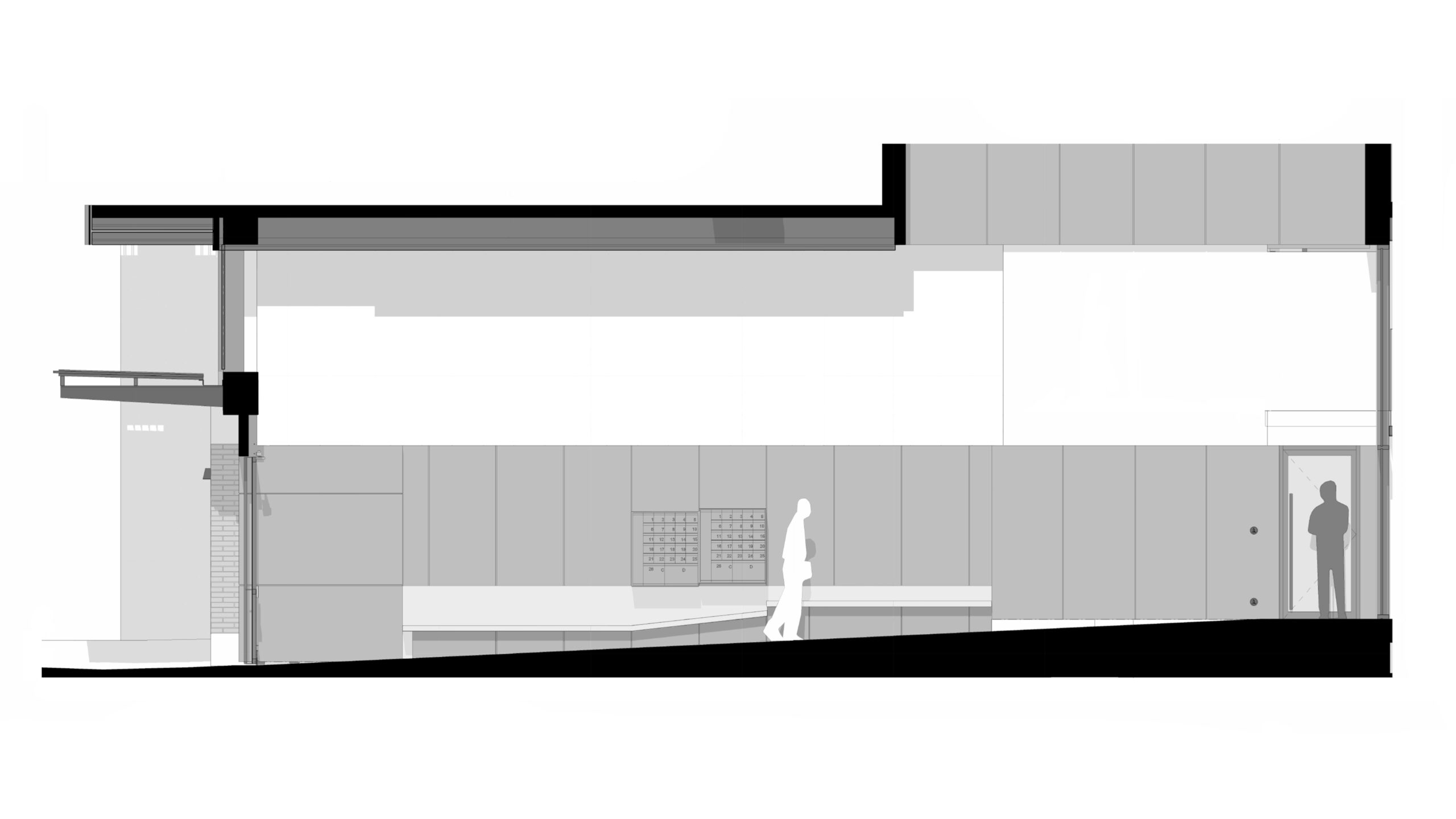
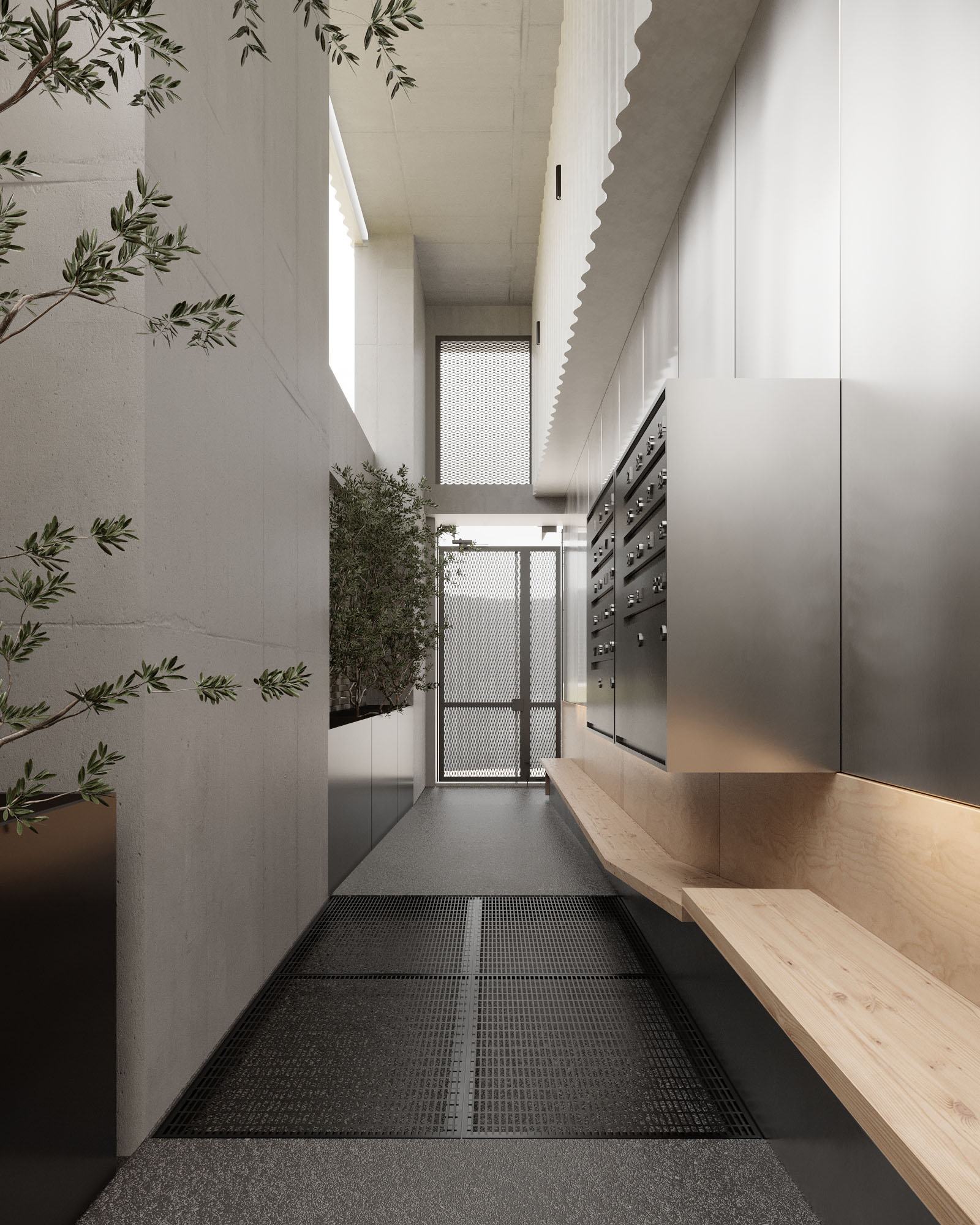
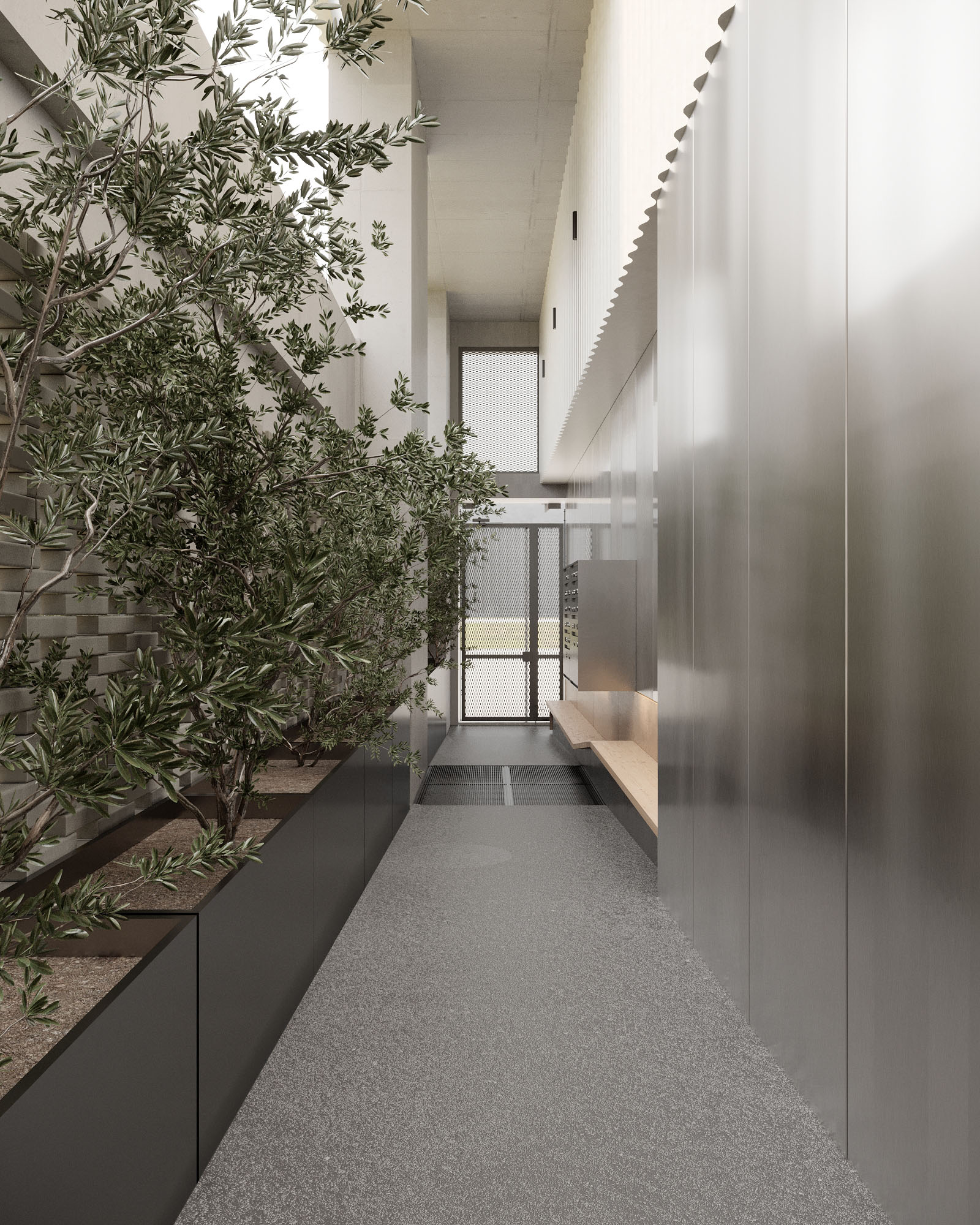
Internally, the design reinforces the narrative of livability and connection. A landscaped residential breezeway and multi-storey light-well introduce daylight, views, and a sense of openness into the building’s core—an approach that turns a compact site into a place of light and community. Rooftop and upper-level landscaping further soften massing while contributing usable outdoor space. Overall, the project makes efficient use of a challenging site, adds secured rental homes, and builds an architectural identity rooted in material quality, urban activation, and housing accessibility.
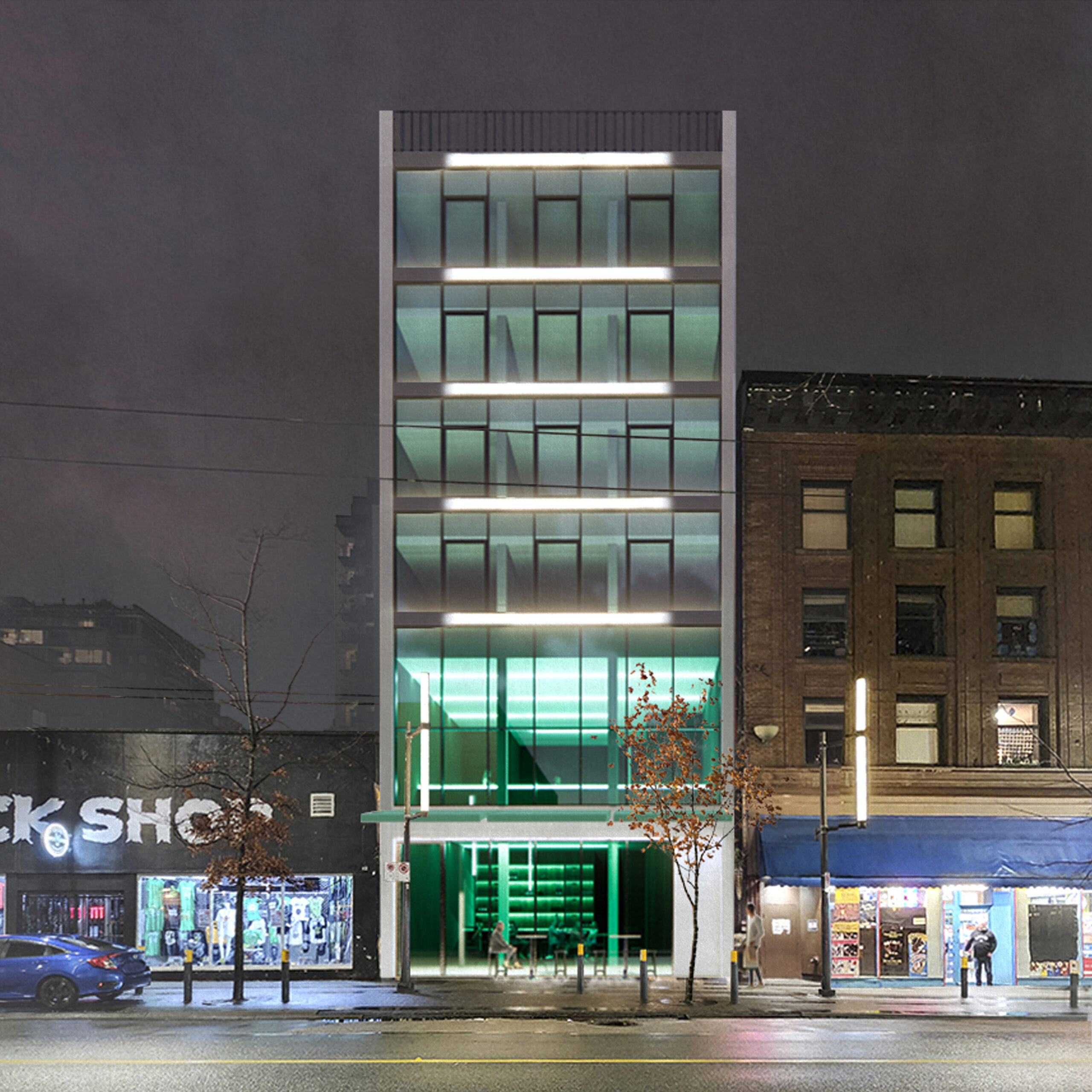
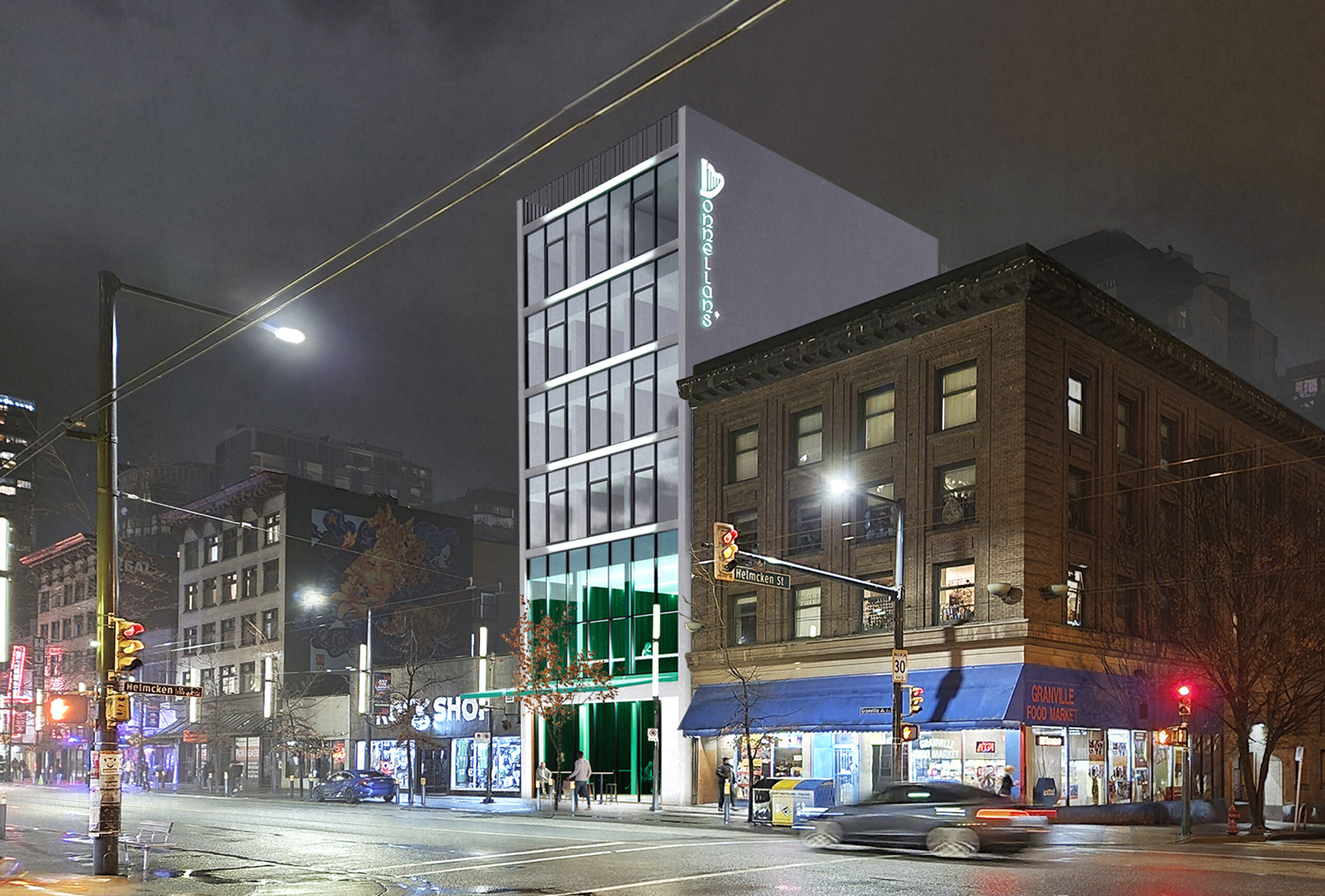
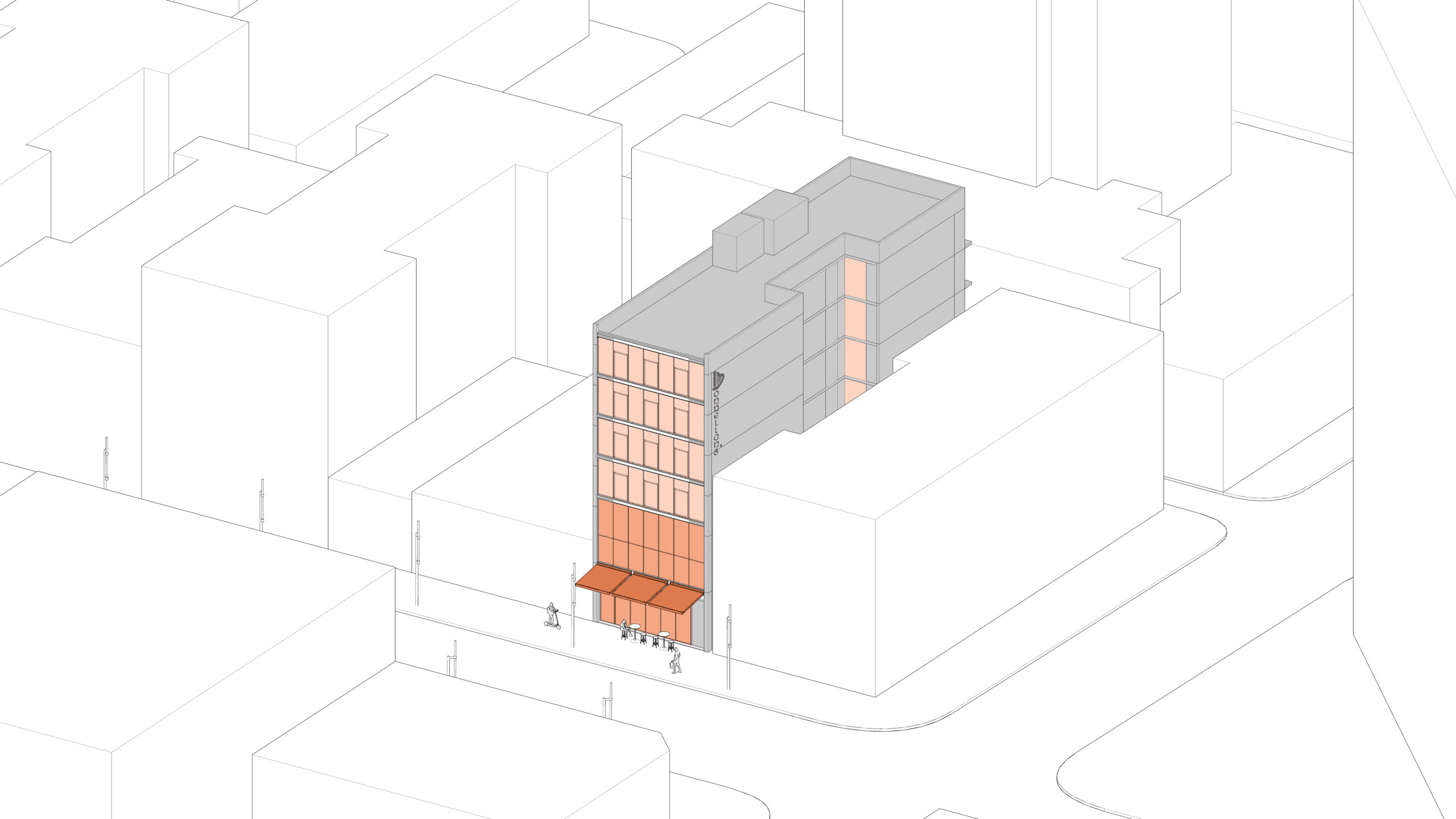
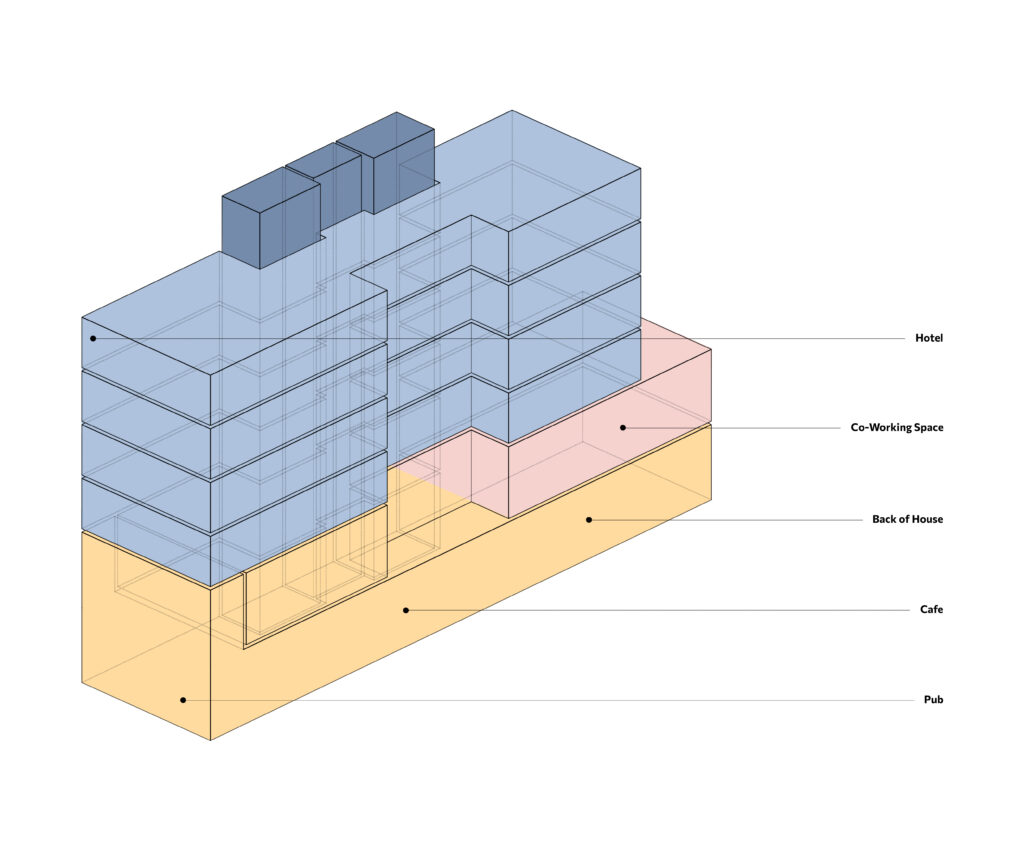
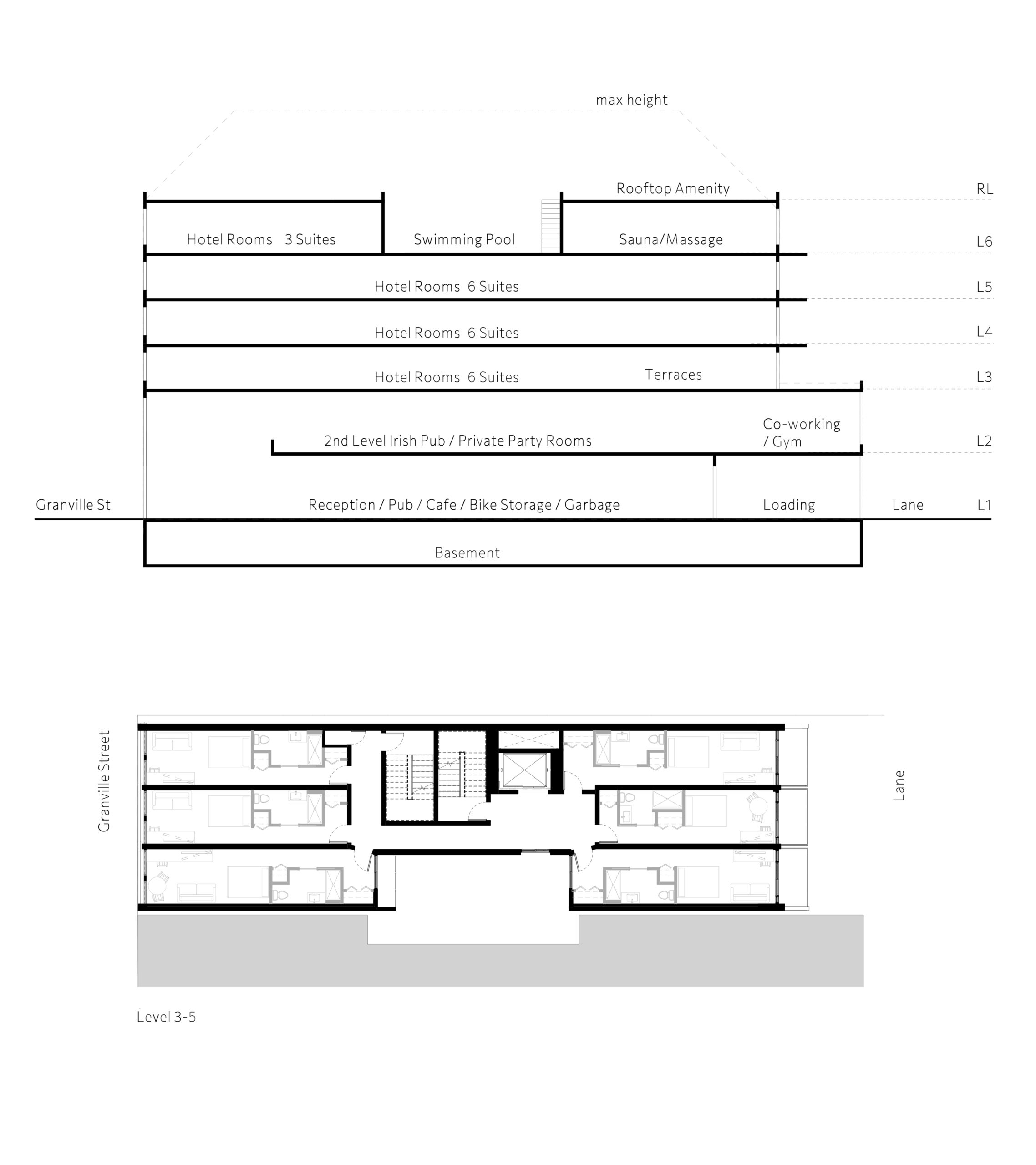
Located in the heart of downtown Vancouver, the six-storey mixed-use development at 1082 Granville Street introduces a contemporary urban landmark that blends hospitality, wellness, and flexible work-life spaces into one compact 13,440 sq.ft. footprint. The building features 21 short-term residential hotel suites above an active, publicly engaging ground plane that includes a café, pub, and amenity spaces such as a gym, co-working areas, and a sauna. The ground level is designed to immediately connect with the energy of Granville Street, while upper floors transition into more private and retreat-oriented environments for guests and tenants. A night-time façade strategy, expressed through illuminated horizontal bands and a transparent ground-floor entry, adds a striking visual presence to the entertainment district.
The design begins with the question: What story does this place need to tell? Situated between historic and eclectic neighboring buildings, the project seeks to contribute a contemporary chapter to Granville Street’s layered urban fabric. The massing and glazed expression are intentionally modern and minimal, creating a refined contrast while maintaining a strong human-scaled relationship to the street.
Interior program stacking is organized to support a gradient of experiences—from public to private, active to restorative—making the building not only a place to stay, but a destination for socializing, working, and recharging within Vancouver’s most vibrant downtown corridor.
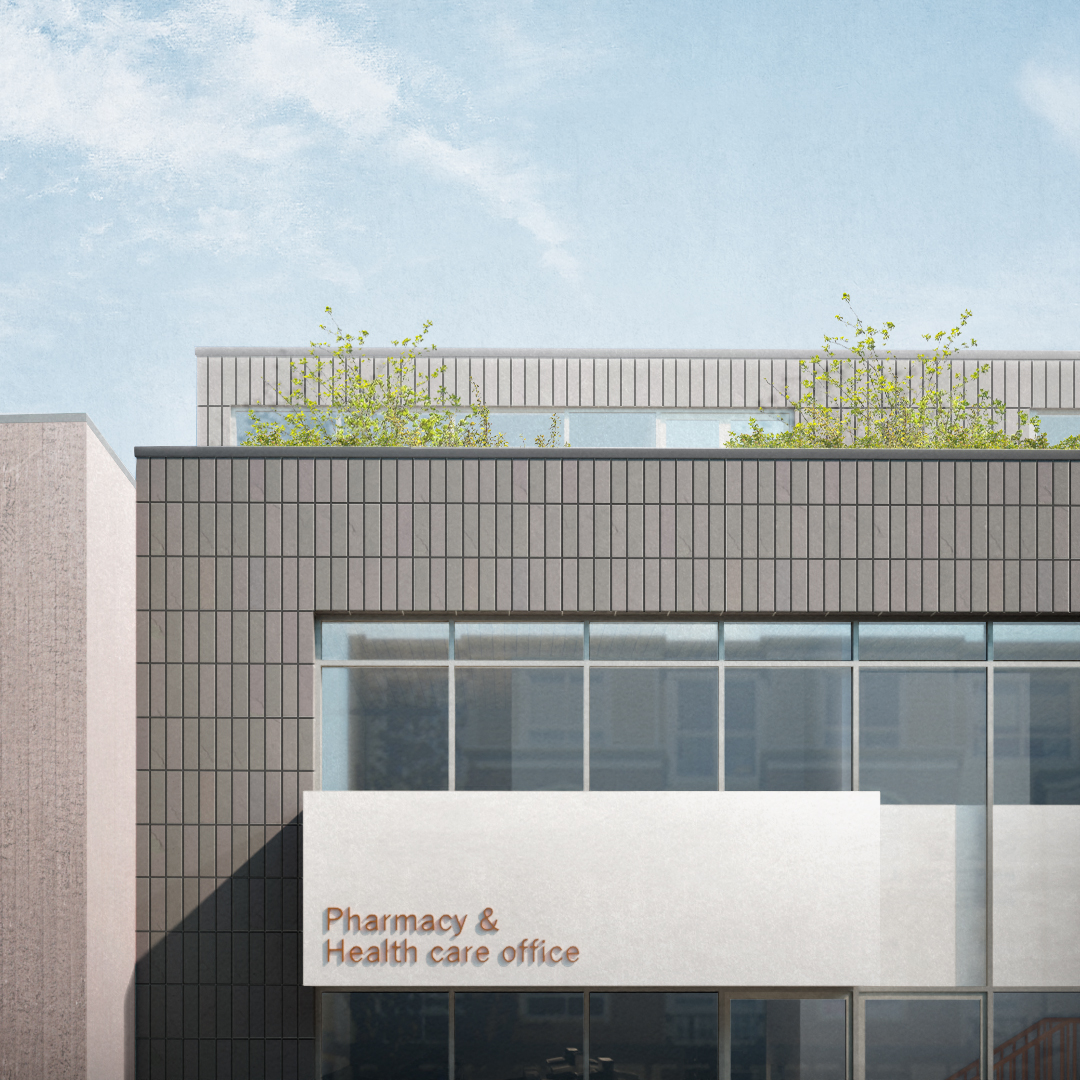
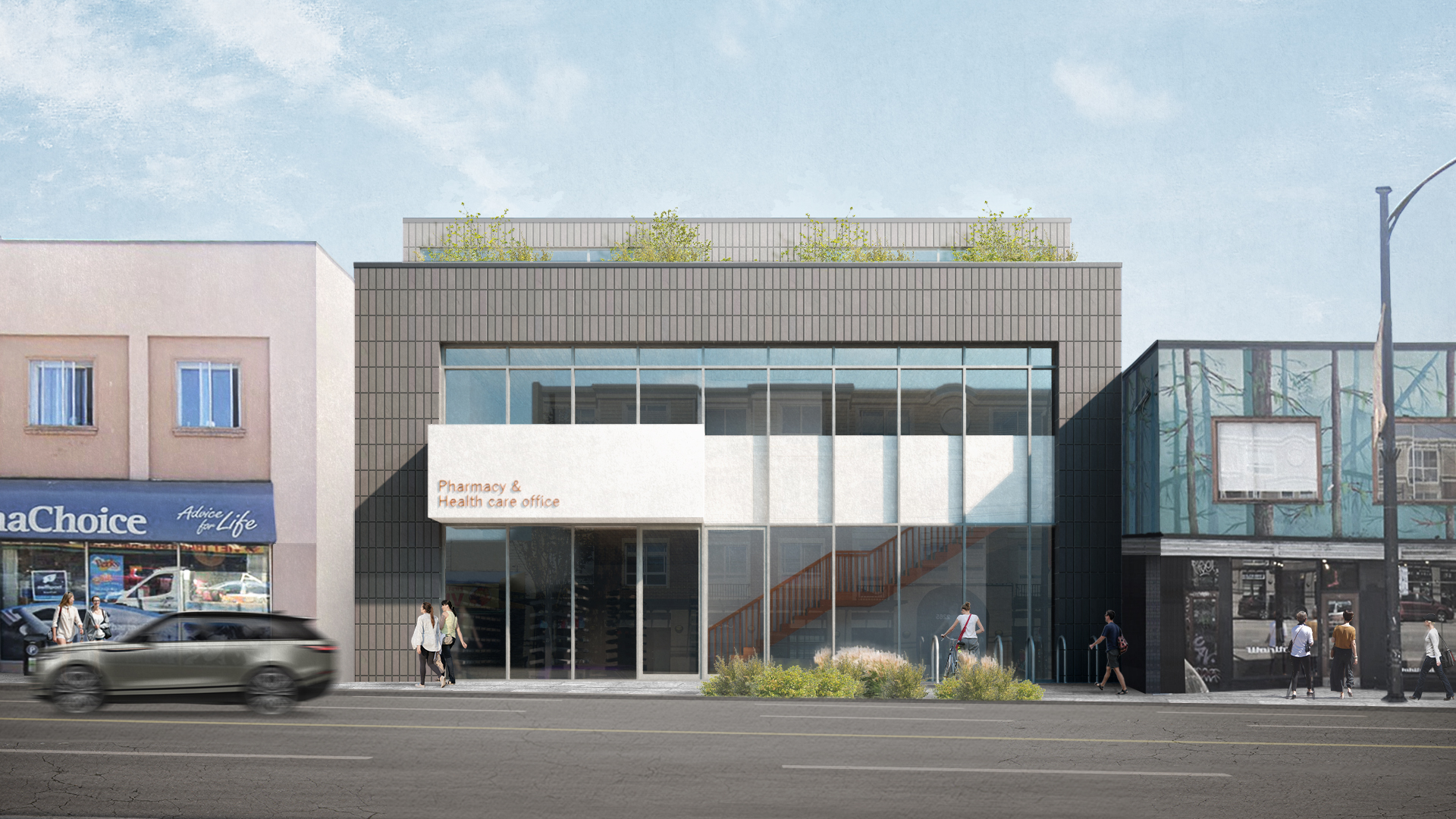
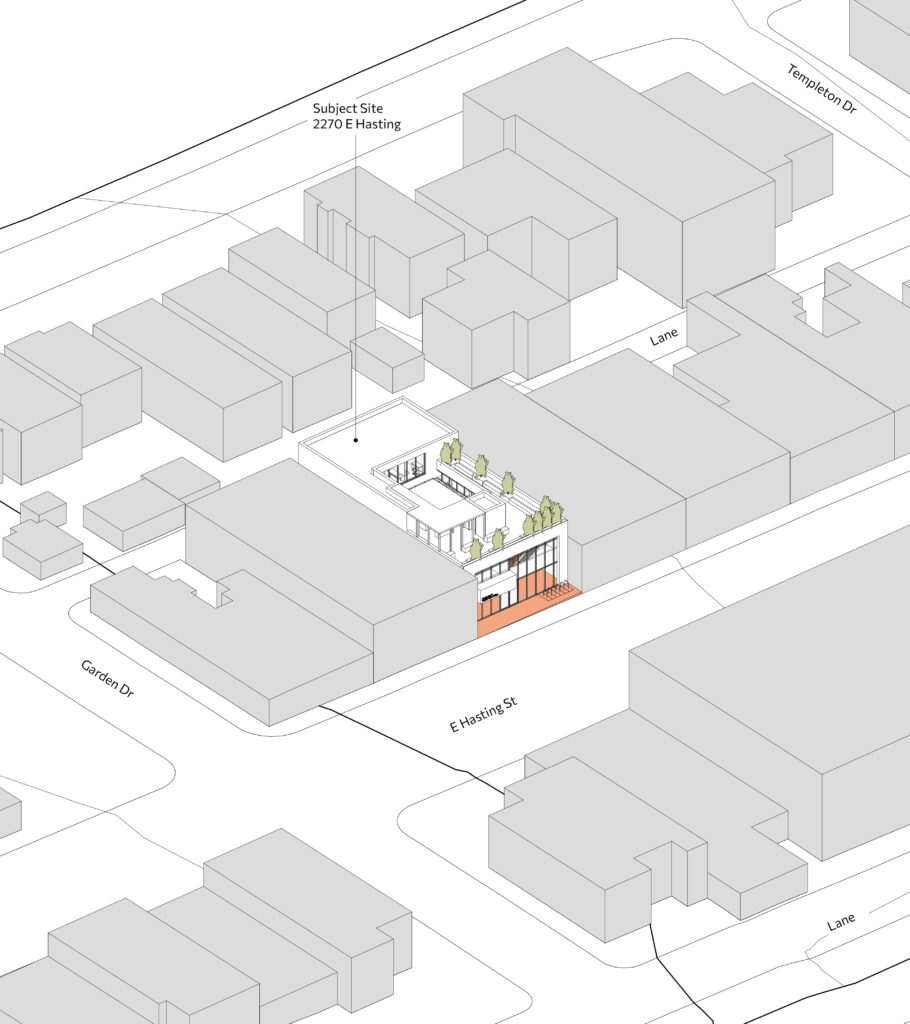
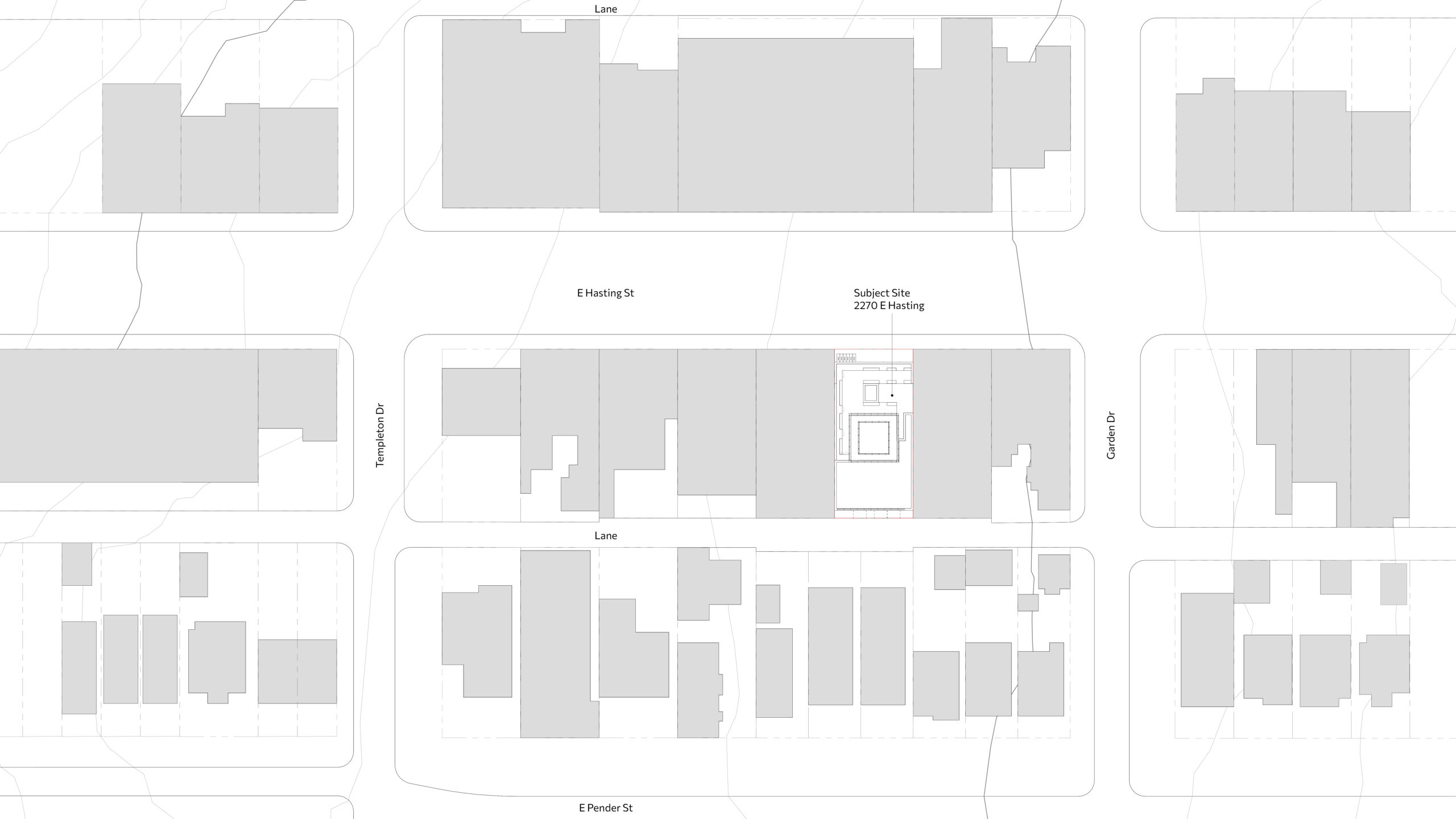
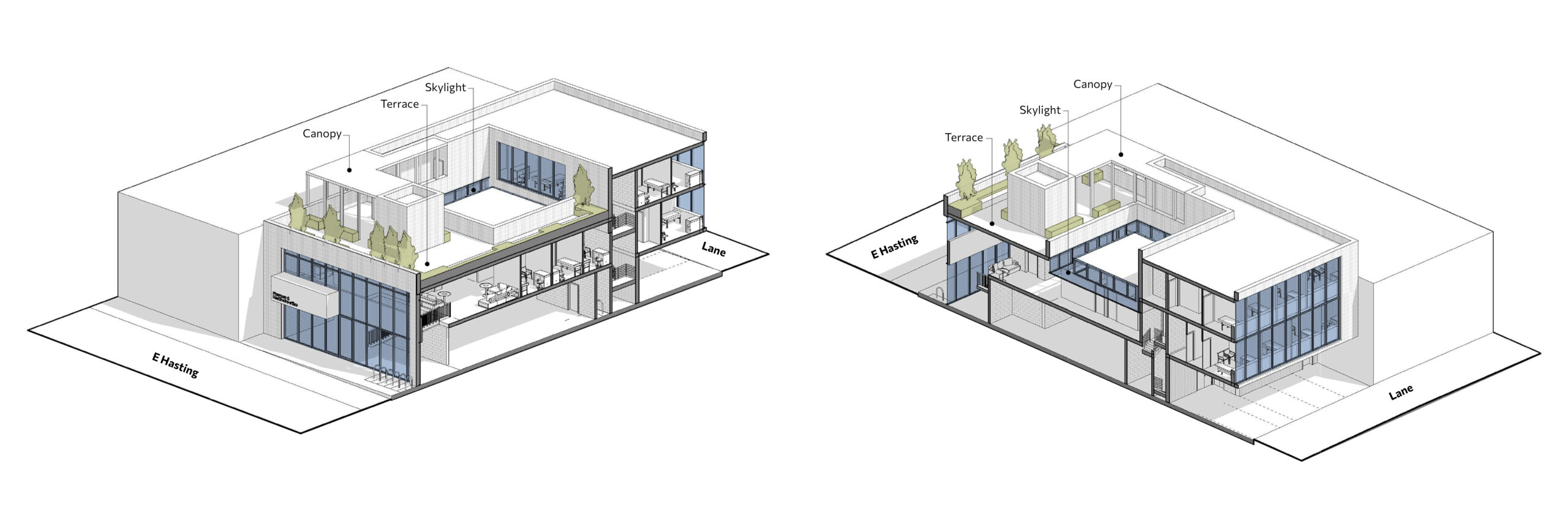
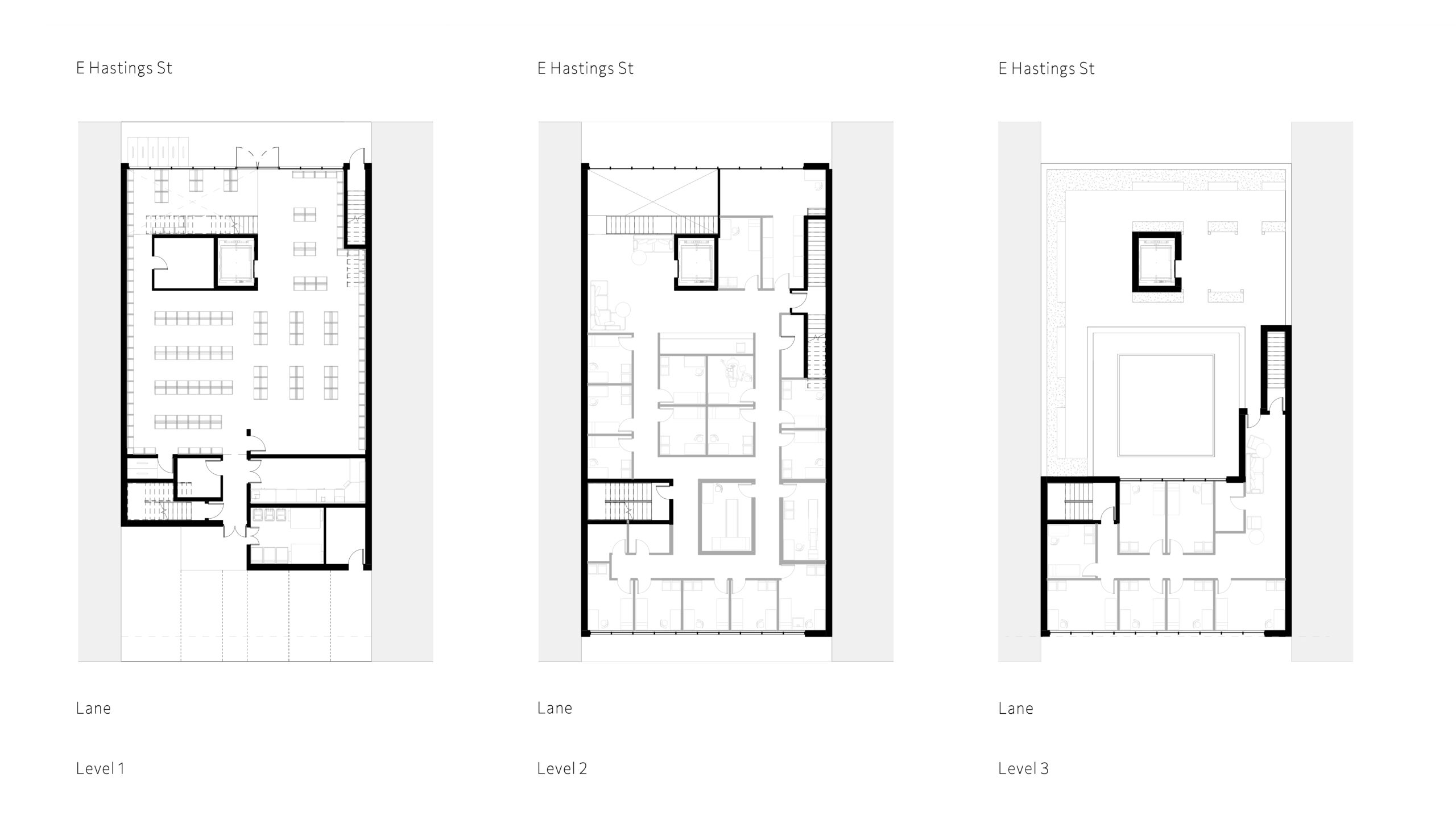
Located along East Hastings in Vancouver’s Grandview-Woodland neighborhood, this project is designed to serve a growing residential community with accessible, locally operated healthcare services. The client sought a pharmacy, medical clinic, and general office space within a modest budget, prompting the design team to ask: what story does this place need to tell? The result is a building that reflects practicality, community value, and a strong urban presence without the need for rezoning or costly underground construction.
The two-storey form maintains the fine-grain scale of the streetscape while presenting a contemporary identity. A fully glazed ground floor brings daylight deep into the pharmacy and clinic spaces and creates an active dialogue with the street. Above, a stepped-back second level provides efficient workplace space and access to a rooftop terrace, offering outdoor amenity for staff and views back to the neighborhood.
Material selection emphasizes durability and clarity: vertical cladding, generous glazing, and a simple projecting signage canopy establish a refined, approachable façade. Rear-lane access and secure bike storage allow the project to avoid expensive structured parking, keeping the development feasible for the owner-operators.
Through its form, material expression, and careful response to context, 2270 E Hastings tells the story of a neighborhood-focused building—one rooted in community needs, scaled to its surroundings, and designed to serve Grandview-Woodland as it continues to grow.
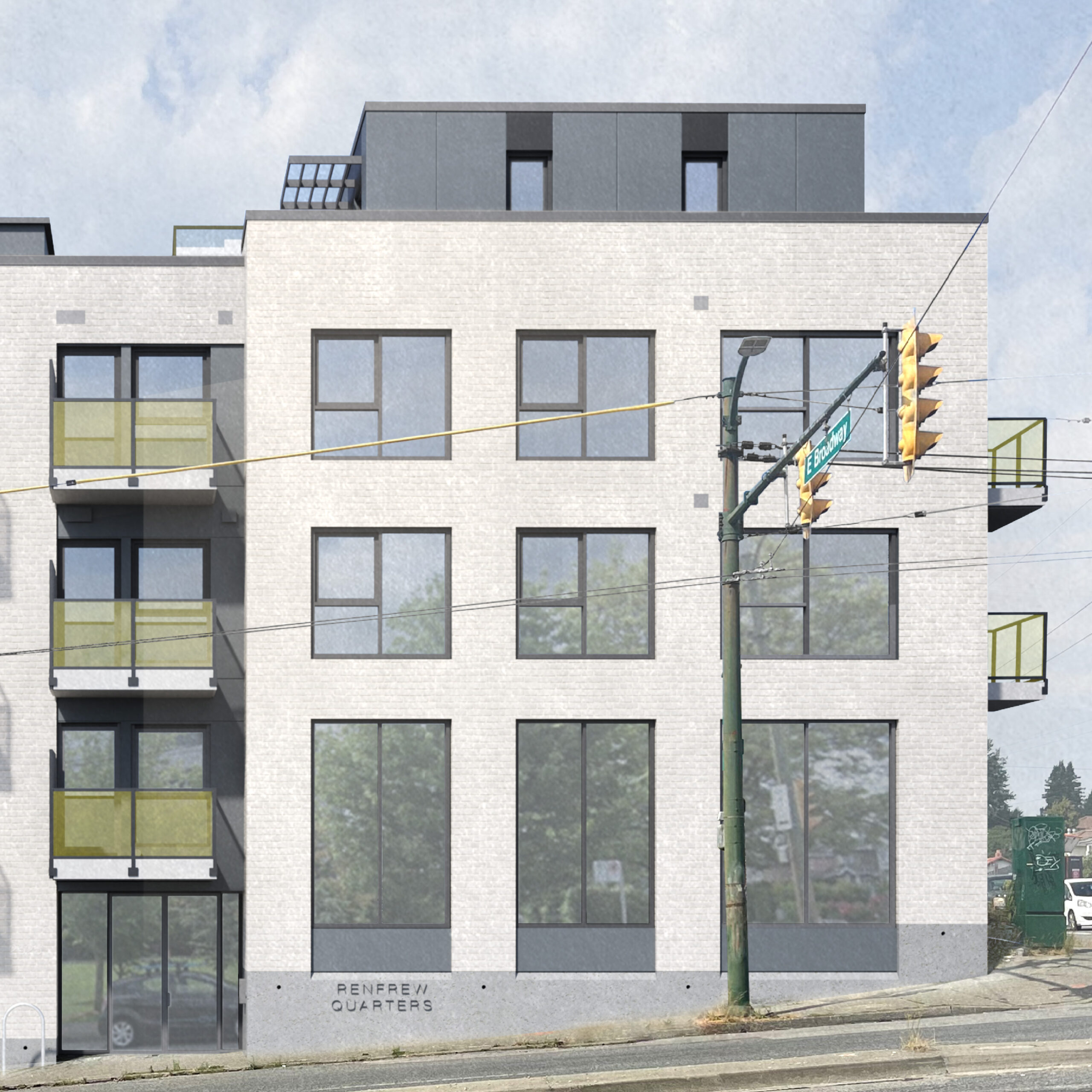
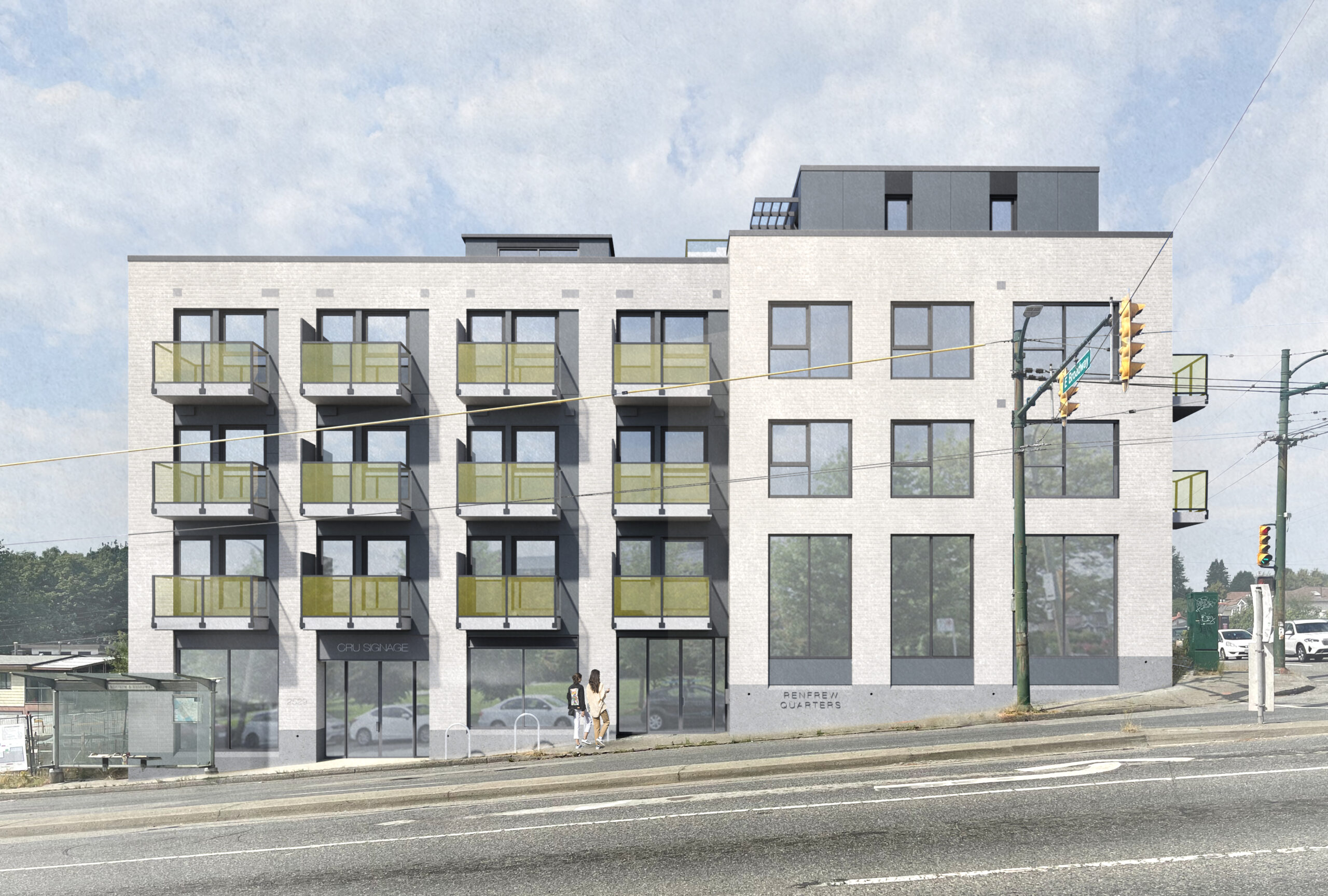
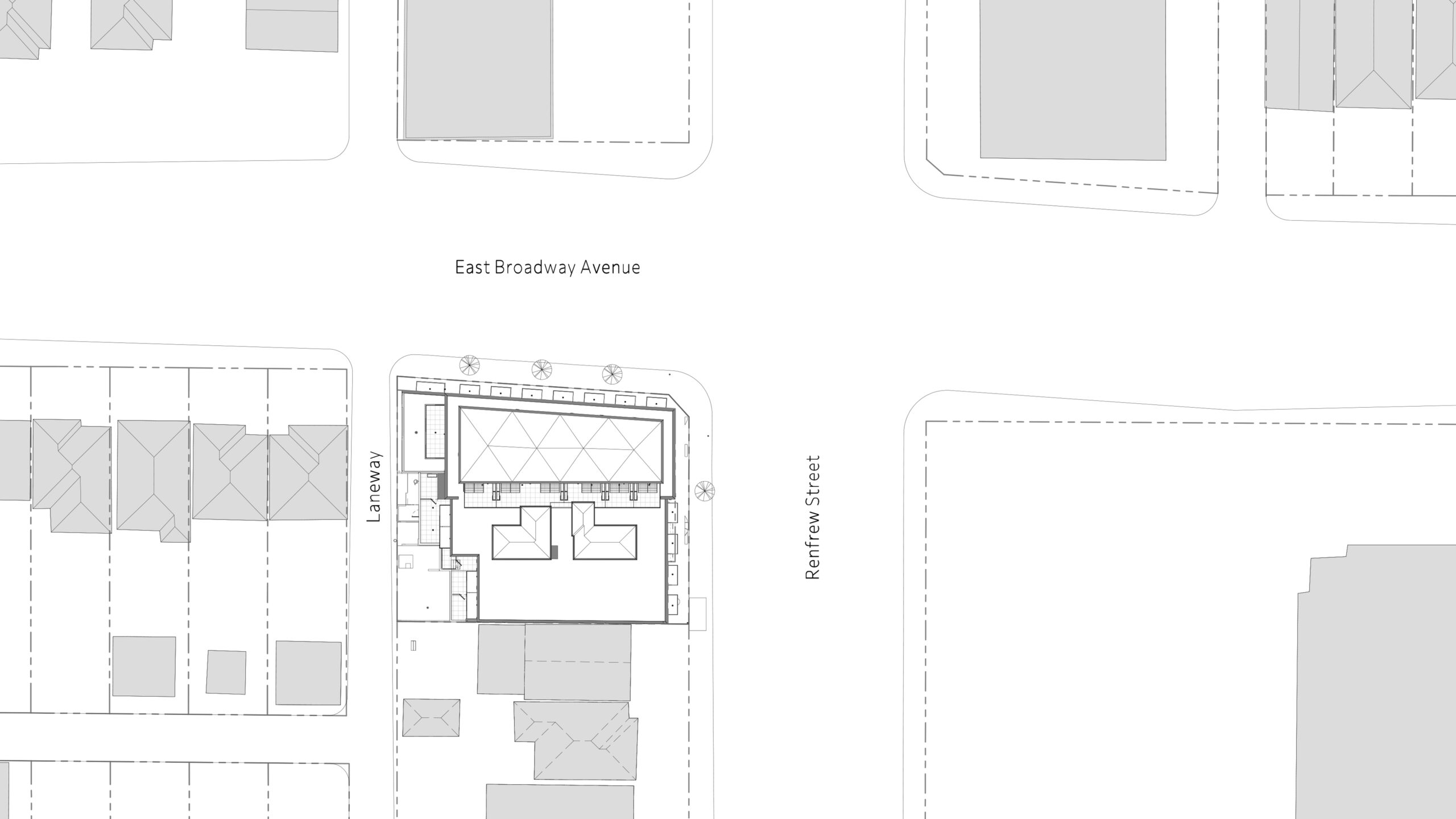
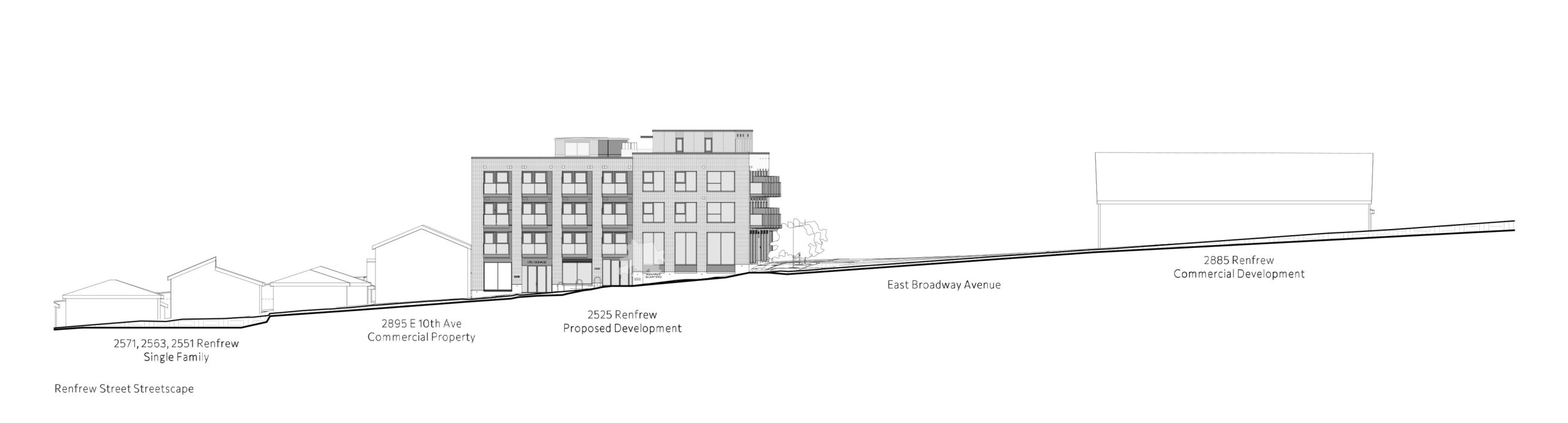
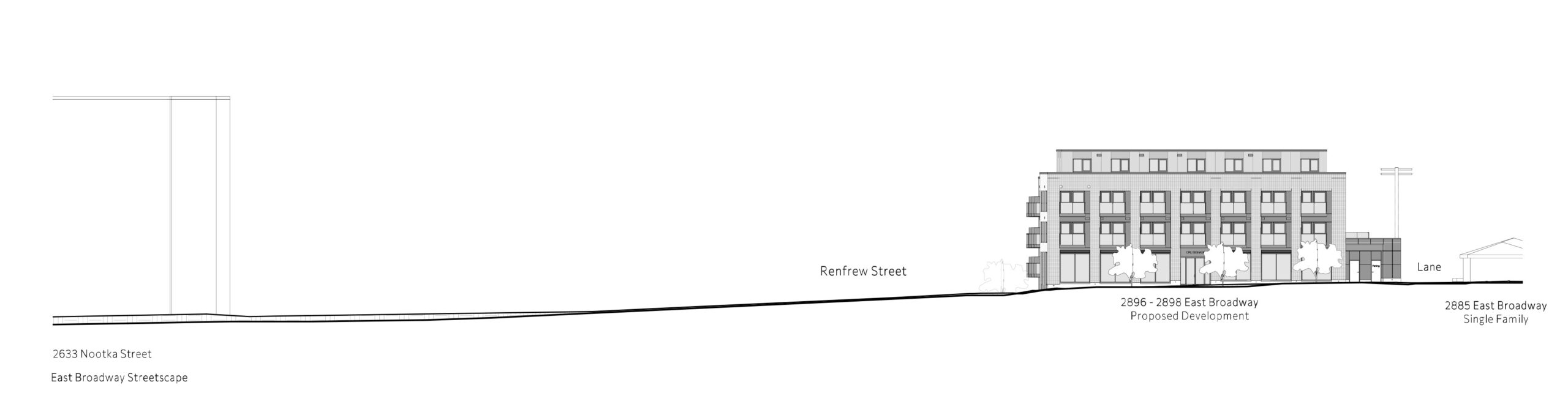
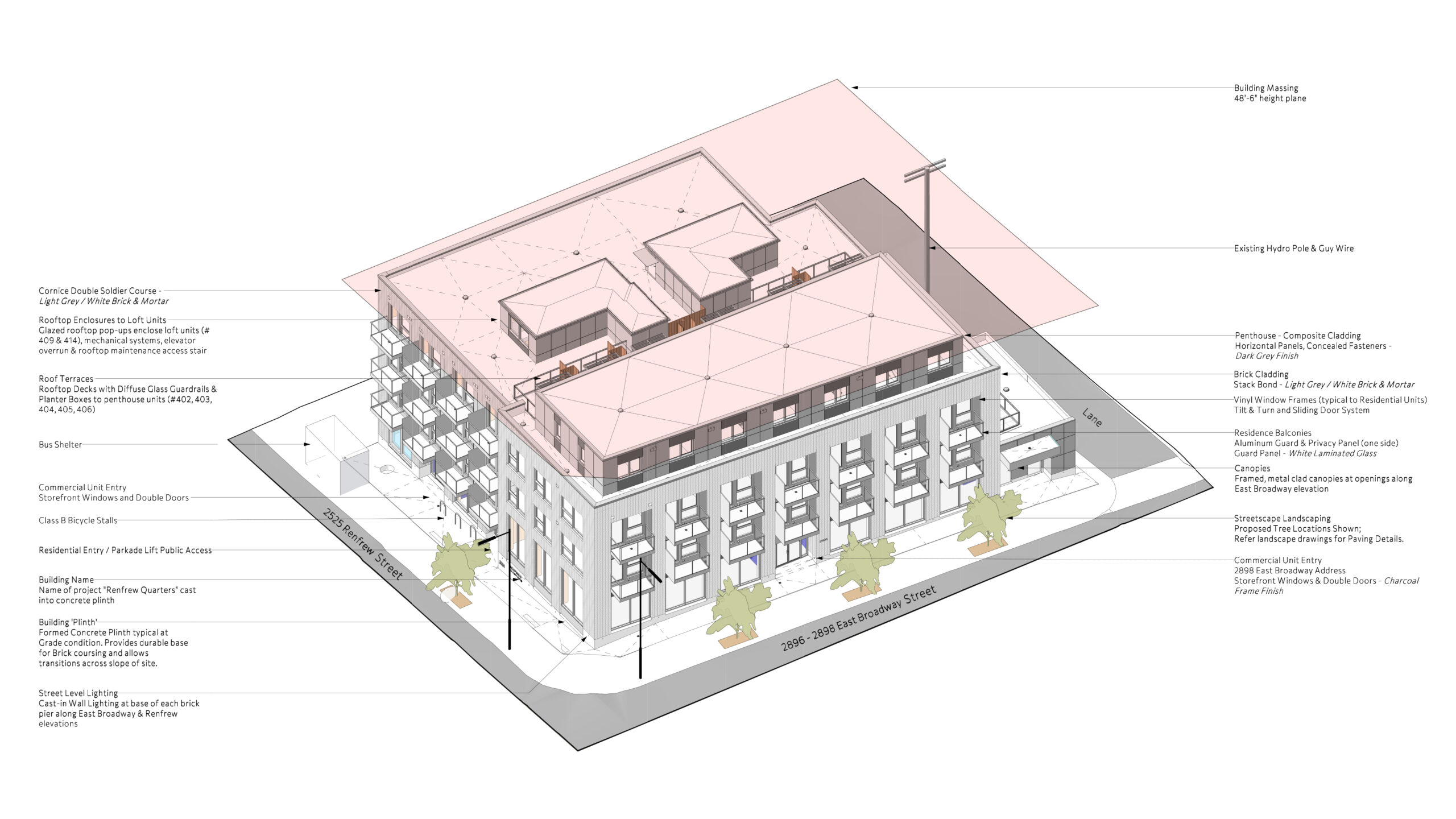
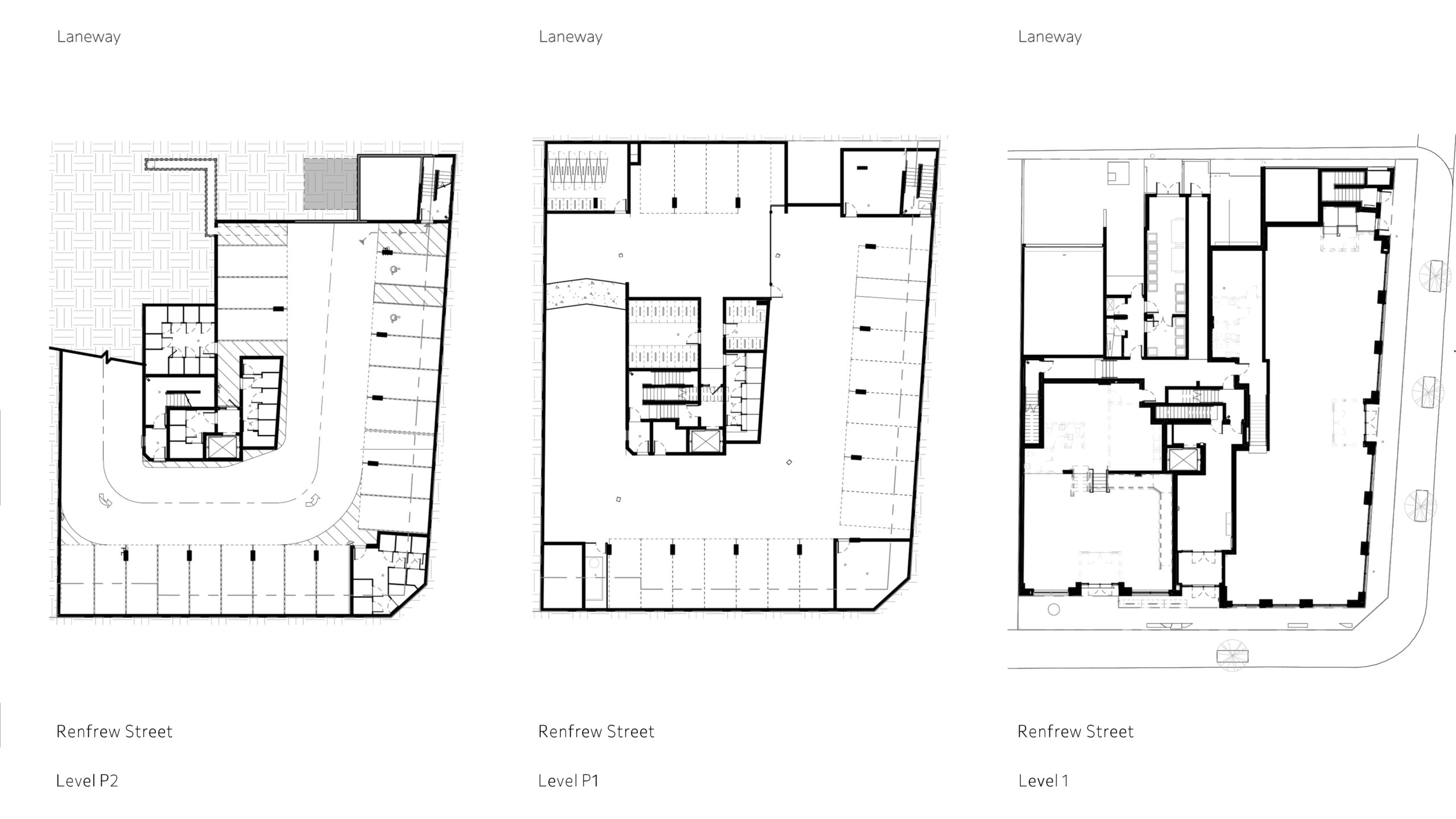
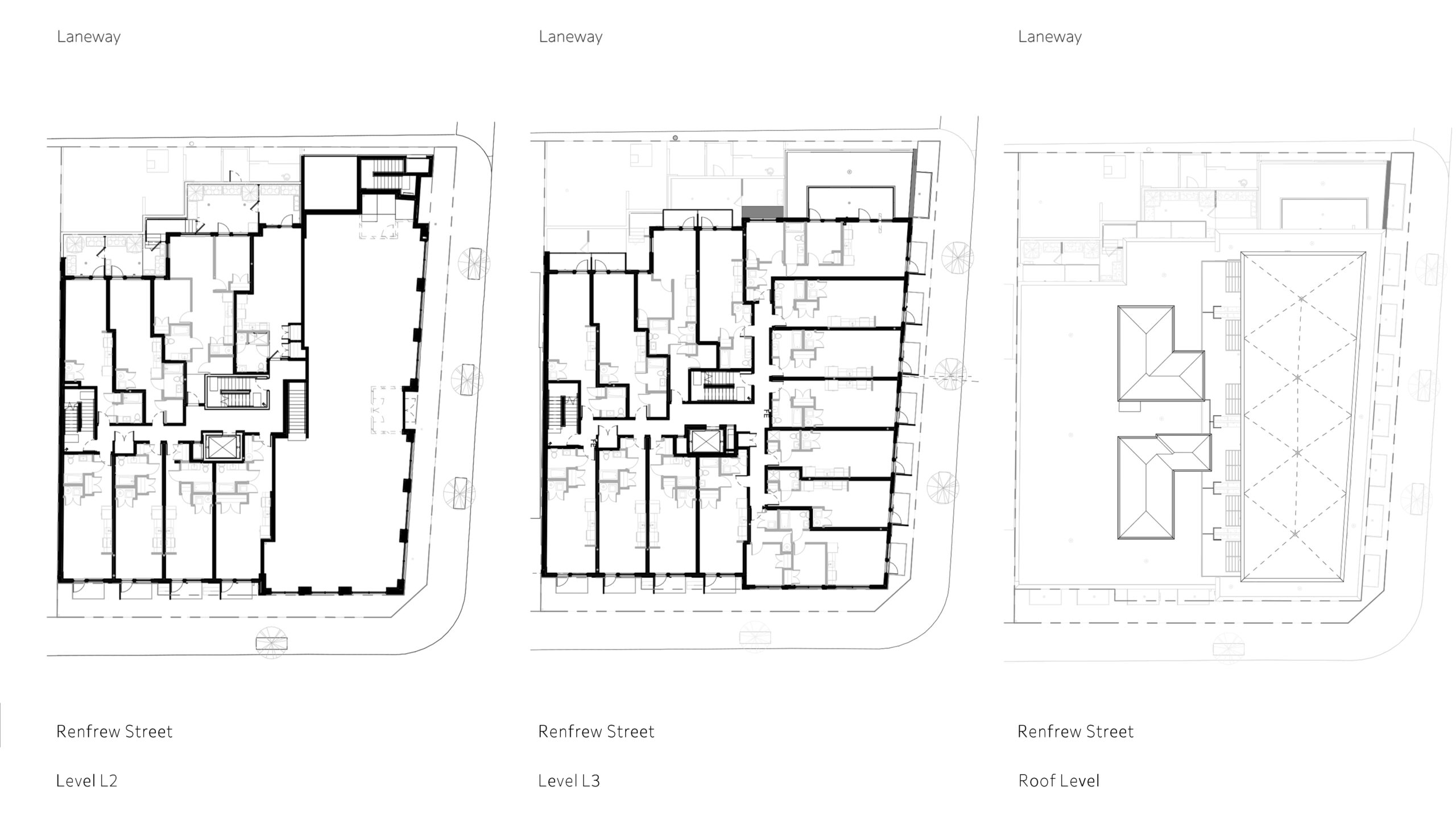
The proposed development at 2525 Renfrew Street was created under Vancouver’s Rental 100 Secured Market Rental Housing policy and follows the C-2 district guidelines for form, height, setbacks, and density. The site was rezoned from C-1 to CD-1 to support a mixed-use building that steps down the steeply sloped terrain. The project consists of a split-level four-storey structure—perceived as five storeys along the lower elevation—with three ground-floor commercial units and 37 secured rental homes. The terraced design allows each CRU and all residential units to maintain convenient access to garbage, loading, and service areas.
The building includes a single level of underground parking accessed from the southwest lane, with all service and emergency access points also connected to the lane. The total gross floor area is 48,329 sq. ft., including a 36,678 sq. ft. above-grade component and an 11,650 sq. ft. parkade. Residential rental space comprises 25,439 sq. ft. of the building, with 18,655 sq. ft. dedicated to net secured rental area, and 5,224 sq. ft. allocated to commercial uses. Overall, the project achieves a 2.62 FSR and covers 79% of the lot.
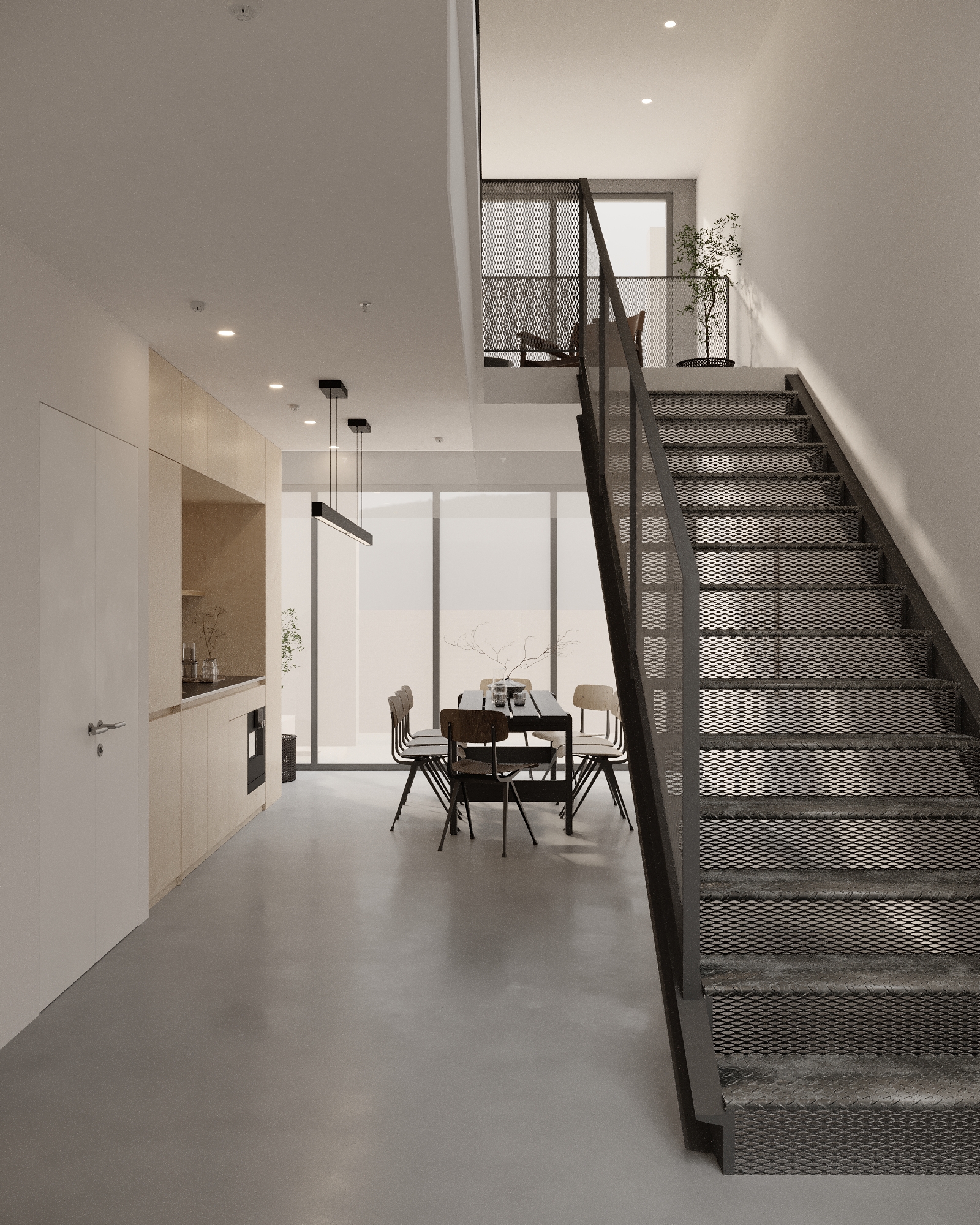
The residential program provides a mix of studio, one-bedroom, two-bedroom, and three-bedroom homes, including two-storey lofts, with sizes ranging from 346 to 954 sq. ft. These units meet the city’s Rental Incentive Guidelines for average sizes and affordability. Of the 37 total units, 24 are studios, two are one-bedrooms, eight are two-bedrooms, and three are three-bedrooms—meaning 30% of the homes are suitable for families, reinforcing the project’s alignment with rental housing objectives.
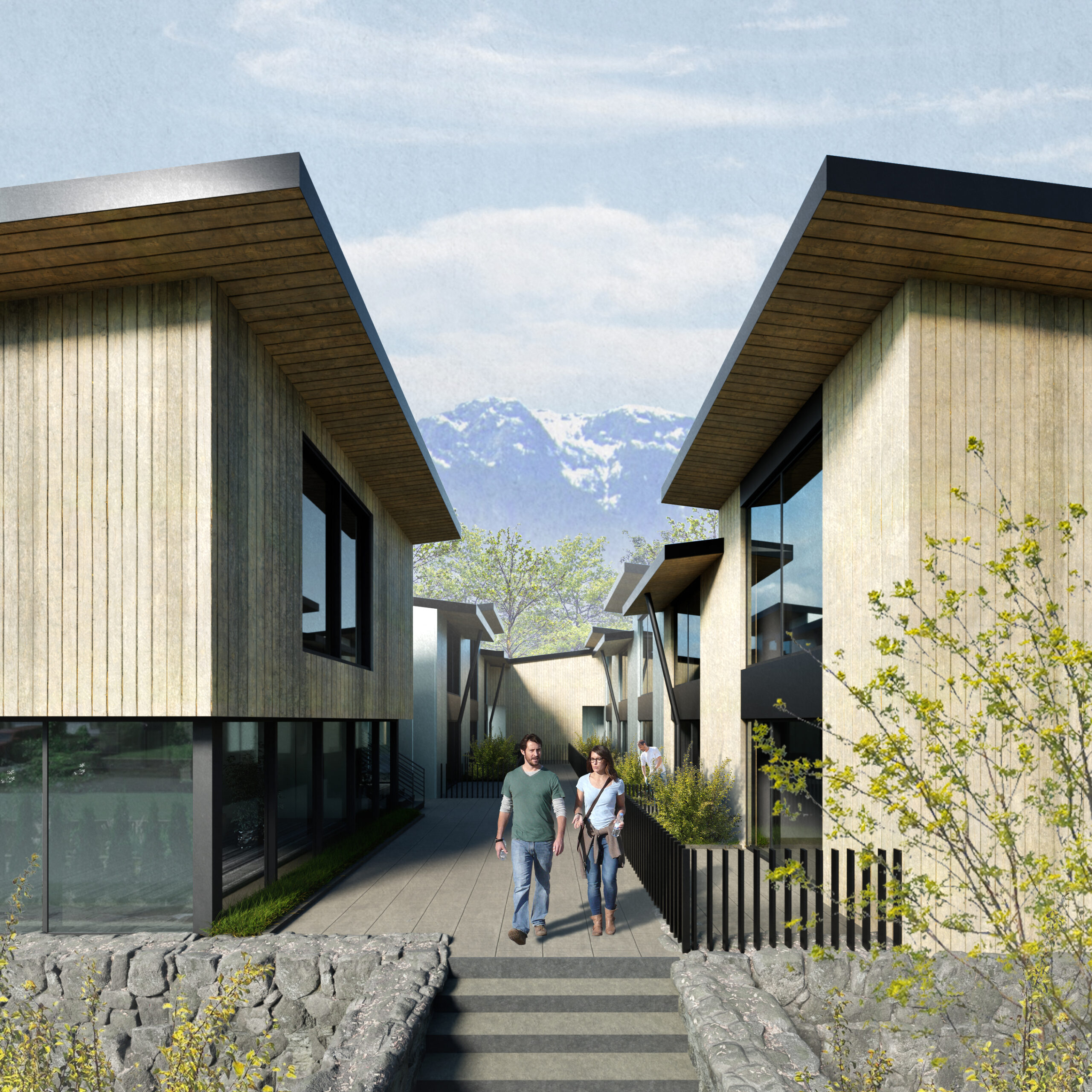
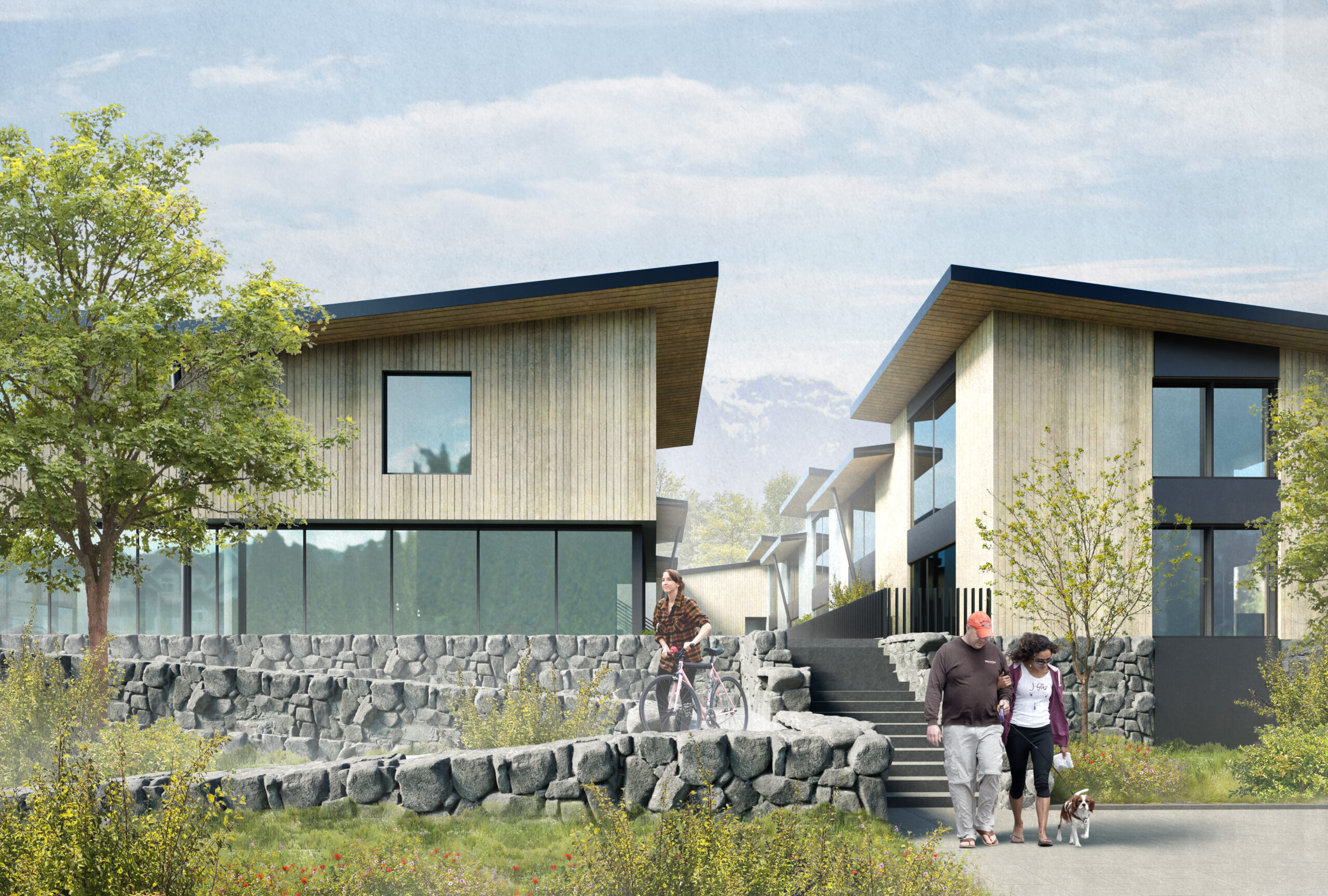
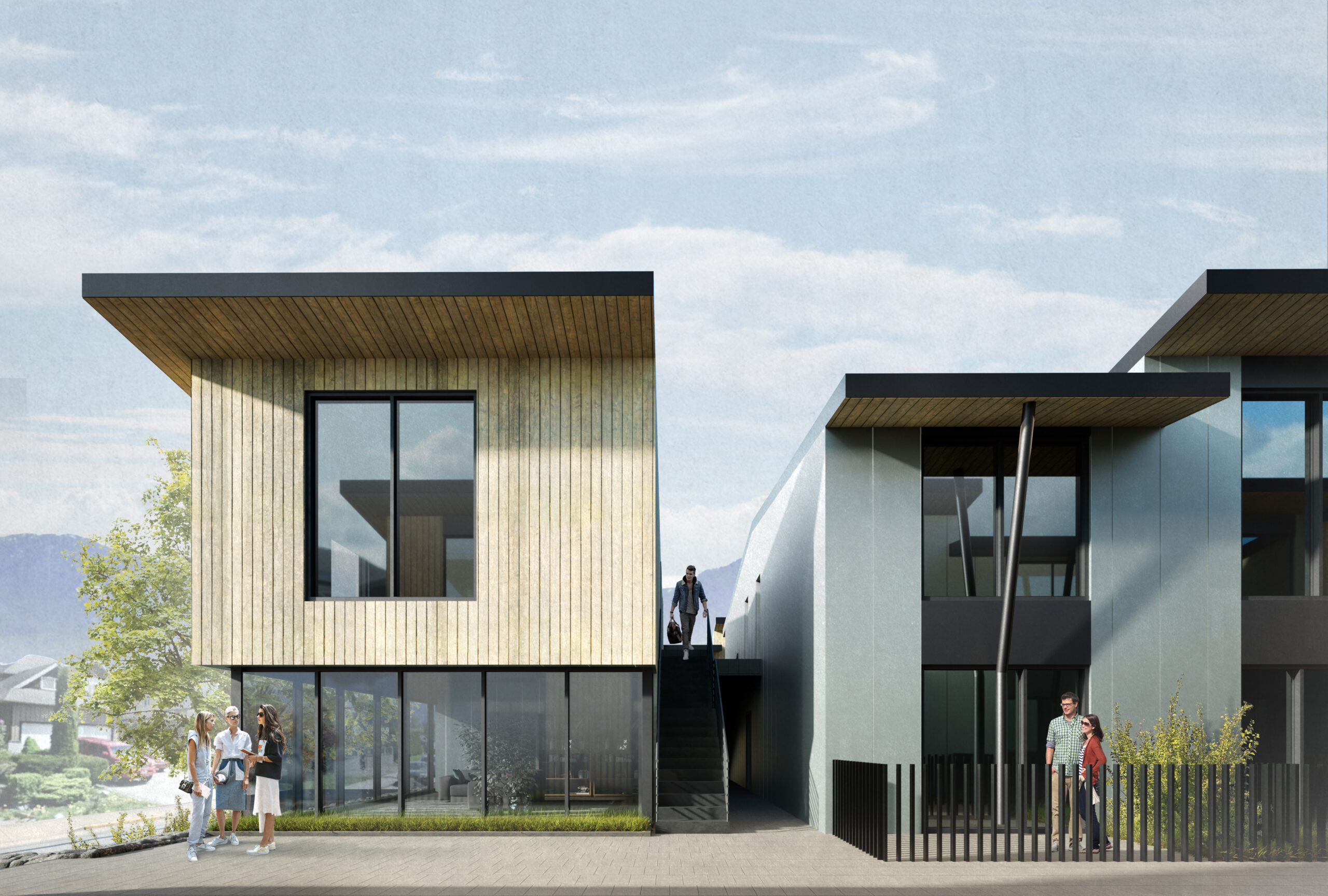
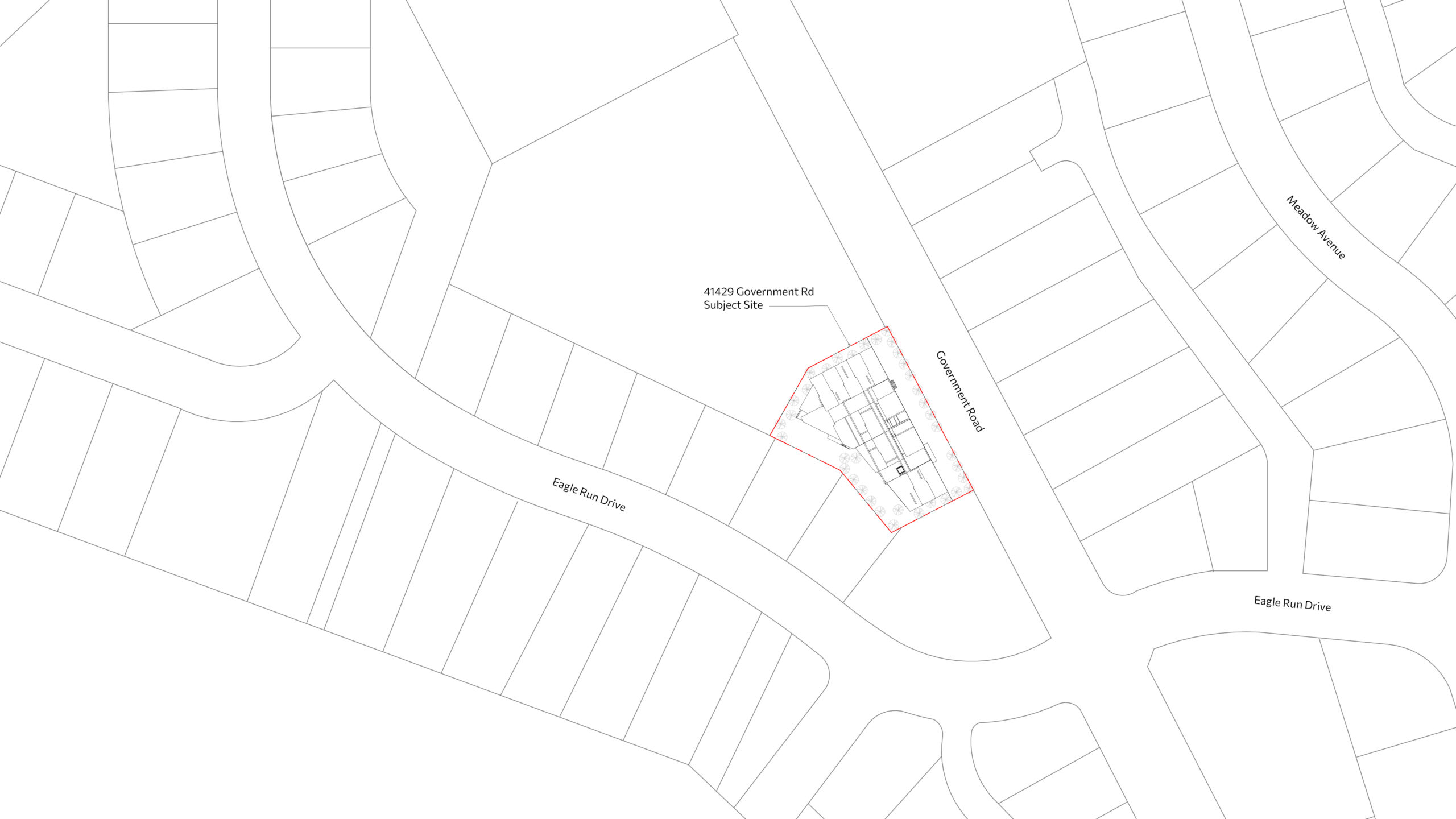
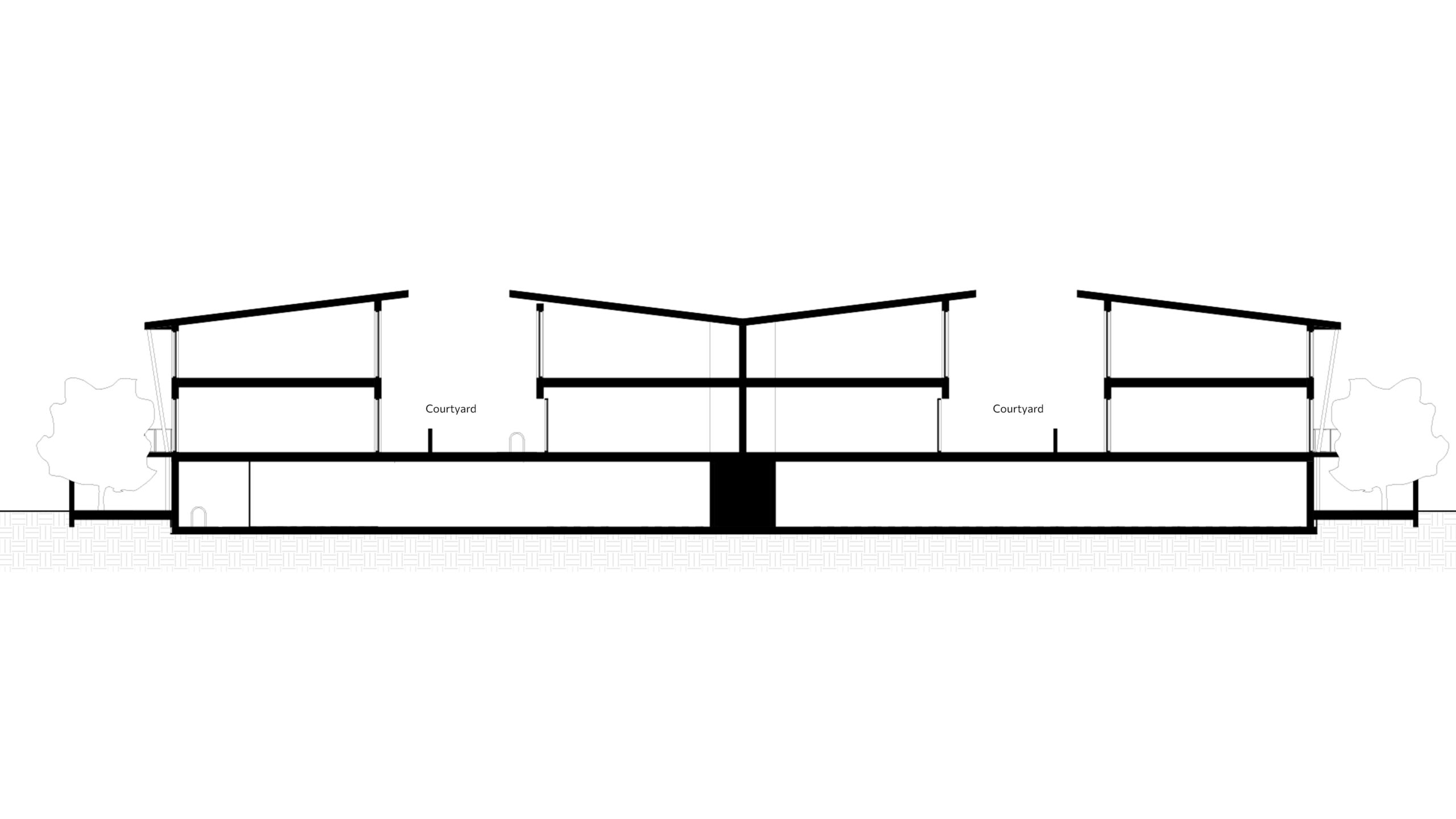
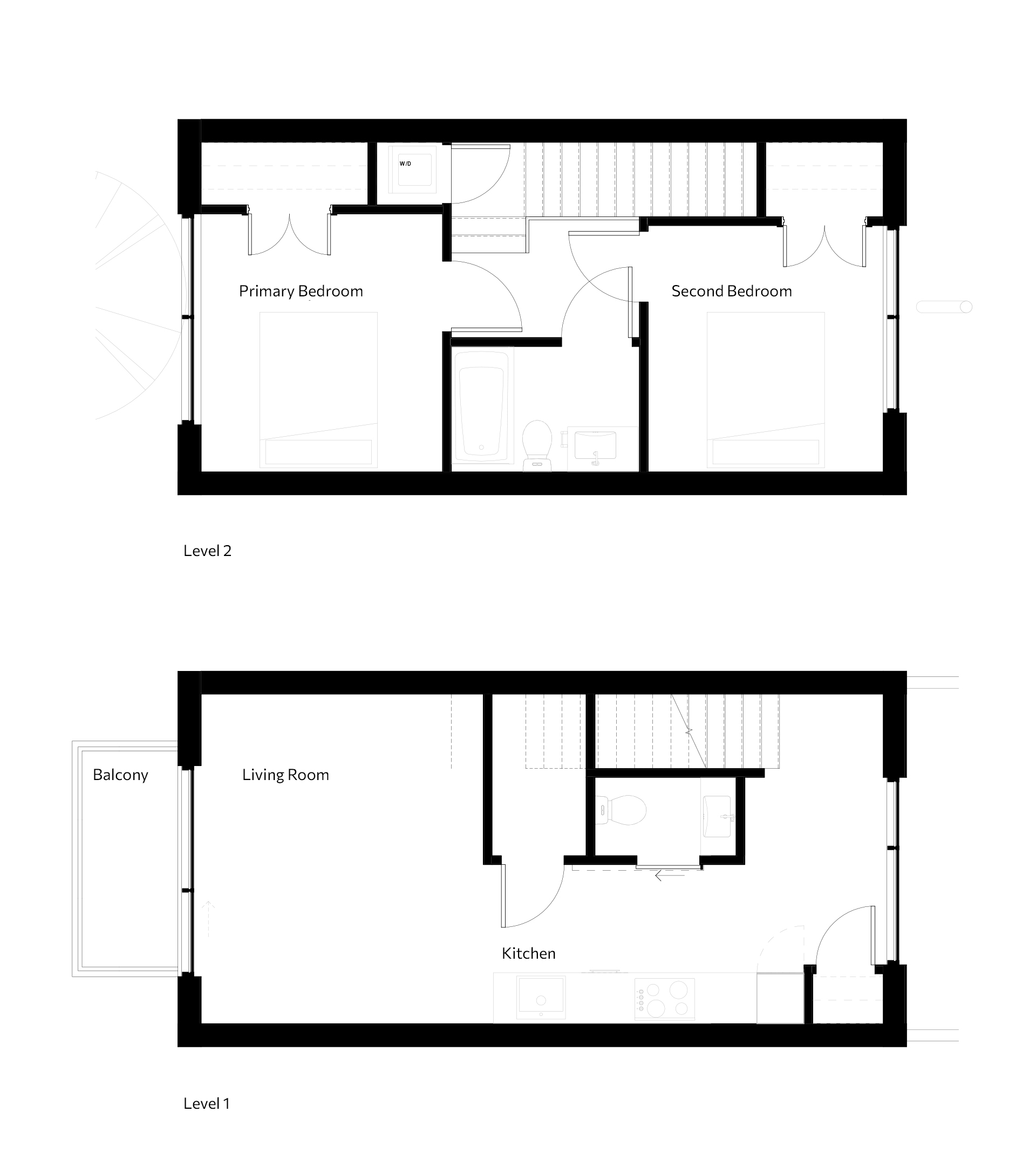
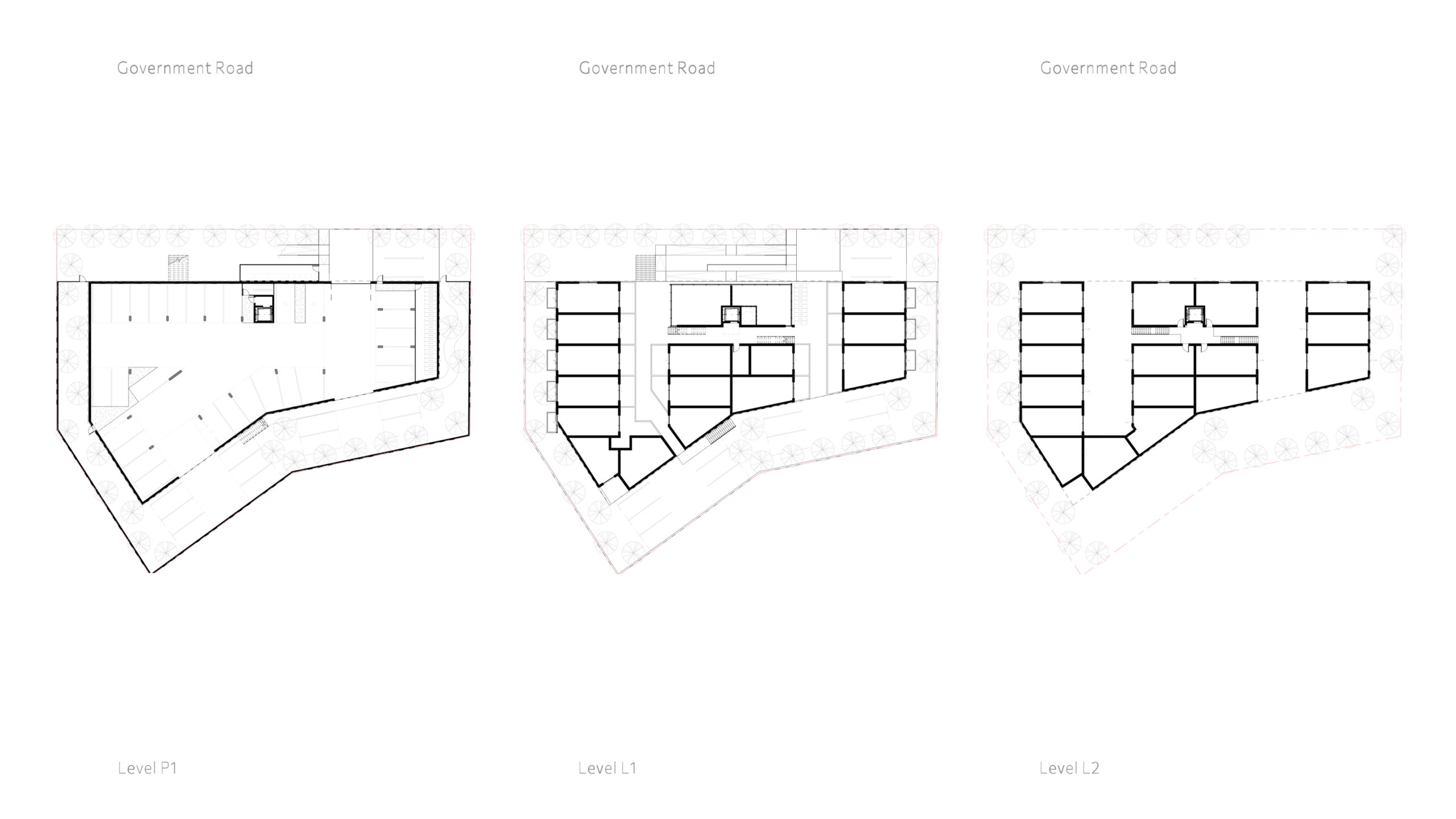
41429 Government Road in Squamish, BC is a thoughtfully designed multi-family residential development that introduces pedestrian-oriented, missing-middle housing to a walkable neighbourhood in the Sea to Sky corridor. The project includes 19 homes—studios, one-bedroom, and two-bedroom townhomes—organized around a generous elevated courtyard above a single-level parkade. This podium approach meets required flood construction levels while transforming a technical constraint into a community asset: a secure, landscaped outdoor space shared by all residents.
Every project begins with the question: What story does this place need to tell? For this site, the story is rooted in Squamish’s identity—simple forms, durable materials, and a close relationship to the outdoors. The buildings are scaled to fit the neighbourhood, oriented to capture natural light and mountain views, and arranged to support both privacy and casual neighbourly connection.
A neighbourhood-serving commercial unit at street level activates Government Road and adds daily convenience for residents and the surrounding community. With walkable access to transit, schools, recreation, and local amenities, the project reinforces the village character of Squamish while providing modern, attainable homes for singles, couples, and families.
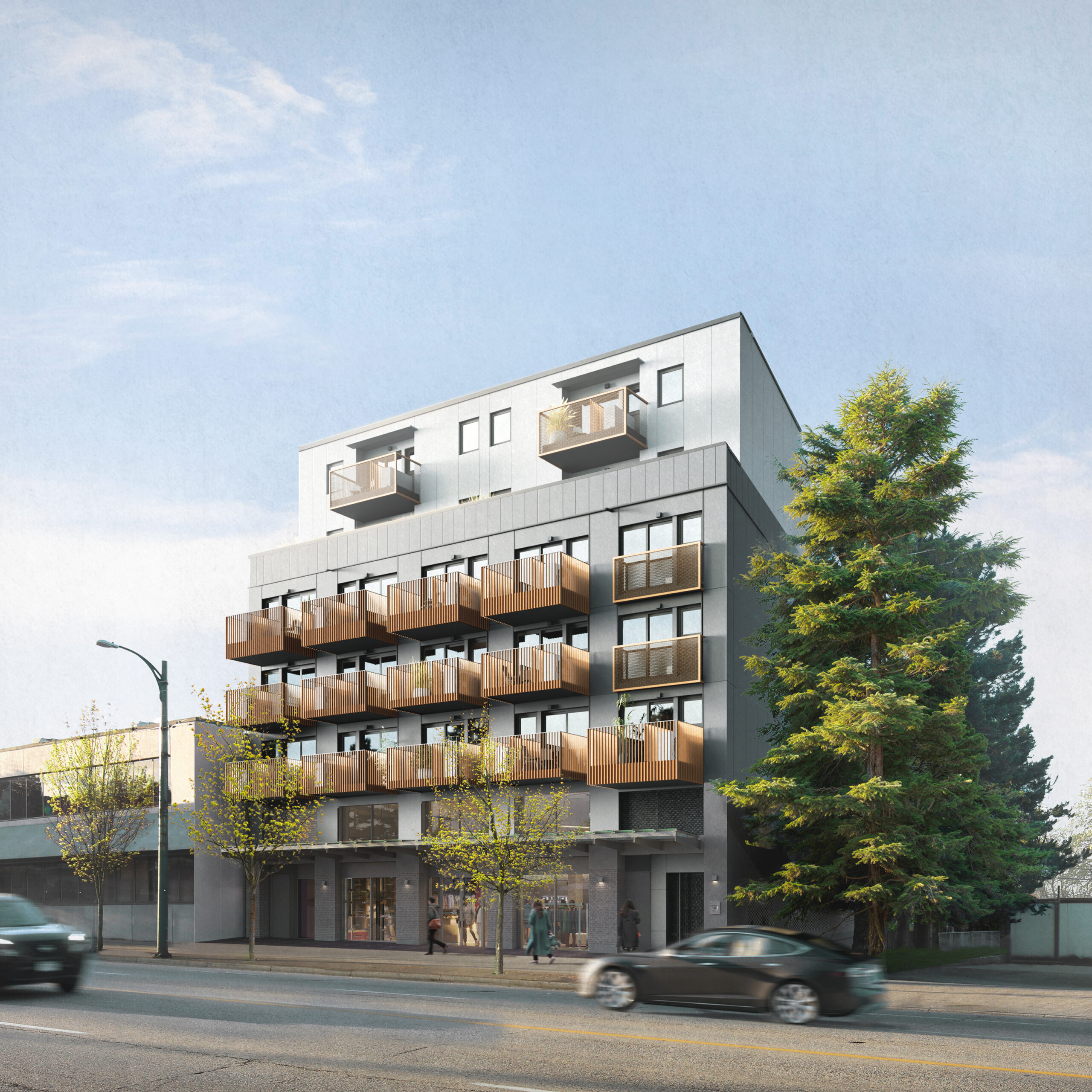
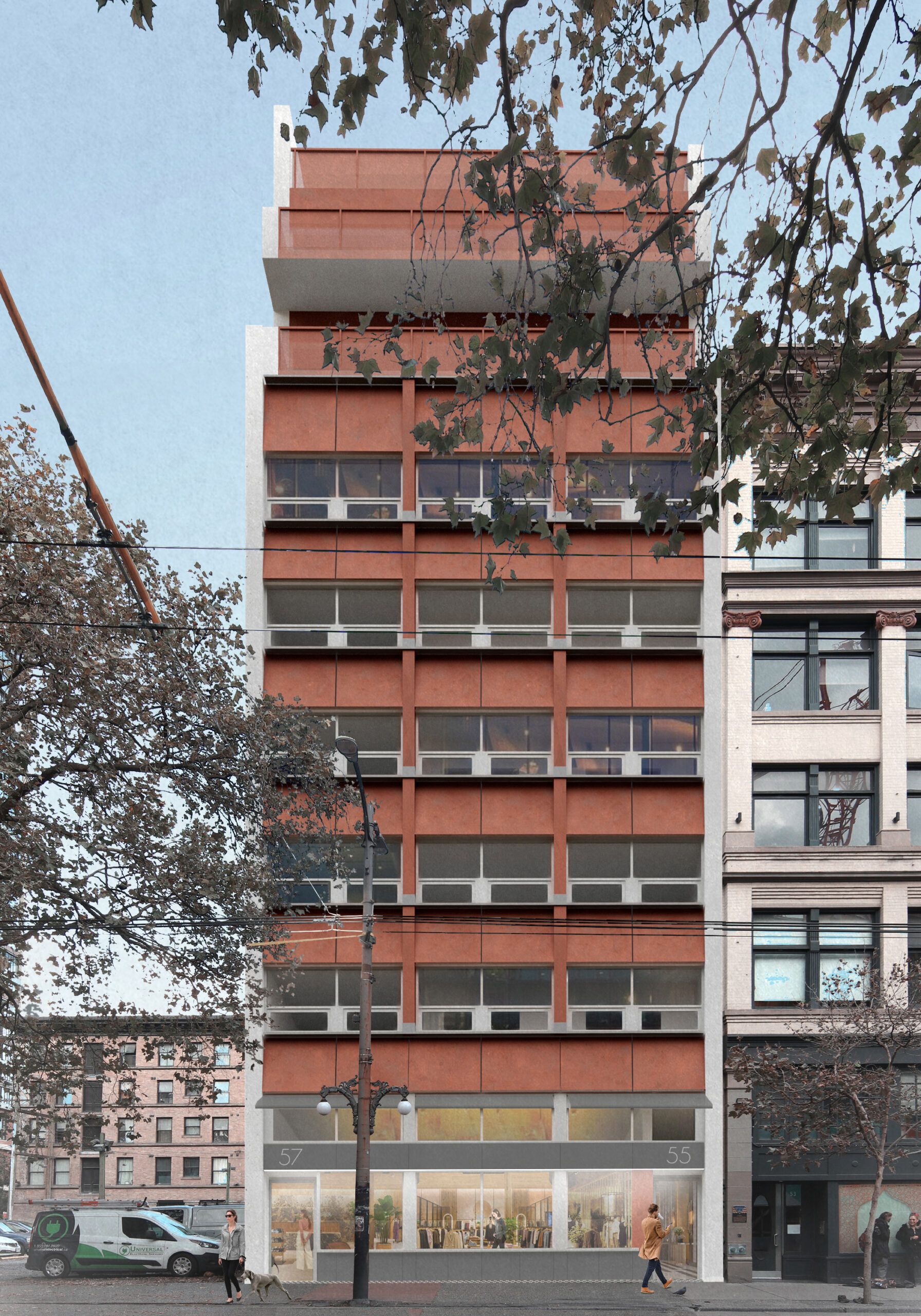
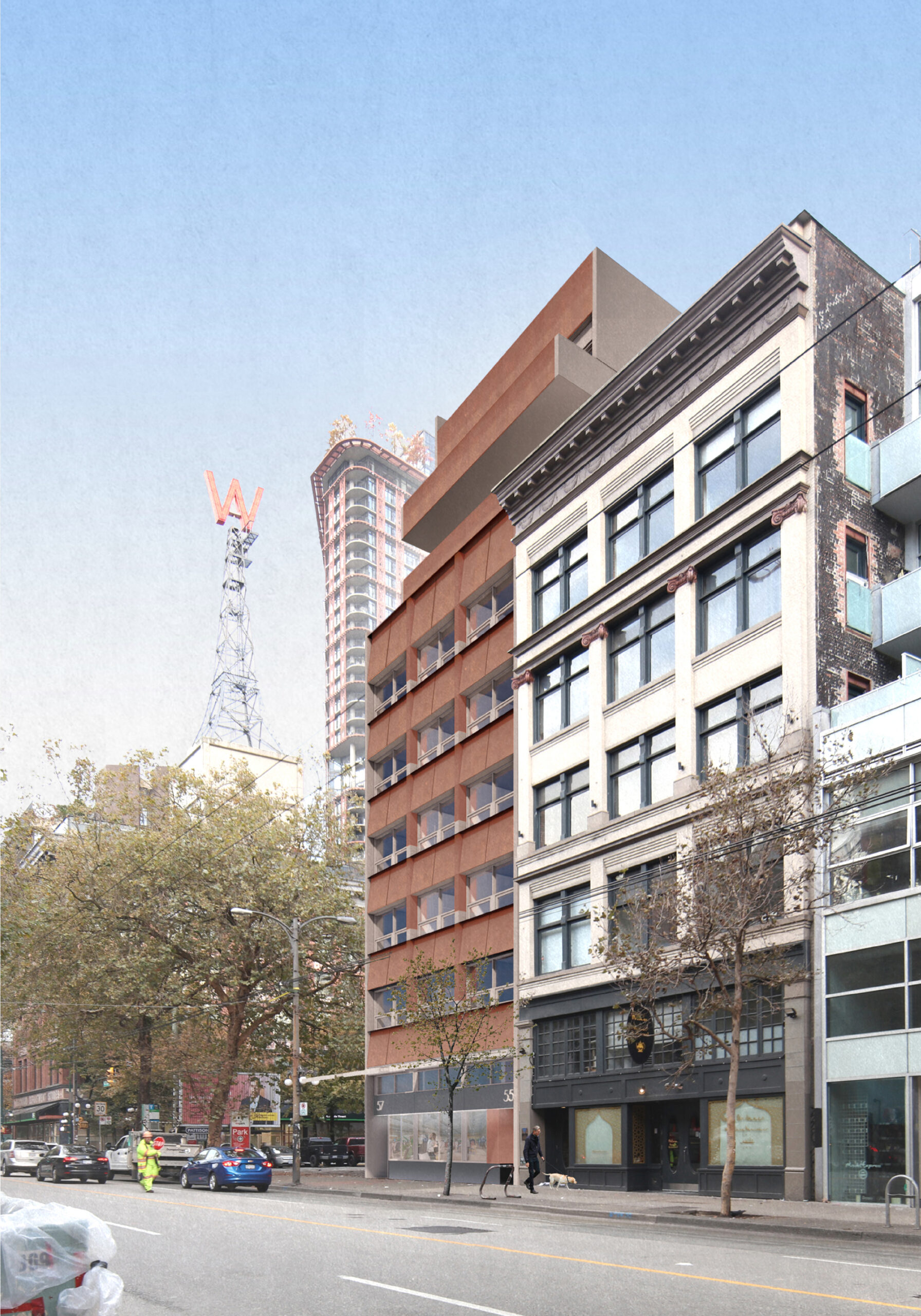
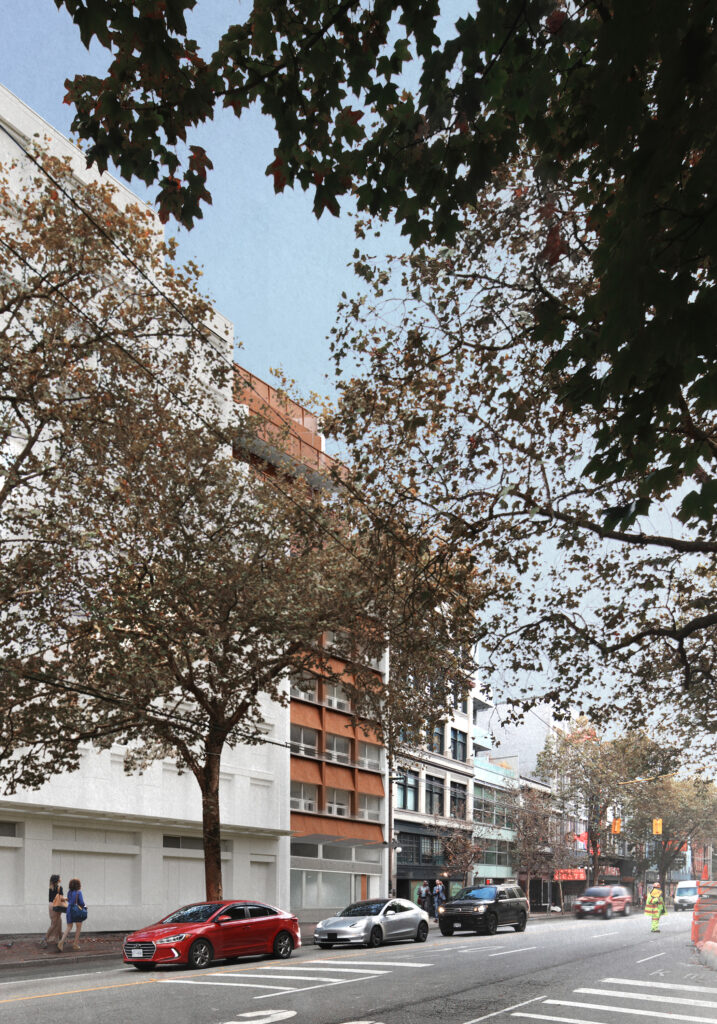
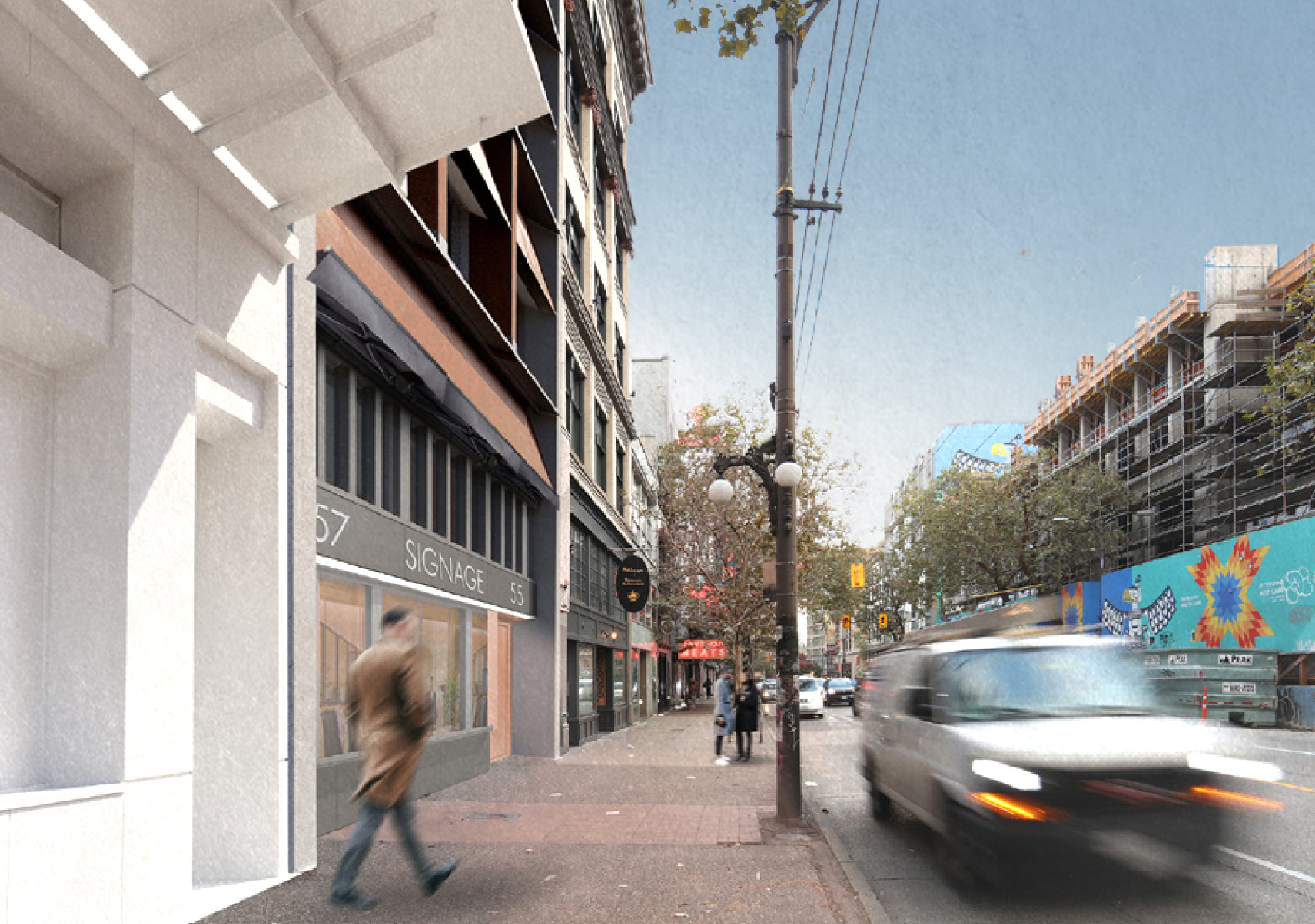
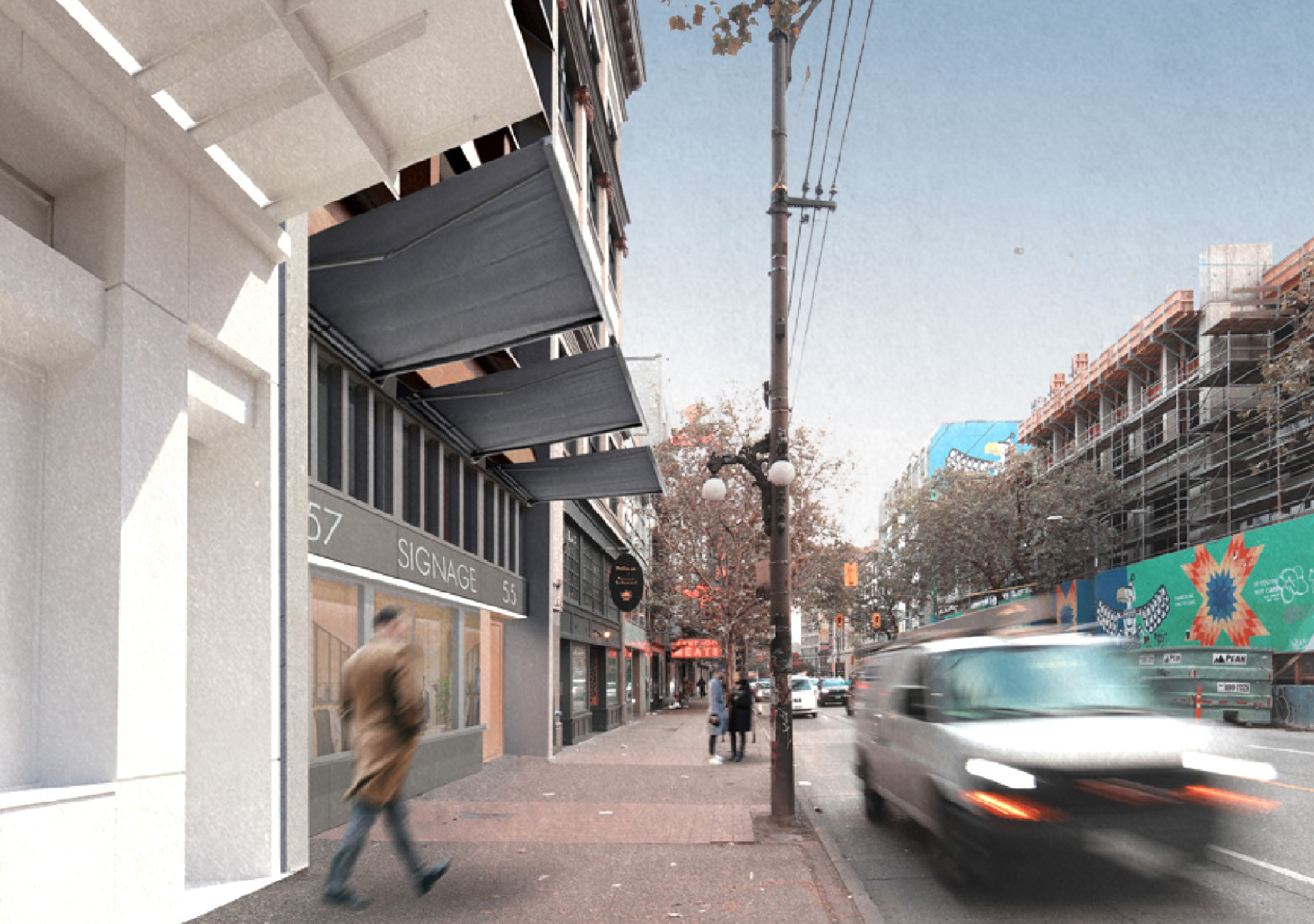
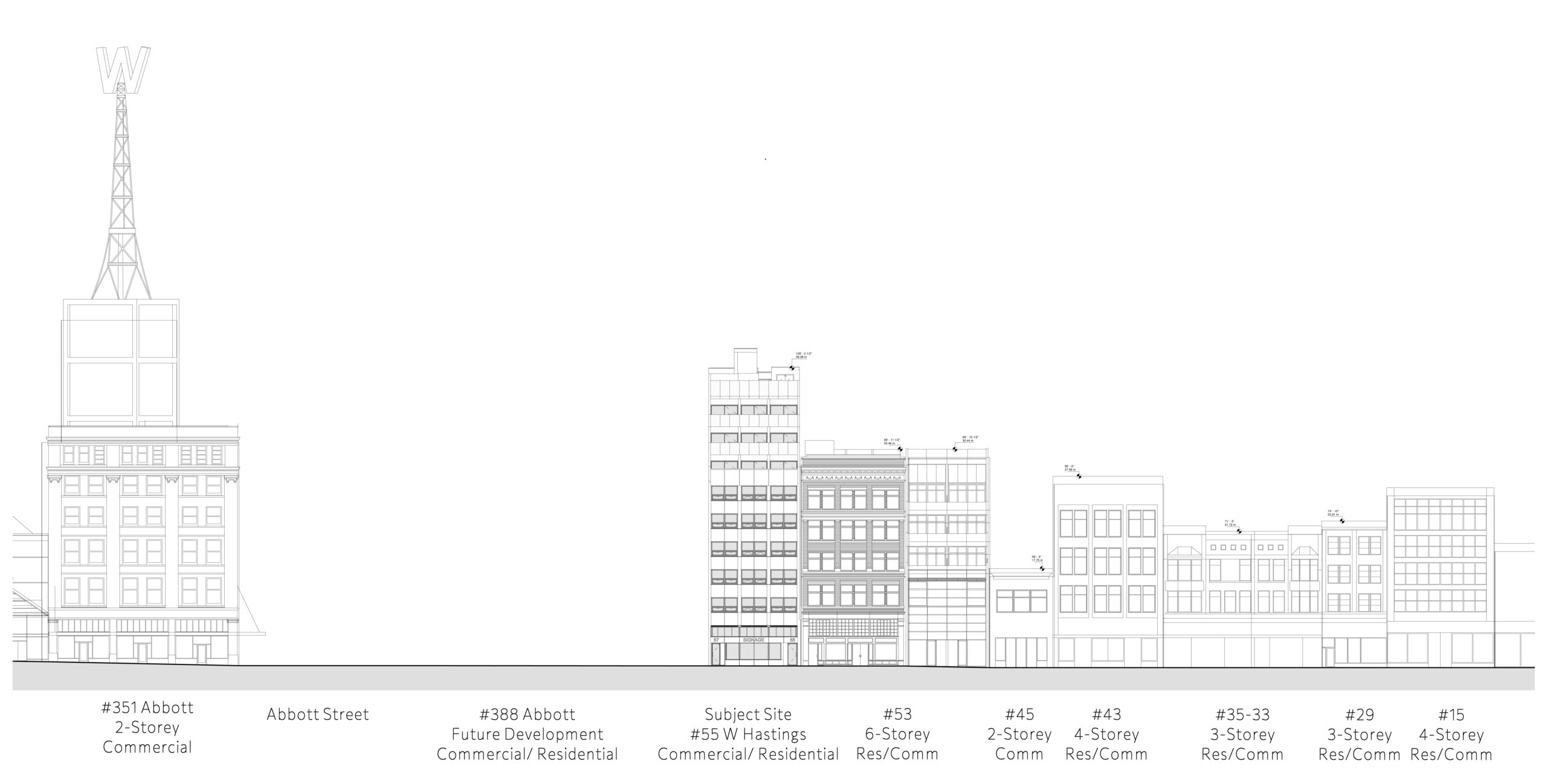
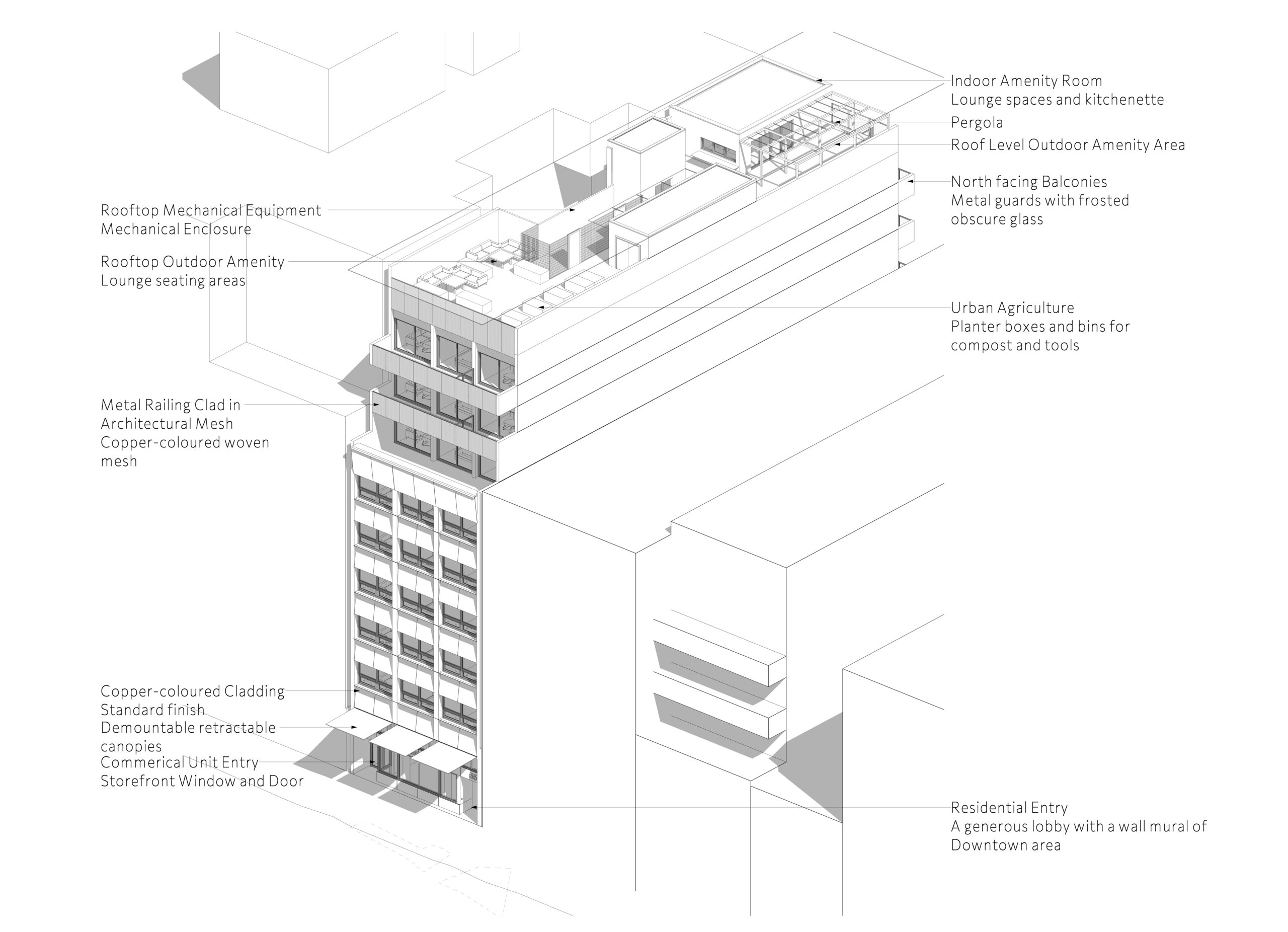
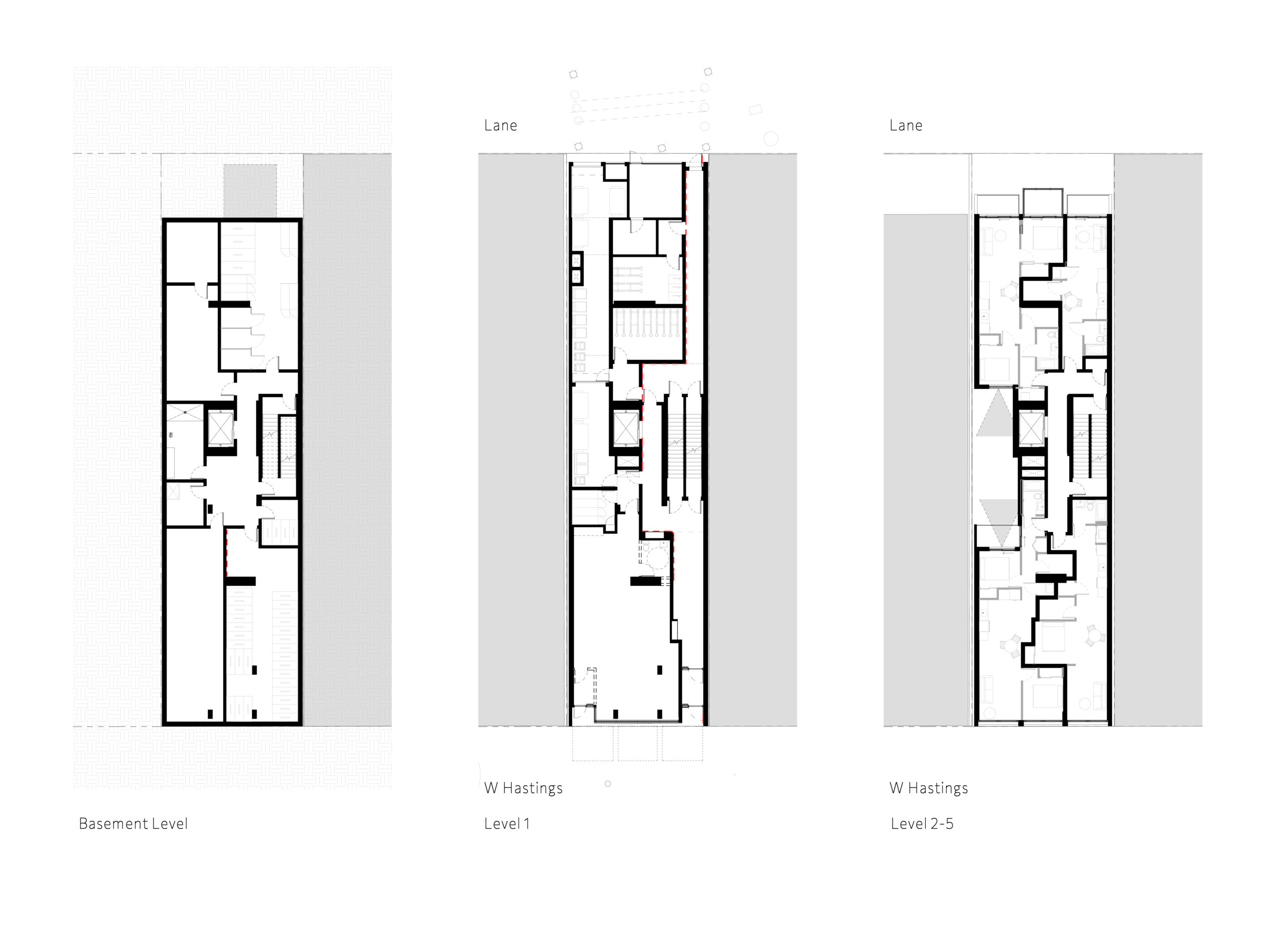
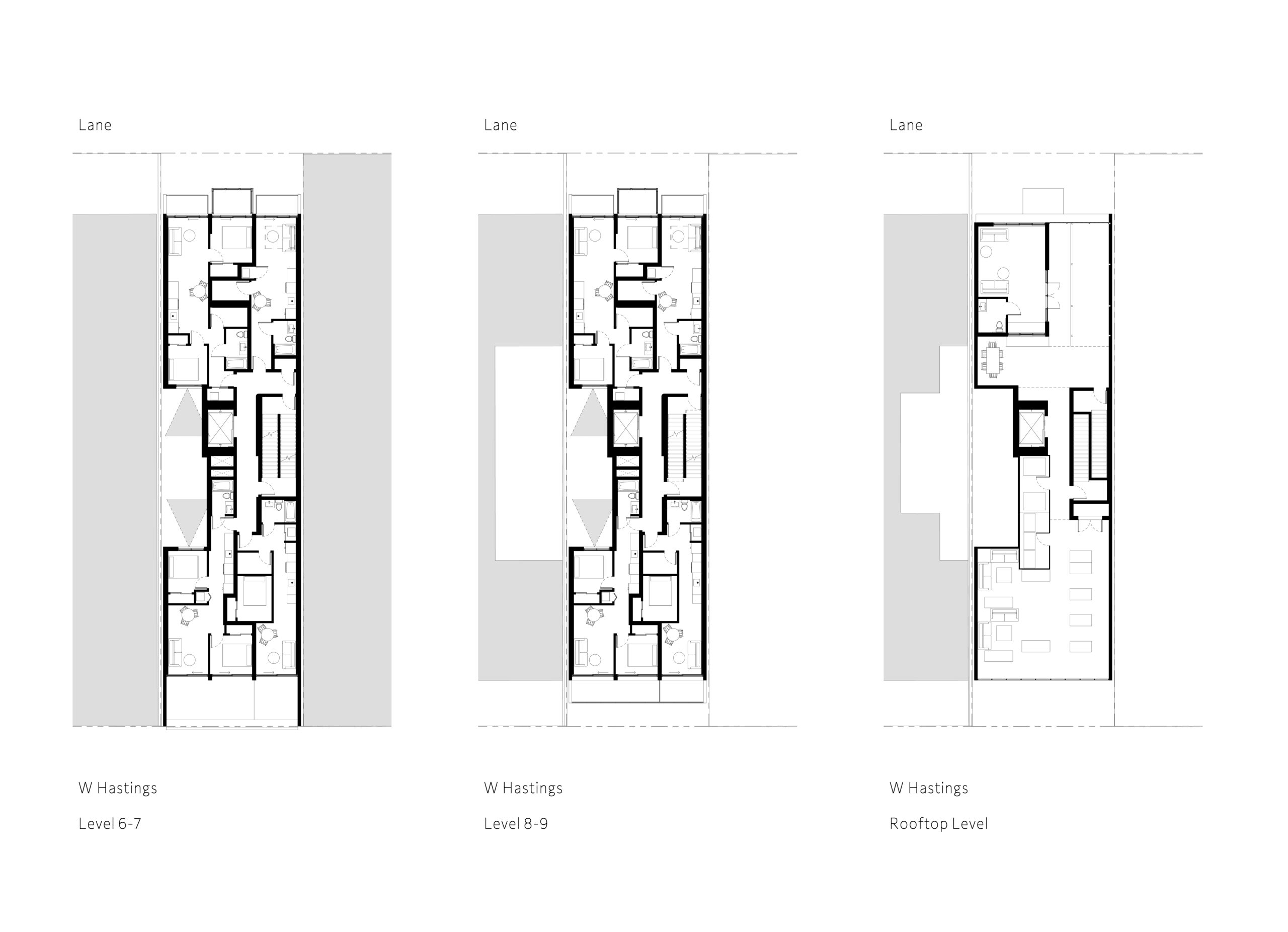
This mixed-use residential project features rental housing above a single commercial retail unit at street level. Its design approach begins from the idea of storytelling—creating a development that responds meaningfully to its surrounding urban environment. The project aims to heal the city by completing the street wall consistent with the Victory Square policy, while also offering dignified, light-filled homes with generous storage. Unlike many developments in the area dominated by small studio units, this project specifically supports families by providing a safe and suitable living environment enriched with amenities.
A strong emphasis is placed on community and livability, including a landscaped rooftop that accommodates children’s play spaces and opportunities for urban agriculture—an important response to the dense urban context. Commercial frontage at street level is designed to reinforce a vibrant public realm, supporting active urban life and complementing nearby developments.
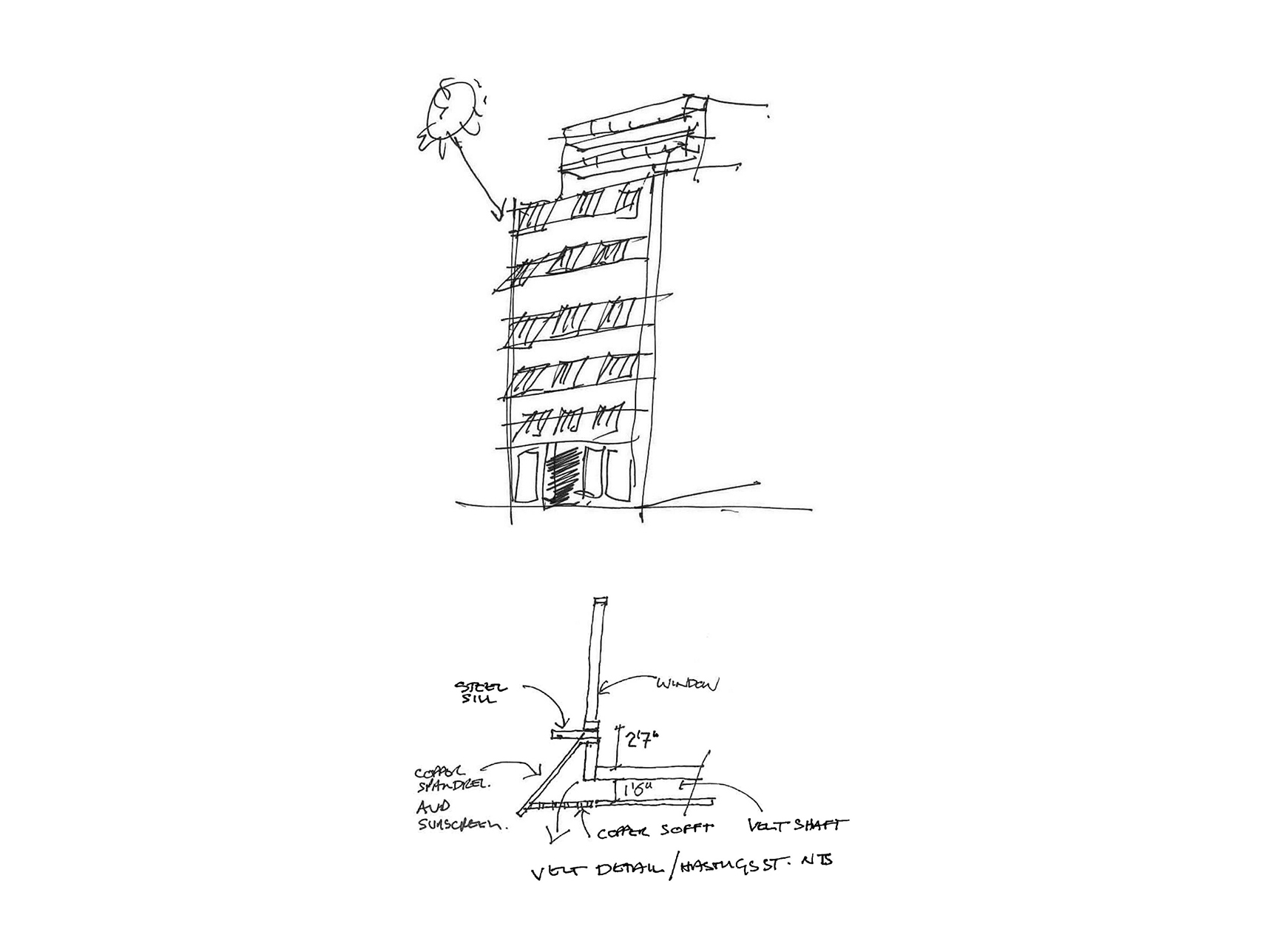
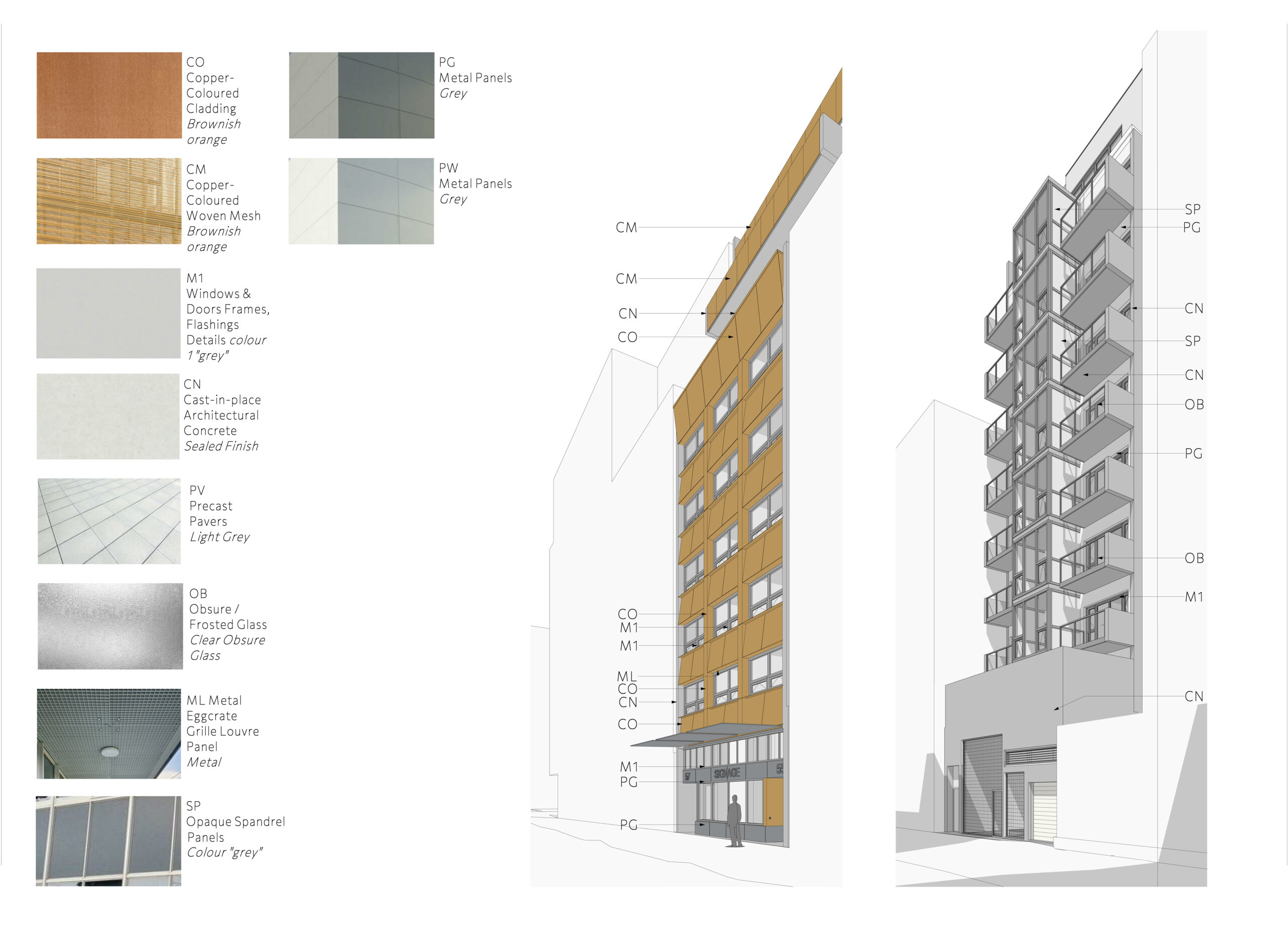
Architecturally, the building takes inspiration from David Chipperfield, adopting a contemporary but understated language that respects the surrounding neighbourhood. Materials such as copper-colored cladding and woven mesh, light grey window and door systems, concrete, and terrace pavers express a refined palette, while features like frosted balcony guards and a welcoming residential lobby with a detailed neighbourhood mural enhance the project’s character. Upper levels are stepped back from the eighth floor onward to reduce massing and improve fit within the site context.